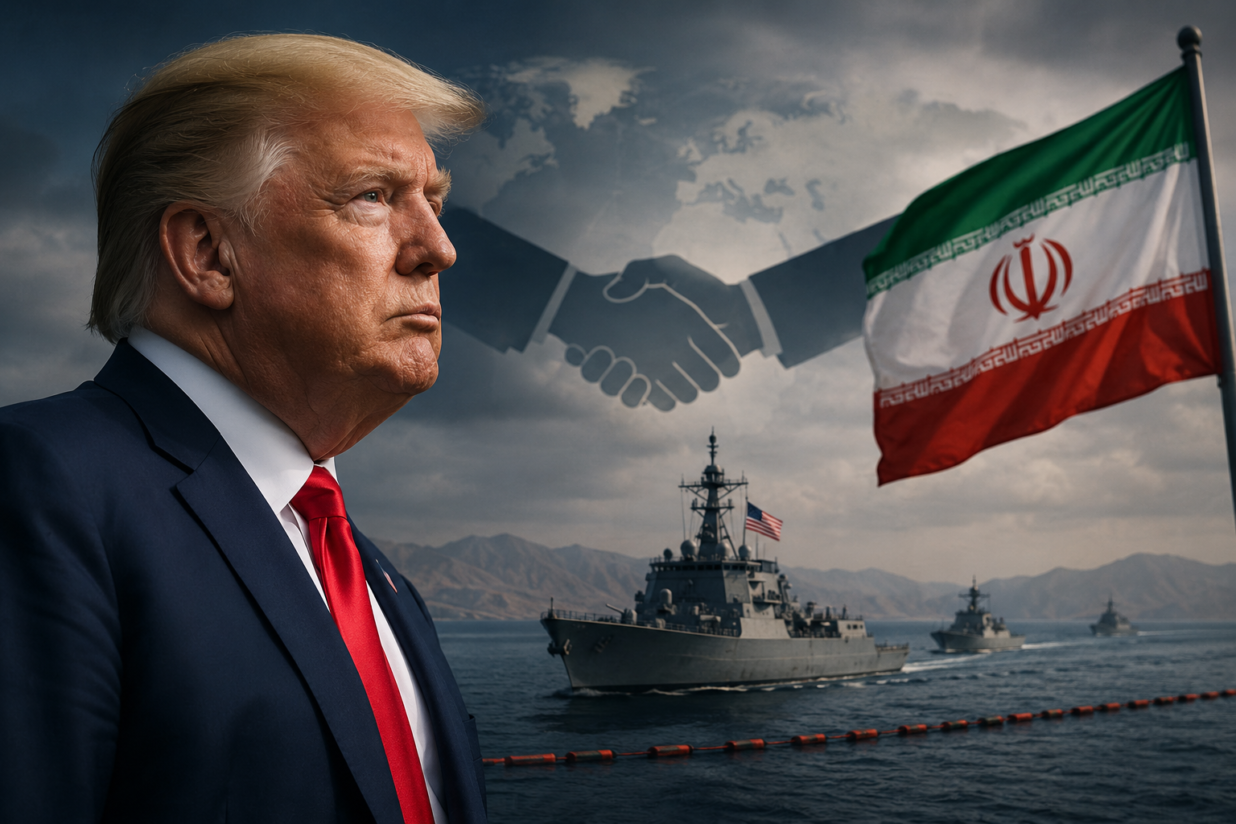
Trump Iran Deal : US President Donald Trump said that a prospective agreement with Iran is “largely negotiated,” raising optimism for a reduction in Middle Eastern tensions. However, debates over reopening the Strait of Hormuz and other critical problems continue to cause instability in global markets and diplomacy.
The declaration followed months of confrontation between the US, Israel, and Iran, which disrupted energy supplies and raised fears of a larger regional crisis. Trump said talks were progressing toward a memorandum of understanding that may reopen the Strait of Hormuz, one of the world’s busiest oil shipping routes.
According to sources, the suggested framework might comprise a staged procedure that involves terminating military operations, reopening maritime lines, and launching broader talks on Iran’s nuclear programs and sanctions. According to sources familiar with the talks, Pakistan has also played a diplomatic role in facilitating the continuation of conversations.
Trump Iran Deal Talks Raise Hope for Global Stability
Trump said the final terms of the agreement are still being worked out and that there is “no rush” to conclude the deal. He also stated that the US naval blockade related to the conflict would stay in effect until a formal agreement was struck and validated.
According to reports, Iran may agree to calm tensions over its nuclear program and reopen the Strait of Hormuz in exchange for sanctions relief and the release of frozen financial assets. However, Iranian media sites said that Tehran still wants authority over navigation decisions in the strait and expects the US to fulfill agreements before any substantial changes occur.
The Strait of Hormuz is regarded as one of the world’s most strategic waterways, with almost one-fifth of global oil exports passing through it. The fighting and shipping restrictions in recent months have resulted in substantial hikes in energy costs and disruptions to global trade routes.
Financial markets responded warmly to stories of potential diplomatic progress. Gulf stock markets rose because investors expected tensions would gradually relax if negotiations were successful. Analysts believe that even early signals of stability could ease pressure on oil prices and transportation costs.
Strait of Hormuz Dispute Keeps Global Oil Markets on Edge
Despite Washington’s hopeful tone, all parties continue to disagree on critical issues. Experts believe that negotiations over Iran’s uranium stockpile, sanctions, and regional influence could take weeks, if not months, to establish a final deal.
Some critics in the United States also questioned whether the planned pact differs greatly from the 2015 Iran nuclear deal, which Trump previously attacked. Conservative parties and opposition MPs have complained that the current negotiations may not provide sufficient guarantees about Iran’s future nuclear operations.
Meanwhile, energy traders are concerned since any further military escalation might disrupt oil supplies and maritime operations in the Gulf region. Shipping businesses and global investors are constantly monitoring any developments involving the Strait of Hormuz.
The most recent developments demonstrate how closely global economies are linked to political tensions in the Middle East. Governments, markets, and companies are now waiting to see if Washington and Tehran can turn their ongoing talks into a permanent accord.
- Join our whatsapp channel for daily updates.
- Follow tazatimesnews Telegram Channel for latest news alerts.
- Follow TazaTimesNews on TruthSocial for exclusive updates
- Also reads : UAE President Receives Diplomatic Call From Qatar Emir