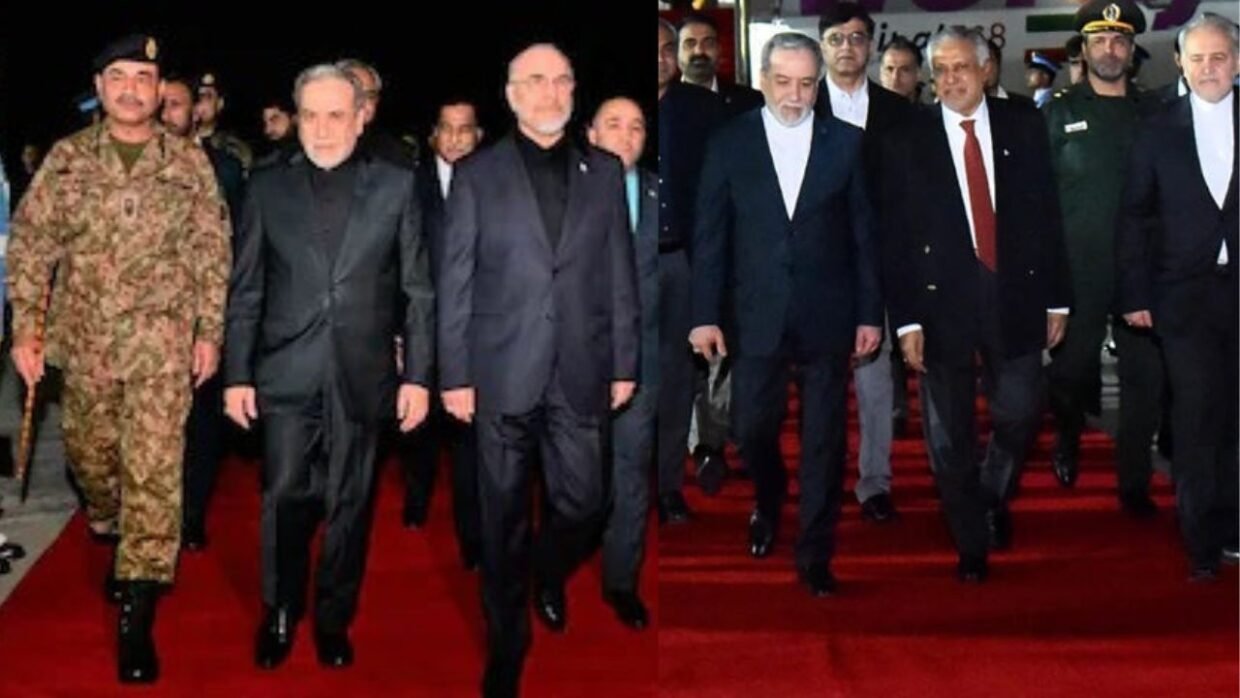
US Iran ceasefire talks : Iranian Foreign Minister Abbas Araghchi arrived in Islamabad late Friday night to discuss regional issues and the US-Iran cease-fire. The visit brought renewed attention to prospects for another round of US-Iran peace negotiations. Pakistan’s top officials were scheduled to meet with Araghchi as Islamabad pursued measures to reduce tensions in West Asia.
Araghchi traveled with a small team that included Esmaeil Baqaei, the Foreign Ministry’s spokesman. According to a Pakistani official, Araghchi will meet with Prime Minister Shehbaz Sharif and Field Marshal Gen Asim Munir, Pakistan’s Chief of Defense Forces. The insider also stated that Araghchi may meet with US officials involved in the scheduled second round of discussions.
The world’s attention is now focused on Islamabad as new diplomatic efforts to resuscitate a shaky ceasefire between the US and Iran are launched. Iranian Foreign Minister Abbas Araghchi has arrived in Pakistan with a tiny entourage, raising both excitement and worry about the next round of talks.
Pakistan is once again acting as a major mediator, attempting to bring both sides back to the negotiating table after previous meetings failed to achieve a final agreement. The protracted violence has already raised tensions throughout the Middle East, impacting global trade and security.
US Iran Ceasefire Talks: Hope for Peace or Another Delay?
The major purpose of this visit is to revive the stalled cease-fire talks between Washington and Iran. According to reports, the US has also despatched senior envoys to Pakistan to discuss potential alternatives and press for a compromise.
However, the situation is not straightforward. While global leaders are pressuring Iran to resolve the dispute, Iran has been hesitant to engage in direct negotiations with US officials during this visit. According to some sources, Araghchi may prioritize meetings with Pakistani leaders above immediate negotiations with the US.
This ambiguous signal has created uncertainty about whether meaningful progress will be made or if talks will be postponed again.
Rising Tensions Behind the Scenes
The context of these discussions is intense. The dispute between the United States and Iran has already lasted several weeks, affecting energy routes and regional stability. A US naval blockade of critical waterways, along with continued military pressure, has exacerbated the situation.
At the same time, both countries face pressure to prevent further escalation. Experts worry that ongoing war could harm global markets and exacerbate regional instability.
Positive Signal but No Guarantee
Despite the uncertainties, Araghchi’s visit is viewed as a positive development. Diplomatic channels are still open, and Pakistan’s engagement could assist establish trust between the two sides.
There has been no official confirmation of direct negotiations between the United States and Iran. The outcome is dependent on whether both countries are willing to compromise on critical topics like as sanctions and nuclear policy.
Conclusion
The summit in Islamabad has the potential to be a watershed moment—or another squandered chance. While optimism for peace persists, the route forward remains uncertain. The world is now waiting to see whether these talks will produce tangible achievements or exacerbate the ongoing problem.
- Join our whatsapp channel for daily updates.
- Follow tazatimesnews Telegram Channel for latest news alerts.
- Follow TazaTimesNews on TruthSocial for exclusive updates
- Also reads : Norway Social Media Ban: Government Moves to Block Under-16 Users