
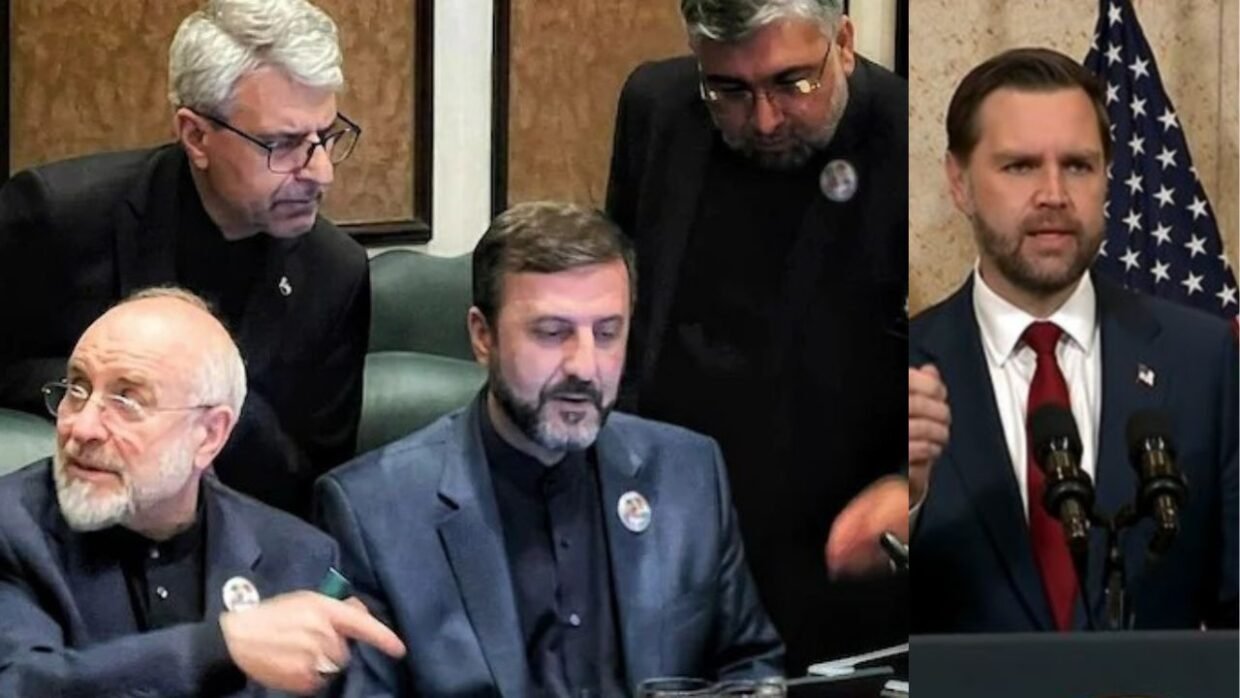
Iran US Talks Failure : Iran’s national television IRIB stated that the United States’ “unreasonable demands” caused the failure of talks in Islamabad aimed at ending the Middle East war.
IRIB said that the Iranian delegation discussed “continuously and intensively” for 21 hours, but US positions stymied progress.
The Iranian group discussed for 21 hours, but the American side’s outrageous demands stalled progress. Thus, the conversations came to an end,” IRIB announced on Telegram.
Iran US Talks Failure: Iran advises the US to refrain from making “excessive demands.”
The negotiations are “intensive,” according to Iran’s Foreign Ministry spokeswoman Esmaeil Baqaei, but any progress “depends on the seriousness and good faith of the opposing side.”
He called on Washington to respect Iran’s “legitimate rights and interests” and to abstain from “excessive demands and unlawful requests.”
Tensions between Iran and the United States have increased again after important peace talks failed to produce an accord. Iran has openly accused the US’s “unreasonable demands” for the abrupt collapse of negotiations aimed at resolving the current conflict.
According to official Iranian media, the two sides engaged in heated deliberations in Islamabad for about 21 hours. Despite several suggestions from Iran, the talks were stalled owing to harsh US conditions.
Iran said that it was serious during the negotiations, but US demands prevented a final agreement. This breach has put the fragile ceasefire in considerable jeopardy.
Also reads : Trump Iran Strike Warning: Powerful Weapons Threat Sparks Hope and Fear
Iran US talks fail unreasonable demands: Why did negotiations break?
The failed negotiations highlight significant divisions between the two countries. Key topics were Iran’s nuclear program, control of the Strait of Hormuz, and calls for a complete end to the war.
Iran claimed that the US demands were unreasonable and impractical. Officials stated that despite “continuous and intensive” attempts, the American side stalled progress with criteria that Tehran could not accept.
On the other hand, US officials regarded their proposition as a final offer, and they expected Iran to accept. However, Iran rejected the demands, resulting in a complete standstill.
Experts believe the dispute stems primarily from trust concerns and long-standing political turmoil. Both parties seek security guarantees but are unwilling to compromise on basic objectives.
Ceasefire in danger: Rising tension or chance for new talks?
Despite the fact that the talks failed, the existing cease-fire remains in effect—though it is extremely fragile. According to reports, if diplomatic measures are not made soon, the situation may deteriorate into conflict.
The failure has an impact on world markets, particularly oil supplies, as the Strait of Hormuz remains a major worry for both countries.
However, there is still some hope. Analysts anticipate that backchannel discussions or new mediation efforts may begin negotiations in the coming days.
The situation is currently ambiguous. The breakdown of discussions may signify increased danger, but it may also force both sides to return with more realistic expectations.
- Join our whatsapp channel for daily updates.
- Follow tazatimesnews Telegram Channel for latest news alerts.
- Follow TazaTimesNews on TruthSocial for exclusive updates