Riyadh [Saudi Arabia]: In a sharply worded statement on Monday, Saudi Arabia’s Ministry of Foreign Affairs slammed Iran, stating that the ongoing strikes reflect a further escalation and will have serious consequences for bilateral relations.
Saudi Arabia stated
Saudi Arabia described the activities as a clear breach of international charters and law, and stated that it reserves the right to take whatever necessary measures to protect the country’s security, sovereignty, and people’s safety.
Saudi Arabia’s Ministry of Foreign Affairs issued a statement saying, “The Ministry of Foreign Affairs reiterates the Kingdom of Saudi Arabia’s firm condemnation of the Iranian attacks against the Kingdom and member states of the Gulf Cooperation Council, as well as a number of Arab, Islamic, and friendly countries, which cannot be accepted or justified under any circumstances.” The Kingdom proclaims that it reserves the entire right to take all necessary steps to protect its security, sovereignty, and the safety of its inhabitants and residents, as well as to deter attack.”
It criticised the targeting of civilian objects, airports, and oil installations, stating that it demonstrates “a determination to threaten security and stability” and continues to flagrantly violate international charters and law.
Also reads : US Senate rejects proposal to stop military campaign against Iran
Kingdom stated
The Kingdom stated that despite the remarks by the President of the Islamic Republic of Iran claiming there were no plans to target neighboring nations and that decisions were made by the Leadership Council, Iran’s actions have not matched those statements. Saudi Arabia said that both during the Iranian President’s address and afterward, Iran continued its attacks based on unfounded accusations.
These claims included allegations that fighter jets and refueling aircraft had taken off from Saudi territory to take part in the conflict. The Kingdom reiterated that it had already clarified these allegations were false. According to Saudi officials, the aircraft in question were only conducting routine air patrols aimed at monitoring and safeguarding the airspace of Saudi Arabia and the Gulf Cooperation Council (GCC) countries against Iranian missiles and drone threats.
“The Kingdom also stresses that Iran’s current actions toward our countries do not reflect wisdom or serve the interest of avoiding a widening of escalation, in which Iran would be the greatest loser” , according to the document.
#Statement | The Foreign Ministry reiterates the Kingdom of Saudi Arabia’s firm condemnation of the Iranian attacks against the Kingdom and the member states of the Gulf Cooperation Council, as well as a number of Arab, Islamic, and friendly countries, which cannot be accepted or… pic.twitter.com/edsDAJnSnF
— Foreign Ministry ???????? (@KSAmofaEN) March 9, 2026
As tensions rise in the region, the UAE Ministry of Defence reported that air defences intercepted 12 ballistic missiles, 17 UAVs, and detected 15 ballistic missiles on Monday, 12 of which were destroyed and three of which fell into the sea. It also stated that a total of 18 UAVs were identified, with 17 intercepted and one falling into the country’s territory.
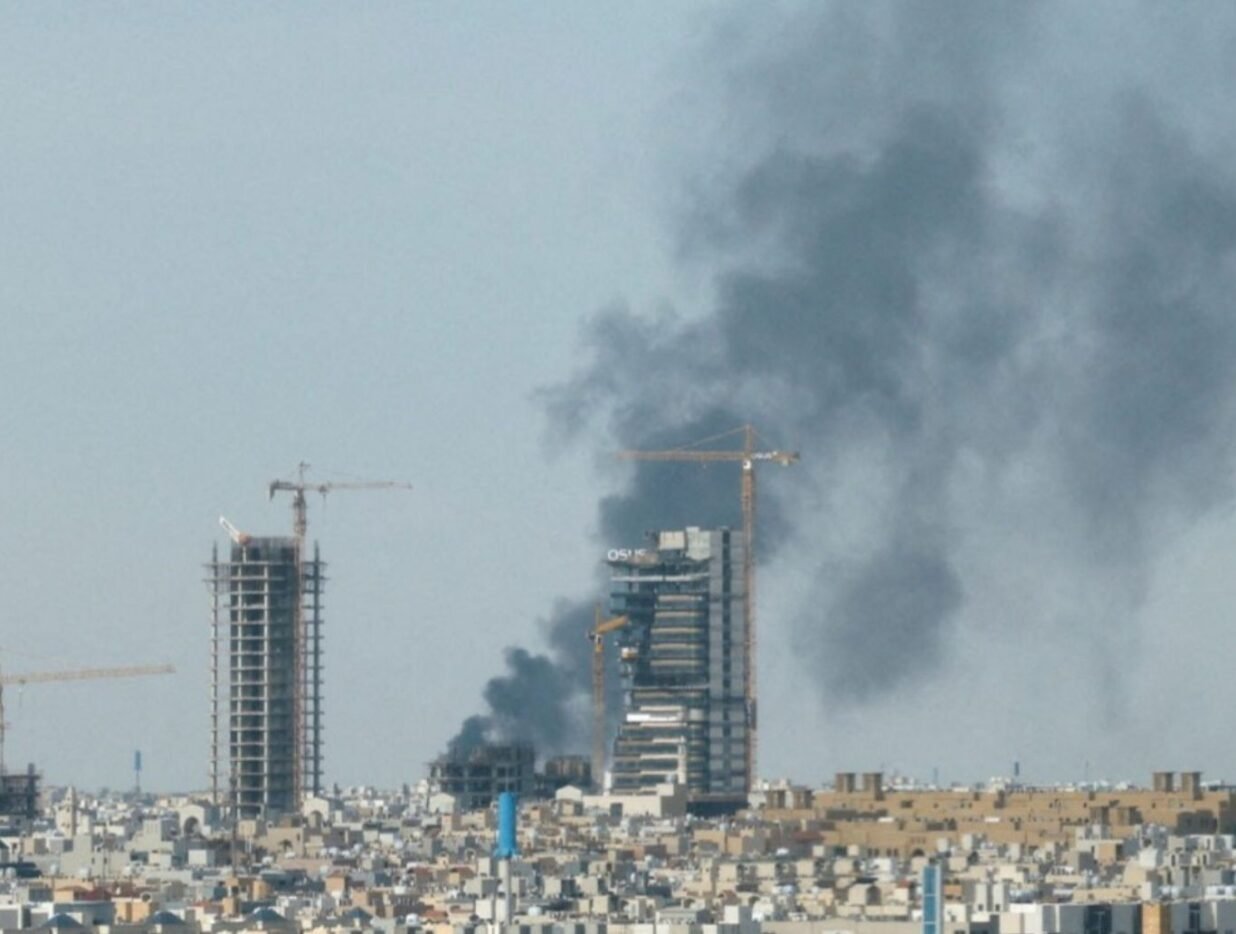
It added, “Since the beginning of the Iranian attacks, 253 ballistic missiles have been detected. Of these, 233 were destroyed, 18 dropped into the sea, and two landed in the country. A total of 1,440 Iranian UAVs have been identified, of which 1,359 were intercepted and 81 fell within the country’s borders. Eight cruise missiles were also discovered and destroyed.
It stated, “These attacks resulted in four deaths among Pakistani, Nepalese, and Bangladeshi nationals, as well as 117 minor injuries. The injured are from the United Arab Emirates, Egypt, Sudan, Ethiopia, the Philippines, Pakistan, Iran, India, Bangladesh, Sri Lanka, Azerbaijan, Yemen, Uganda, Eritrea, Lebanon, Afghanistan, Bahrain, the Comoros, Turkey, Iraq, Nepal, Nigeria, Oman, Jordan, and Palestine. The Ministry of Defence reiterated that it is fully prepared to deal with any threats and will respond strongly to any attempts to undermine the country’s security, assuring the protection of its sovereignty, security, and stability, as well as defending its national interests and capabilities.”
Following the death of Iran’s Supreme Leader, 86-year-old Ayatollah Ali Khamenei, in joint military strikes by the US and Israel on February 28, tensions in West Asia have increased as military operations and retaliatory actions involving Iran, the US, and Israel continue to escalate throughout the region.
The strikes also claimed the lives of other key Islamic Republic officials.
In return, Tehran conducted counter-strikes against US military bases in many Arab countries as well as Israeli assets throughout the region.
- Join our whatsapp channel for daily updates.
- Follow tazatimesnews Telegram Channel for latest news alerts.
- Follow TazaTimesNews on TruthSocial for exclusive updates