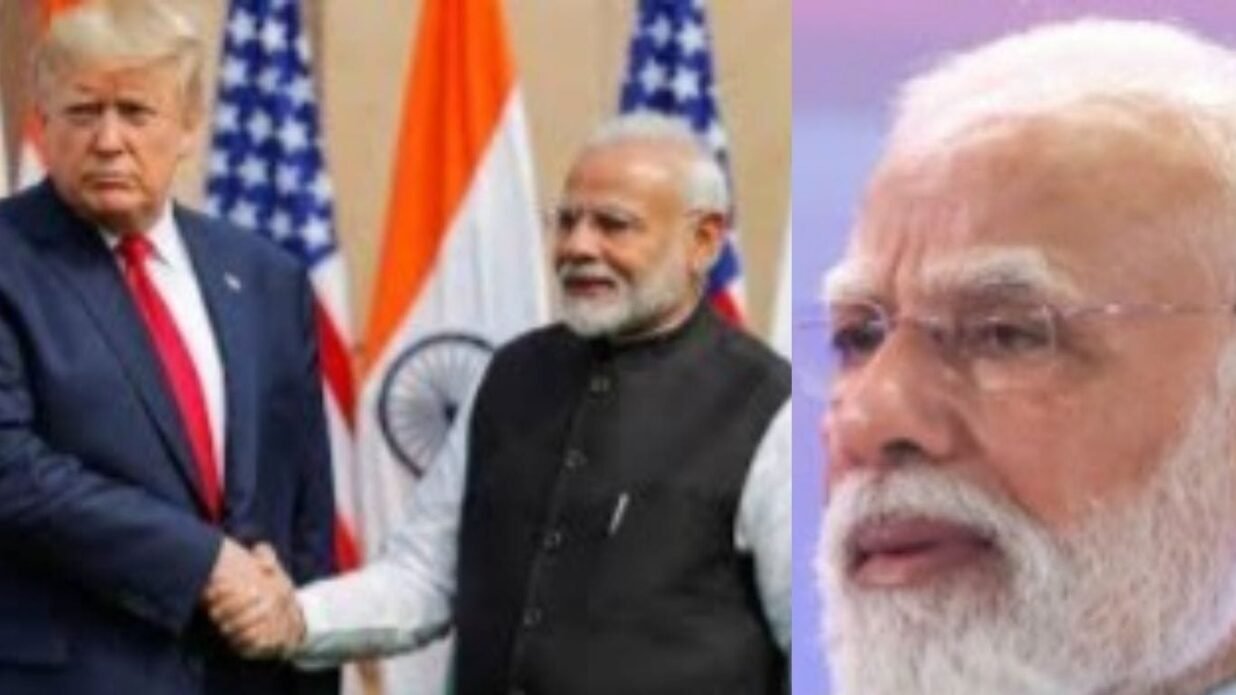
India-US trade deal : India and the United States have reached an agreement under which Washington will reduce its tariffs on Indian goods to 18% from the current 50% in exchange for New Delhi suspending Russian oil purchases and decreasing trade obstacles, according to US President Donald Trump. Following a phone chat with Indian Prime Minister Narendra Modi, the American leader announced the agreement on social media, stating that India would now purchase oil from the United States and possibly Venezuela.
Prime Minister Modi expressed his joy that “Made in India products will now have an 18% tariff reduction.”
“Great to speak with my close buddy President Trump today. We are delighted that Made in India products will now be subject to an 18% tariff reduction. Prime Minister Modi expressed gratitude to President Trump on behalf of India’s 1.4 billion citizens for this magnificent statement.
The prime minister stated that when two major economies and the world’s largest democracies collaborate, it benefits the people and “unlocks immense opportunities for mutually beneficial cooperation”.
India-US trade deal : How India-US Relationship Compares to Other Countries
With the new agreement in place, India is now one of the countries experiencing the lowest tariff rates from the Donald Trump administration as compared to other key Asian economies such as China, Pakistan, Indonesia, Bangladesh, and Vietnam. However, the US imposes significantly higher trade charges on India than on its European counterparts, Japan, and South Korea.

Countries with high tariffs
Brazil (50%), Myanmar (40%), Laos (40%), China (37%), and South Africa (30%) are among the countries with the highest tariffs from the United States.
In Southeast Asia, higher duties apply to:
- Vietnam (20%)
- Bangladesh (20%)
- Pakistan (19%)
- Malaysia (19%)
- Cambodia (19%)
- Thailand (19%)
Countries with Low Tariffs
The countries having the lowest tariff agreements with the US include the United Kingdom (10%), the European Union (15%), Switzerland (15%), Japan (15%), and South Korea (15%).
What We Know About the Terms of the India-US Agreement
According to Reuters, the US was lifting a 25% levy on all imports from India for purchasing Russian oil, which had been added to a 25% “reciprocal” tariff rate.
In addition to purchasing over $500 billion in US energy, including coal, technology, agriculture, and other items, PM Modi pledged to “BUY AMERICAN at a much higher level,” according to Trump’s social media posts.”They will also proceed to reduce their tariffs and non-tariff barriers against the United States to ZERO,” Trump stated of India.
Before Trump took office and boosted US tariff rates to double-digit levels last year, India had some of the world’s highest tariffs, with a simple applied rate of 15.6% and an effective applied duty of 8.2%, according to World Trade Organization data.
What Remains Unclear in the India-US Trade Deal
Trump’s Truth Social post contained little information, such as the start date for lower tariff rates, the deadline for India to halt Russian oil purchases, trade barrier reductions, and which US items India had agreed to purchasing.
As of late Monday afternoon, the White House had not released the presidential proclamation or Federal Register notice required to make the changes official.
Neither India nor the United States has provided any information on the parameters of the agreement or when it will go into force. Russia has likewise not issued a remark on India’s alleged suspension of Russian oil purchases.
Previous trade agreements with other key Asian trading partners, such as Japan and South Korea, included commitments to spend hundreds of billions of dollars in US sectors, but the India announcement made no mention of any specific investments.
- Join our whatsapp channel for daily updates.
- Follow tazatimesnews Telegram Channel for latest news alerts.
- Follow TazaTimesNews on TruthSocial for exclusive updates
- Also reads : Iran–US tensions : Donald Trump Sees Serious Talks, Tehran Says No to Forced Dialogue