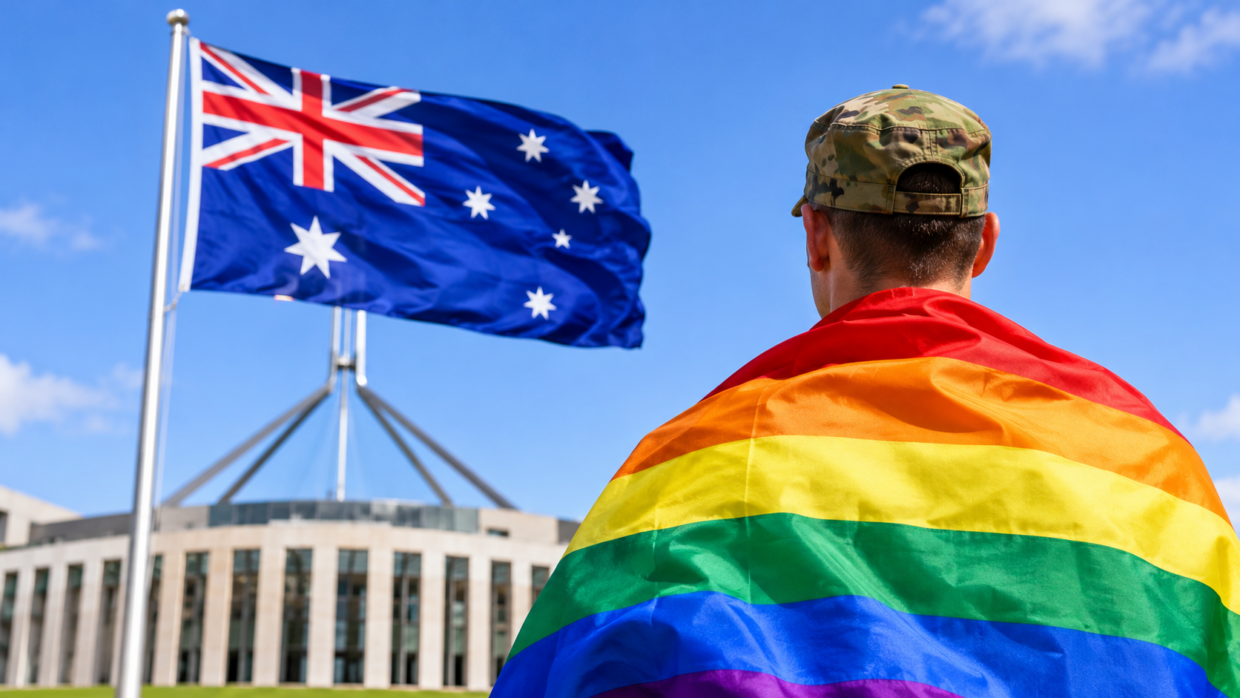
The Australian government has issued a formal apology to LGBTQ persons who have encountered prejudice while serving in the country’s military services. The apology acknowledges the treatment of current and former service members under military regulations that limited their ability to serve openly for decades.
Defence Minister Richard Marles apologised in parliament on Wednesday. He recognised the harm done to military men and their families, saying the country had failed to treat them fairly and respectfully.
Marles stated that LGBTQ troops served Australia but were met with scorn, mistrust, and shame. He also stated unequivocally that the government had failed to respect its obligations to those who served.
Australia LGBTQ Veterans Faced Years of Unfair Rules
Australia progressively eased bans on LGBTQ individuals serving in the military. In 1992, the government lifted the prohibition on lesbian, homosexual, and bisexual persons joining the Australian Defence Force.
Prior to that alteration, consenting homosexual conduct might result in prosecution under military law. Transgender persons faced restrictions for a longer period of time, until the military lifted its ban on transgender service members in 2010.
Marles called the treatment of impacted servicemen as a low point in the Australian Defence Force’s history. He said that certain members were investigated, tracked, questioned, and pressured to leave the service.
Those who were subjected to these measures may have been compelled to retire or received a dishonourable discharge. People were affected by regulations based on their sexual orientation rather than their capacity to serve.
The Defence Minister stated that the treatment had resulted in substantial injury to members of the military. He also acknowledged that their families had been impacted by prejudice.
Marles contended that Australia expected these people to support fairness and equal treatment while denying them same ideals within the military. He stated that the limitations have done little to make the country safer.
Australia LGBTQ Veterans Receive Formal Recognition
Although the ban on homosexual, lesbian, and bisexual troops was lifted in 1992, Marles recognised that amending the legislation did not instantly alter views inside the defence system.
He stated that military culture and thought takes far longer to adjust to legislative changes. This meant that the termination of the statutory prohibition did not immediately solve the challenges that LGBTQ workers faced.
In September, lawmakers enacted laws to expunge prior convictions for gay crimes from military service records, marking another step toward confronting the past.
The legislation permits impacted convictions to be removed from their records. It addresses some of the long-term consequences of prior military policies for those who served in the Australian Defence Force.
The government’s apology also recognises that the consequences of discrimination extended beyond the period when the restrictions were officially in place. For affected veterans, their treatment had become part of their military service history.
Conclusion
Australia’s apology provides formal acknowledgment to LGBTQ service members who faced discrimination under previous military regulations. The restrictions, which included a ban on homosexual, lesbian, and bisexual people until 1992 and transgender troops until 2010, had an impact on those who served, both professionally and personally. Some faced inquiries, pressure to resign, and dishonorable discharge due to their sexual orientation. Another approach addressing the impact of those rules was legislation passed in September that removed prior homosexual convictions from service records. Defense Minister Richard Marles stated that legal improvements alone were insufficient to alter military attitudes. The apology acknowledges the unfair treatment these people received and the country’s failure to treat them with equal respect while they served in Australia.
- Join our whatsapp channel for daily updates.
- Follow tazatimesnews Telegram Channel for latest news alerts.
- Follow TazaTimesNews on TruthSocial for exclusive updates
- Also Read : Israel Election Results: Netanyahu Faces Coalition Challenge as Rivals Weigh Arab Alliance