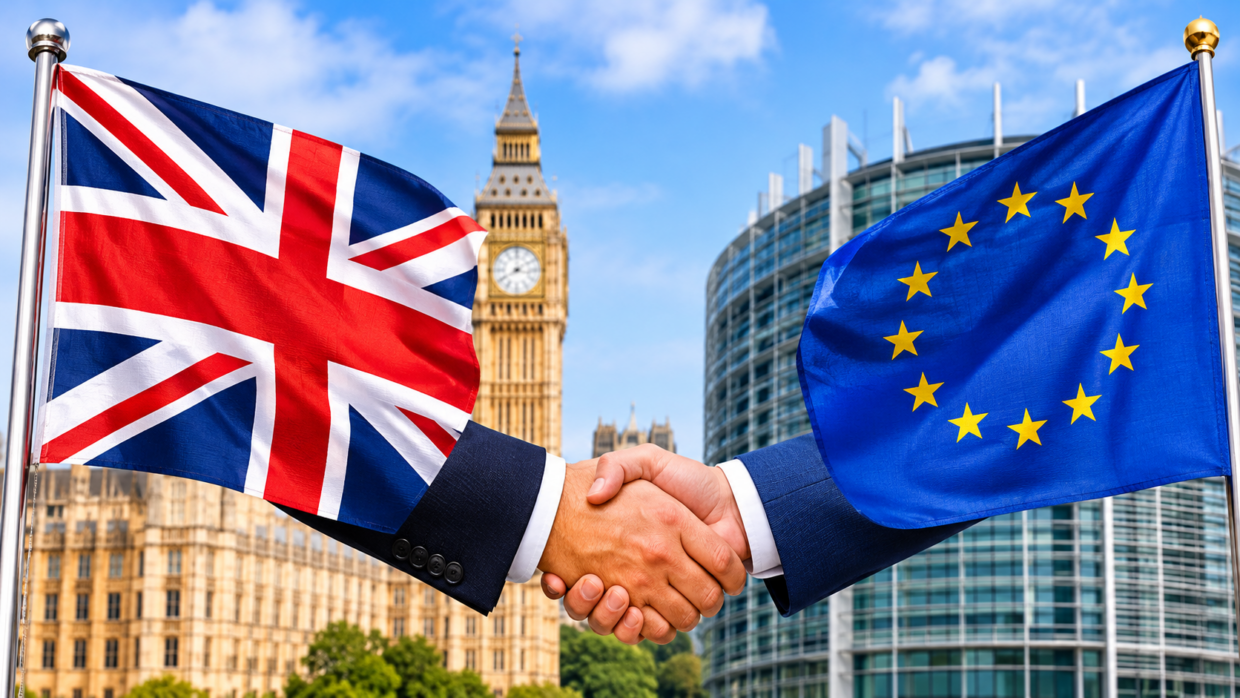
Britain and the European Union are ready to publish a new bundle of agreements on Friday, encompassing food trade, youth employment prospects, and greater economic collaboration. However, disagreements over immigration, university tuition, and trade policy may stymie progress made at the gathering.
The conference is anticipated to bring both sides closer together after years of strained relations since Britain’s withdrawal from the European Union. While London and Brussels aim to increase cooperation, numerous key concerns concerning the future partnership remain unanswered.
The summit occurs at a time when international relations are under strain from a variety of sources, including Russia’s war in Ukraine, US tariffs, China’s control of crucial minerals, and the situation in Iran.
Nearly a decade after the Brexit vote, both parties appear more willing to collaborate. British Prime Minister Andy Burnham has also reignited the debate over the country’s long-term relationship with the bloc.
On Monday, Burnham called Brexit as a “obvious truth” in which Britain lost more than it gained. He said the country should evaluate many options for its future relationship with the EU, including rejoining the bloc.
Britain-EU Reset Targets Easier Food Trade
The movement of agricultural products between the United Kingdom and EU member states is expected to be one of the primary agreements reached during the summit.
Under the proposed system, enterprises might trade animals, plants, and associated commodities without having to go through the certificates and checks that are currently necessary at the border. The anticipated adjustments will also benefit products like sausages and seeds.
Britain predicts that lowering these trade restrictions would add £5.1 billion ($6.70 billion) to its GDP per year.
Another proposed deal focuses on carbon emissions. The UK and the EU are anticipated to join their respective carbon trading schemes. This would allow British and European commodities, particularly steel, to dodge cross-border carbon levies.
Youth mobility is another key component of the proposed plan. Both sides have agreed on a three-year agreement that allows young people to travel for job or study.
However, achieving an agreement on the number of participants necessitated negotiation. Britain initially proposed a 50,000-person limit, reflecting immigration worries that influenced the Brexit vote.
The European Union sought a higher figure. According to EU diplomats, the two parties have reached an agreement on 100,000 spots.
Britain-EU Reset Still Faces Key Disputes
Despite improvements in trade and youth mobility, university tuition remains a contentious subject.
EU countries want their students studying at British universities to pay the same home costs as domestic students. International students typically pay significantly higher rates, frequently three times the home fee.
Instead of guaranteeing the same rates as British students, Britain wants to offer European students much lower costs.
The two sides have agreed to continue conversations and hope to resolve the issue within six months.
Another challenge is the application of trade rules. Britain seeks special treatment under the EU’s proposed “Made in Europe” framework, particularly for its automobile industry.
The European Union has suggested that it may examine this request. As part of the agreement, Britain would be required to comply with relevant EU policies.
If Britain’s policies are brought in line with the EU’s approach, it may be forced to impose duties on Chinese electric vehicles.
The level of future economic cooperation has also sparked controversy. Different stances from Britain and the EU featured in the draft joint statement, indicating that both sides have yet to reach an agreement on the entire scope of their economic cooperation.
Conclusion
The summit on Friday could give an opportunity for Britain and the European Union to improve practical collaboration after years of poor relations. Easier agricultural trade, a linked carbon market, and more chances for young people are among the key areas where both parties anticipate development. However, the unsolved issues concerning university fees, immigration quotas, and compatibility with EU trade laws demonstrate that obtaining compromises will be difficult. Britain also wants better access to European economic projects while maintaining control over its own policies. The outcome of the meeting will be critical in determining how far both sides are willing to go. For the time being, the suggested accords indicate a readiness to reestablish ties, notwithstanding significant divisions.
- Join our whatsapp channel for daily updates.
- Follow tazatimesnews Telegram Channel for latest news alerts.
- Follow TazaTimesNews on TruthSocial for exclusive updates
- Also Read : Trump and Xi Agree on Sensible AI Regulations, US and China May Work Together