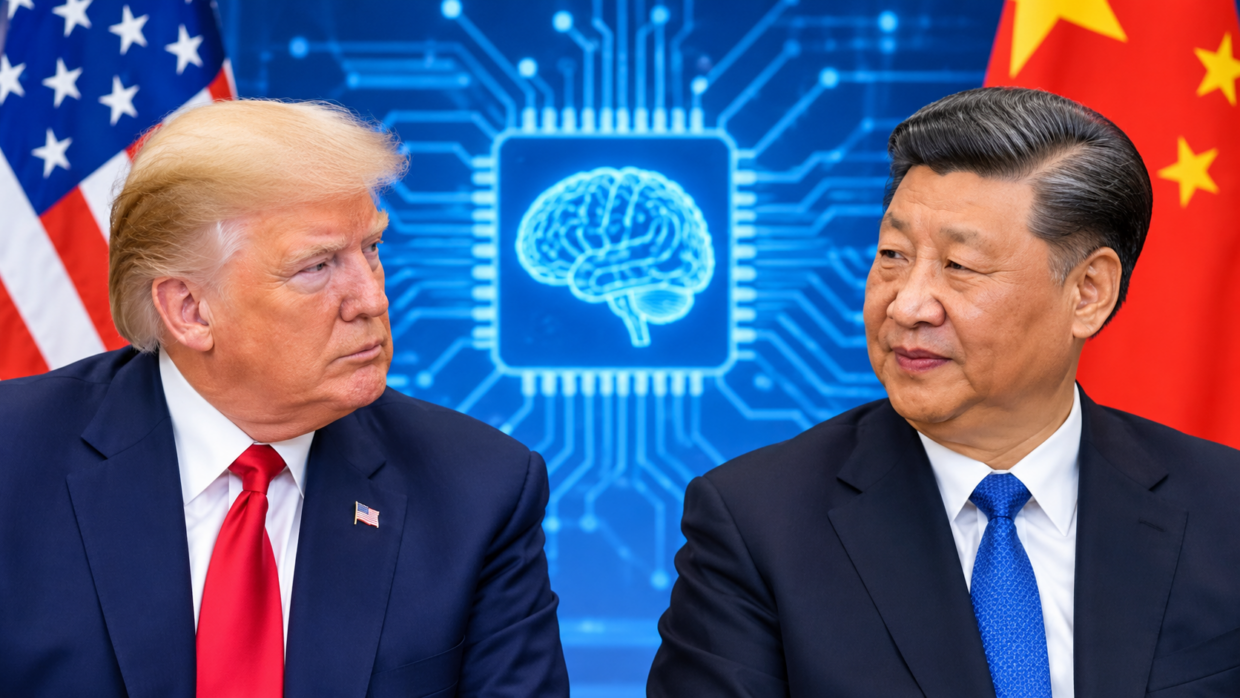
AI Regulations : US President Donald Trump has stated that he and Chinese President Xi Jinping have an interest in developing fair standards for artificial intelligence (AI), with safety being a top priority. Trump suggested that both countries may collaborate on legislation to address the risks associated with quickly evolving technology.
Trump and Xi Agree on Sensible AI Regulations, US and China May Work Together
In an interview with Fox News on Thursday, Trump stated that he and Xi preferred a moderate approach to AI legislation. His comments come after the two leaders met in Shenzhen earlier this week to discuss a number of issues pertaining to US-China ties.
The words indicate a common interest in AI safety, even as Washington and Beijing continue to compete to create increasingly advanced artificial intelligence systems.
AI Regulations Become a Shared Concern for Trump and Xi
Trump stated that both leaders backed reasonable laws aimed at making artificial intelligence safer. Rather than debating a long list of restrictions, he portrayed their stance as an attempt to establish moderate guidelines.
The issue was also addressed by China’s embassy in Washington, which issued a statement Thursday. It asked for increased communication and collaboration between the two governments to address possible AI security risks.
According to the embassy, both parties should work together to mitigate risks associated with artificial intelligence and ensure that the technology remains under human control.
The statement underlines the emphasis that both governments place on addressing the security risks linked with AI. However, the public comments do not include information about a specific regulatory agreement, its proposed rules, or a schedule for cooperative action.
The meeting takes place at a time when artificial intelligence has emerged as a key area of competitiveness between the world’s two major economies. Both countries are attempting to create more powerful AI models, and they see advancements in this field as critical for technical and military leadership.
This competition complicates safety collaboration. The two nations may share concerns about the perils of AI while also competing for the technology and money required to advance it.
Nvidia Issue Remains Separate From AI Talks
Trump also addressed questions about Nvidia and its CEO, Jensen Huang. During his discussion with Xi, he stated that he did not spend much time addressing Nvidia or Huang’s alleged connection to a woman accused of espionage for China.
The issue gained traction after The New York Times ran a piece on it in October. It was stated that Huang was in a love connection with a woman accused of spying for Beijing.
However, Reuters has not independently confirmed the woman’s involvement in spying for China. As a result, the accusation remains unsubstantiated.
Nvidia is the world’s top manufacturer of powerful semiconductors for creating sophisticated artificial intelligence models. Its products are critical to the creation of sophisticated AI systems, making the business a key player in the larger US-China technology struggle.
Washington has tried for years to limit China’s access to Nvidia’s sophisticated technology. The US government has worked to keep these products from aiding the Chinese military.
The issue complicates the two countries’ ties even further. While their leaders have demonstrated an interest in discussing AI safety, access to modern computer technology is a separate issue.
Conclusion
Trump’s remarks following his meeting with Xi Jinping indicate that the United States and China see benefit in discussing the safe development of AI. Both leaders have indicated their support for appropriate AI legislation, while China’s embassy has advocated for improved cooperation and human monitoring. However, their words do not indicate that a formal agreement has been reached or that common rules are ready to be implemented. At the same time, competition over advanced AI models and Nvidia chips remains a major problem between the two countries. The talk focuses on two concurrent challenges: controlling the risks of artificial intelligence and preserving technological leadership. How Washington and Beijing balance these goals is a key challenge.
- Join our whatsapp channel for daily updates.
- Follow tazatimesnews Telegram Channel for latest news alerts.
- Follow TazaTimesNews on TruthSocial for exclusive updates
- Also Read : Elon Musk Regrets Heavy Spending on US Midterm Elections After Republican Defeats