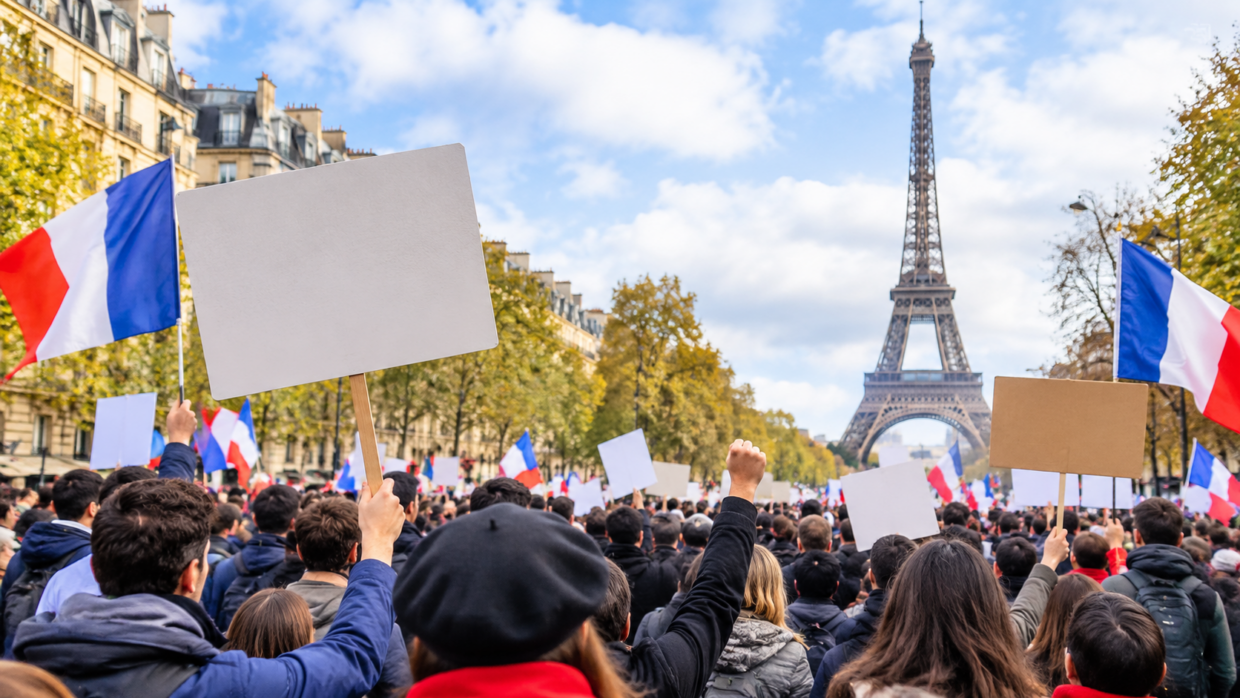
France Protests : On Thursday, France saw widespread protests as students and workers from many industries went to the streets. They advocated for higher salaries, measures to combat growing living expenses, and the preservation of public services.
Teachers, healthcare workers, and railroad workers joined high school and university students in nationwide demonstrations. The demonstrations took held in almost 200 places.
Turnout estimates varied. According to the French Interior Ministry, more than 600,000 individuals participated. However, the General Confederation of Labor (CGT) predicted a crowd of approximately 1.6 million. Both estimates exceeded the numbers reported during the October 17 protests.
The most recent demonstrations highlight how a student-led movement has expanded into a larger campaign. Workers from many industries have now joined the campaign for higher wages and improved public services. This has increased the strain on President Emmanuel Macron’s cabinet.
France Protests Expand From Schools to Workplaces
The demonstrations began in September, after students expressed worries about staff shortages and bad facilities at a high school southeast of Paris. They demanded increased school funding, fewer classrooms, and repairs to damaged structures.
The initiative quickly attracted backing from unions and workers. Their worries included poor pay, job stability, and the growing cost of everyday necessities.
Employees from schools, hospitals, and railroads participated in the marches on Thursday. The demonstrations also caused widespread disruption in educational institutions.
According to government statistics, 81 high schools were blocked off. However, student unions claimed that the number was closer to 1,000. Officials also stated that one-third of higher education institutions were impacted.
Students, laborers, and retirees marched side by side in Paris. Many held banners expressing economic unfairness and concerns about future job opportunities.
Young demonstrators expressed their anxieties about getting jobs. Their parents expressed concern about jobs and family finances. As a consequence, people of various ages and occupations joined the same effort.
France Protests Raise Pressure Over Pay and Budget Cuts
Workers and students have different demands, but both groups want better support from the government. Students are asking for improved classrooms, better school facilities and more education funding.
Workers, meanwhile, want higher wages and pensions. They are also calling for better working conditions and more money for public services.
France’s biggest trade unions have issued warnings about potential job losses and a recession. In a united statement, they stated that the cost of necessary products and services was growing while salaries and pensions were not keeping pace.
Healthcare personnel expressed worry about staff shortages and a lack of equipment. A member of the Private Healthcare Federal Union participated in the Paris march to draw attention to the issues at the private hospital where she works.
Railroad workers were focused on the government’s proposed budget cuts. According to France’s four major rail unions, the ideas might raise poverty, diminish social security benefits, and freeze public worker pay. They also cautioned that the initiatives may restrict financing for environmental programs.
Fabien Villedieu, national secretary of the SUD-Rail union, criticized the government and the national railroad firm SNCF. He also backed strike action as a means of applying pressure on the government.
The administration is already experiencing issues with its expenditure goals. It wants to cut public spending, but parliament is divided. At the same time, France’s public debt is reaching 120 percent of the country’s GDP.
Prime Minister Sébastien Lecornu has scheduled a meeting with trade unions and business leaders for next Monday. As the administration attempts to quell popular outrage, the discussions will center on salaries and the cost of living.
Meanwhile, around 70,000 police officers were deployed throughout France to oversee the demonstrations. The Paris march was generally calm. However, conflicts and tensions have been recorded in Bordeaux, Lyon, Nantes, Rennes, and Toulouse. The Interior Ministry reported that police had arrested at least 448 persons.
The protests are also being held ahead of next year’s presidential election. Marine Le Pen, the far-right leader, is polling high in the contest to succeed Macron. Macron is not eligible for a third consecutive term under the country’s constitution.
The demonstrations increasingly include students and workers from several sectors of French society. Their demands for salaries, employment, education, and public services continue to exert pressure on the government.
- Join our whatsapp channel for daily updates.
- Follow tazatimesnews Telegram Channel for latest news alerts.
- Follow TazaTimesNews on TruthSocial for exclusive updates
- Also Read : Israel Election Results: Netanyahu Faces Coalition Challenge as Rivals Weigh Arab Alliance