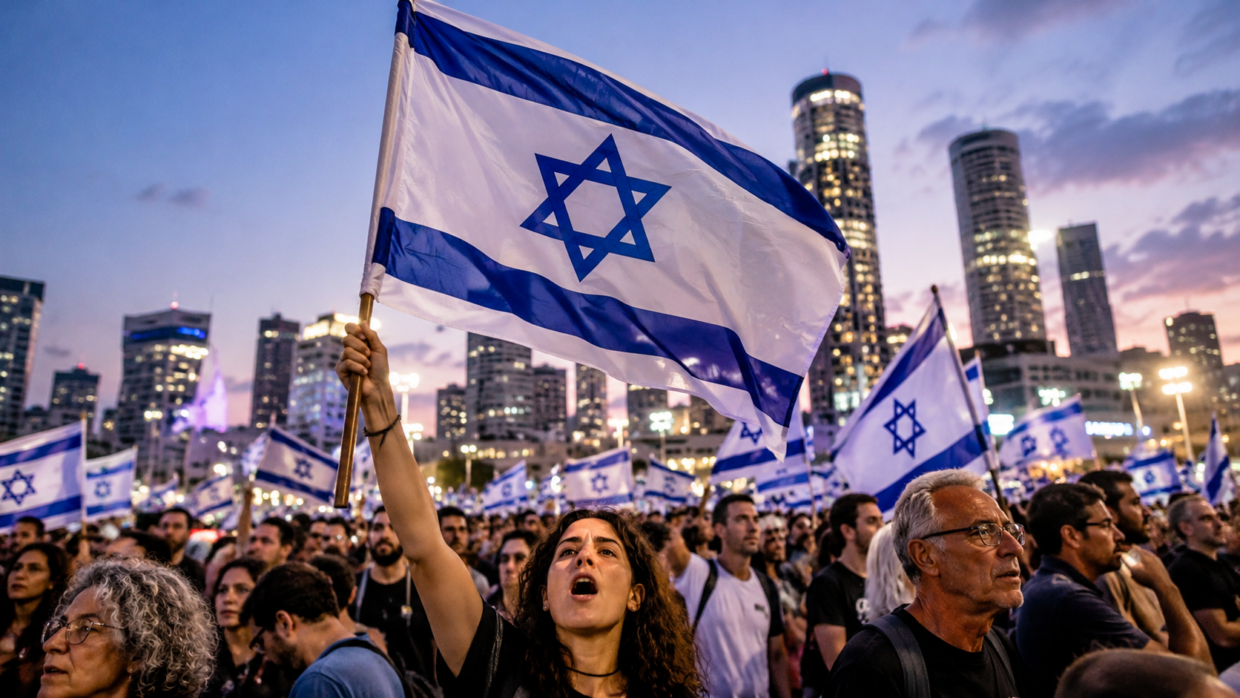
Israel Protests : Hundreds of people rallied in Israel on Saturday, pushing opposition parties to collaborate with Arab political groups to depose Prime Minister Benjamin Netanyahu. The rallies in Tel Aviv and Jerusalem came after an indecisive election that left both political parties short of a parliamentary majority.
The protesters contended that cooperation between Jewish and Arab parliamentarians may pave the way for a different government. However, opposition leaders are still divided on whether to create an alliance with Arab-majority parties or accept their support from outside a coalition.
The debate has intensified after Arab-majority parties made significant gains in Tuesday’s election. Netanyahu has also stepped up his criticism of Arab political leaders, adding to tensions over their role in the country’s political future.
Israel Protests Push Opposition to Work With Arab Parties
Around 500 activists gathered in Tel Aviv, while approximately 100 people attended a separate rally in Jerusalem. Their posters encouraged Jewish and Arab citizens to work together and urged political leaders to support a change in administration.
Ayelet Raz, a 60-year-old psychotherapist who attended the Tel Aviv event, stated that Arab Israelis have the right to participate in the country’s political process. She described the time as a last chance for serious change and urged people to give peace a shot.
55-year-old video artist Sharon Balaban, who was protesting in Jerusalem, called on opposition leaders to be brave and make the correct choice.
The issue of collaboration has become crucial to discussions as a result of the election results. In Israel’s 120-member parliament, anti-Netanyahu Jewish-majority parties won 48 seats. Together, the Arab-majority Raam and Joint List parties secured 19 seats.
When combined, the two organizations could be able to secure 67 seats, which would give them a majority in parliament. However, the notion of depending on Arab legislators to form a government has been challenged by certain opposition groups.
The 66-year-old opposition leader and former military chief, Gadi Eisenkot, has stated that he wants a government that is dedicated to acknowledging Hamas as a terrorist group and Israel as a Jewish, democratic, and liberal state. These demands have already been rejected by Arab leaders.
Although he has stated that he does not want a government that is reliant on Arab parties, Eisenkot has not specifically ruled out obtaining outside assistance from them.
Israel Protests Expose Divisions Over Netanyahu’s Future
The conflict has shown opposing viewpoints within the opposition. Yair Golan, the left-wing Democratic Party’s head, has expressed support for an Arab-led administration. He met with Raam’s leader, Mansour Abbas, on Thursday.
The leader of the right-wing Yisrael Beitenu party, Avigdor Liberman, has adopted the opposite stance. He said that, even with outside parliamentary backing, his party would not join a government that relied on Arab parties.
Arab political participation remains a contentious issue in Israel. Raam previously took part in a governing coalition led by Mansour Abbas from 2021 to 2022, but that government was short-lived. Abbas has indicated that he is willing to participate in another arrangement, while Joint List politician Yousef Jabareen has said he could support Eisenkot in parliament without joining his government.
Saturday’s demonstrations also faced opposition from Netanyahu supporters. More than 100 people held a counter-protest in Tel Aviv, where some participants accused Arab parties of supporting Hamas. Other demonstrators called for opposition figures to join a government led by Netanyahu.
Netanyahu has also raised allegations of electoral wrongdoing involving Arab parties. Police arrested three suspects over an incident involving envelopes of cash, but the election commission described it as an isolated local case. He later alleged that Arab politicians had improperly received support from Qatar, while posting that cooperation with Arab parties would be a disaster for Israel.
President Isaac Herzog is expected to give a party leader 28 days to form a government by Thursday, with a possible 14-day extension. As negotiations continue, the opposition must decide whether cooperation with Arab parties offers a workable path to a majority or creates divisions that could prevent an agreement.
- Join our whatsapp channel for daily updates.
- Follow tazatimesnews Telegram Channel for latest news alerts.
- Follow TazaTimesNews on TruthSocial for exclusive updates


