UN Security Council Reform : India has asked for major reforms to the United Nations Security Council (UNSC), stating that its five permanent members’ veto power should not be exploited to further narrow political objectives. India also wants official reform conversations to begin as soon as possible, with defined timeframes and progress benchmarks.
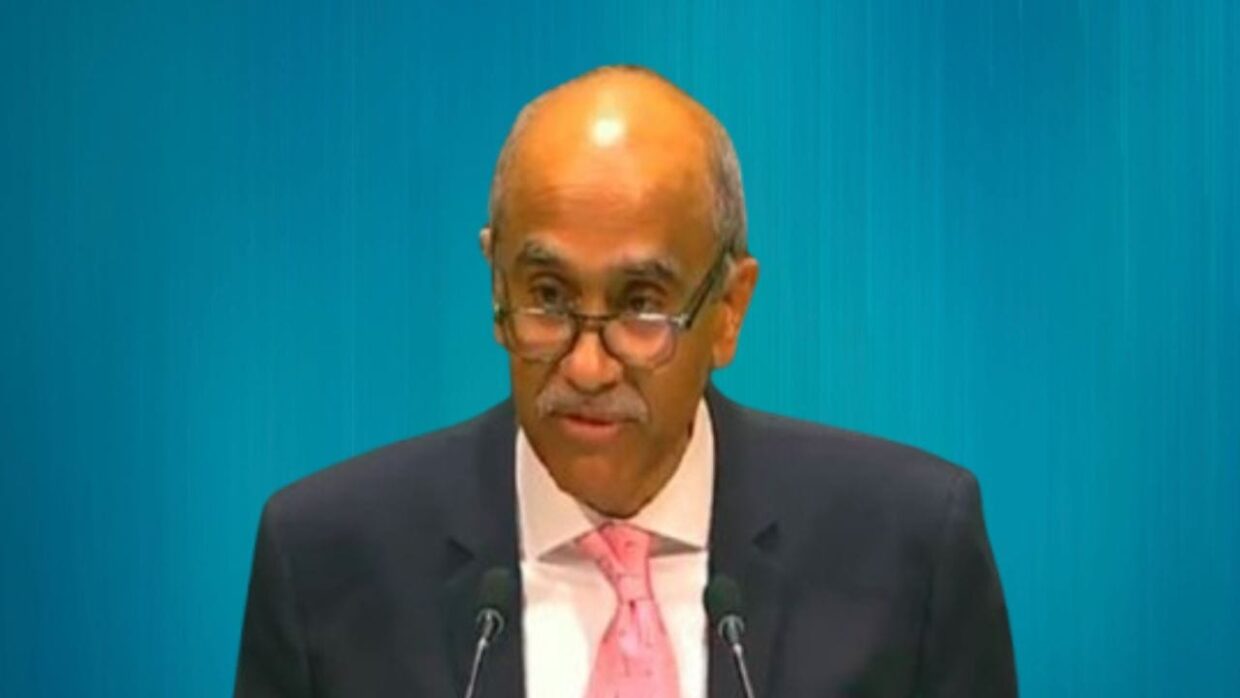
Parvathaneni Harish, India’s Permanent Representative to the United Nations, stated that the veto is a significant obligation, especially when choices threaten world peace and security. He emphasised that permanent members must wield their position with care.
India’s position covers more than the use of the veto. It also calls for changes to membership categories, regional representation, the Council’s size and its working methods. New negotiations, India argues, must address these issues together rather than treating the veto as a separate matter.
India Seeks Major UN Security Council Reform
Harish used the past usage of the veto to illustrate why India feels the current system need improvement. He stated that the veto has been used 331 times on around 200 resolutions during the United Nations’ existence.
He also stated that two of the five permanent members had not exercised their veto in more than three and a half decades. According to India’s statement, the majority of vetoes or threats to exercise the power came from just three permanent members.
In 2022, the UN implemented an accountability provision that requires a debate in the General Assembly anytime a veto is cast. Harish stated that the ongoing use of vetoes following the adoption of UN General Assembly Resolution 76/262 demonstrated that the measure had not yielded the intended results.
India wants text-based discussions to start early, with clear timeframes and targets. Harish stated that the five important areas of Security Council reform must move ahead together.
He argued that changing the veto alone would not alter the way the five permanent members make decisions. For India, wider reforms are needed to address the Council’s structure and the balance of power within it.
India Opposes Unequal Permanent Seats at the UN
India has also expressed worries over what Harish refers to as a “effective or de facto veto”. This refers to circumstances in which a single Council member can prevent agreement on presidential declarations, press releases, or sanctions committee conclusions under the body’s consensus-based working norms.
Such stumbling blocks can exist even when no formal veto is given publicly. India contends that these practices should also be examined while assessing how the Security Council takes decisions.
Harish said that India agrees with the Common African Position on Security Council reform. He stated that if the veto stays part of a reformed Council, all permanent members should have equal rights and duties.
India opposes the creation of a second group of permanent members with lower powers or no veto privileges. Harish contended that such an arrangement would add another layer to an already tough reform process while maintaining current disparities.
He also questioned the consistency of perpetual membership and periodic elections, claiming that the two conceptions were essentially incompatible.
India’s plans thus combine modifications to the veto mechanism with larger reforms to representation, membership, and decision-making processes. The country advocates for discussions that address these concerns as a unified reform package, with defined benchmarks to drive progress.
The underlying takeaway from India’s statement is that effective Security Council reform must promote fairness throughout the organization rather than making restricted adjustments to one aspect of its structure.
.
- Join our whatsapp channel for daily updates.
- Follow tazatimesnews Telegram Channel for latest news alerts.
- Follow TazaTimesNews on TruthSocial for exclusive updates
- Also read : Brazil Election Results: Lula Wins as Bolsonaro Rejects Defeat