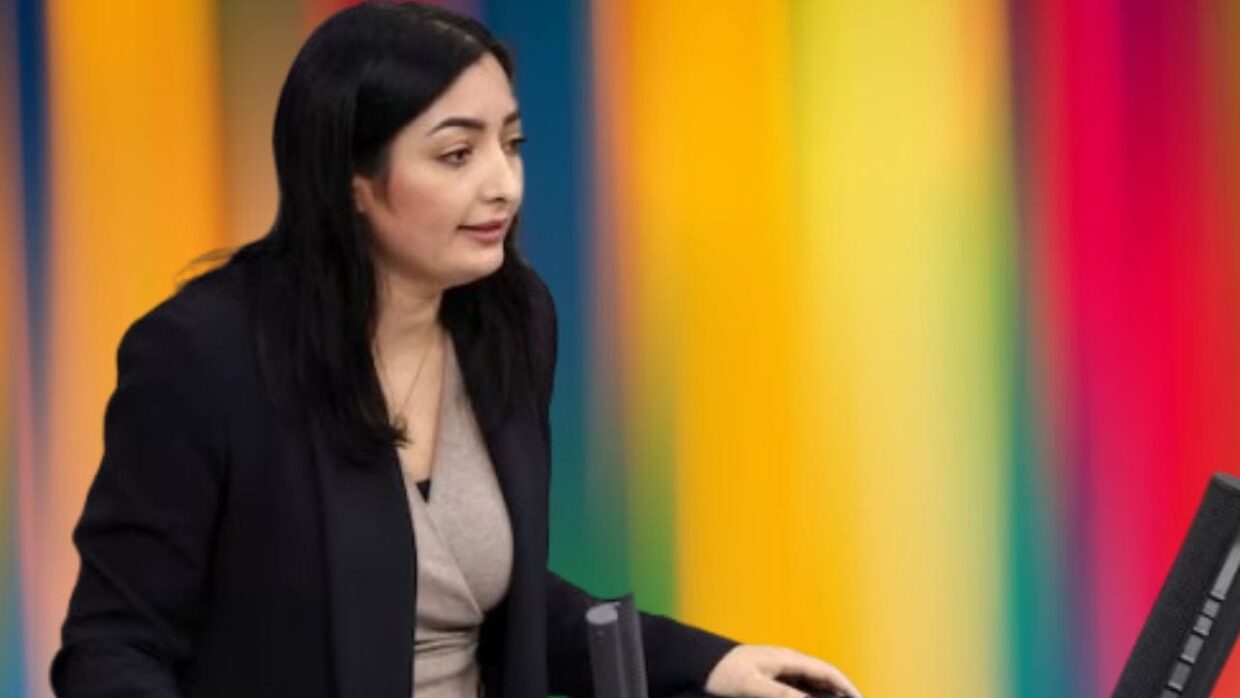
Reem Alabali Radovan, Germany’s development minister, urges the government to establish an exception to borrowing limitations in order to protect Ukraine’s funding. She claims that continuous funding cuts endanger Germany’s civilian assistance as Russian attacks result in more deaths, destruction, and suffering.
During meetings of the International Monetary Fund and the World Bank, Radovan advocated for an exemption from Germany’s constitutional debt brake. She stated that her ministry supplies a significant portion of Germany’s civilian assistance to Ukraine, but that its available budget has declined drastically in recent years.
The minister warned that existing financial constraints may make it hard to continue providing assistance at the current level. She further said that the investment promotes stability in both Ukraine and Europe.
Germany Ukraine Aid Faces Budget Pressure
This year, Radovan’s ministry is projected to provide approximately €330 million ($371 million) in funding to Ukraine. This contrasts to €670 million in 2022 and €750 million in 2023, indicating a significant reduction in monies available through her department.
Radovan stated that the issue was not merely one of political priorities. She noted that reductions in development assistance were leaving her ministry with fewer resources to continue its work in Ukraine.
The burden is especially harming programs that rely on flexible funding. According to Radovan, much of her ministry’s funding is already set aside for long-term projects, whereas crisis-response programs rely more largely on funds that have yet to be awarded.
As a result, these flexible programs bore the brunt of the reductions. The minister stated that while she was already prioritising help for Ukraine, she also needed to address other crises and conflicts.
Germany’s debt brake is a constitutional limit on government borrowing. Radovan’s proposal would make an exception for Ukraine-related money, allowing the government to solve the shortfall without relying entirely on the existing development budget.
Germany Ukraine Aid Proposal Divides Coalition
Foreign Minister Johann Wadephul, a member of Chancellor Friedrich Merz’s conservative Christian Democratic Union (CDU), has endorsed Radovan’s plan. Radovan belongs to Merz’s governing coalition’s junior partner, the Social Democrats.
Other CDU members, on the other hand, are against extending exceptions to the nation’s borrowing regulations. Some party members are hesitant to expand existing exclusions, which have already been authorised for things like defence spending.
The dispute underscores the difficulty the administration faces in striking a balance between budgetary constraints and obligations to foreign aid. Radovan contends that if the cuts continue, her ministry will not be able to maintain the same level of support under the current financial arrangements.
She has also supported Merz’s demand that foreign nations help Ukraine more. Germany was already the biggest supporter, according to Radovan, and other countries could and ought to do more.
Under Germany’s borrowing regulations, the minister’s request would grant financing relating to Ukraine a distinct status. However, the idea is met with difficulty due to disagreement within the governing coalition, and it is unclear from the information presented whether an exemption will be granted.
Radovan’s main worry at the moment is that Germany’s civilian aid to Ukraine may be limited due to dwindling development funds. While her ministry continues to handle other foreign problems, she is looking for a modification to the borrowing framework to help sustain that support.
- Join our whatsapp channel for daily updates.
- Follow tazatimesnews Telegram Channel for latest news alerts.
- Follow TazaTimesNews on TruthSocial for exclusive updates
- Also reads : Royal Enfield Classic 650 Hypershift Launched at Rs 4.26 Lakh