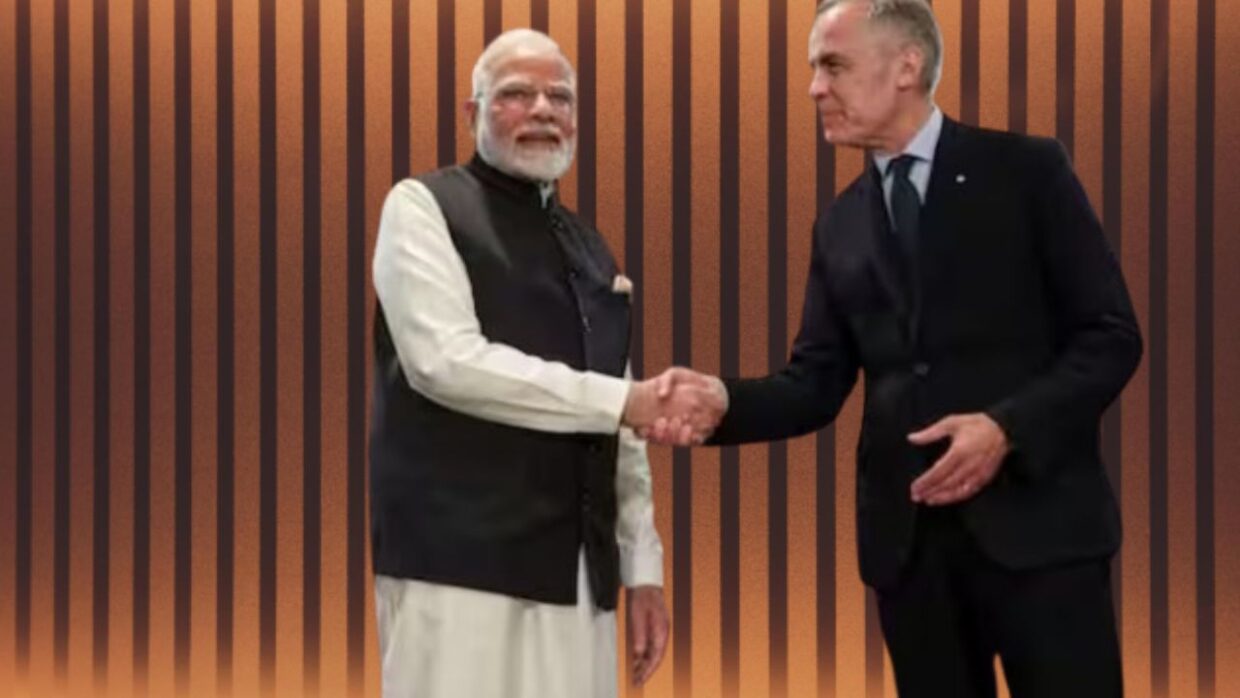
India-Canada Trade Deal : India and Canada are aiming to enhance economic cooperation beyond a proposed trade agreement, with important areas of discussion including energy, essential minerals, technology, and investment. Prime Minister Narendra Modi and Canadian Prime Minister Mark Carney discussed ways to boost bilateral cooperation over the phone on Tuesday.
The two presidents underlined their commitment to finish discussions for a Comprehensive Economic Partnership Agreement (CEPA) as soon as possible. The proposed agreement aims to double bilateral commerce by 2030.
Their debate also included commerce, finance, security, and the consequences of geopolitical instability in the Indo-Pacific. Both leaders emphasised the need of having trusted partners in energy and agriculture. Carney also complimented Modi for his leadership in attempting to find a diplomatic settlement to Russia’s aggression in Ukraine.
The renewed interaction comes as corporate leaders and government officials collaborate to strengthen economic relations. However, the precise provisions of the planned trade agreement have yet to be approved.
India-Canada Trade Deal Puts Energy and Minerals in Focus
Canadian International Trade Minister Maninder Sidhu is leading a team of approximately 300 business representatives to India from October 12 to 17. Canada touted the expedition as its largest trade delegation to India in over 30 years.
The organization is looking for opportunities in aerospace, sustainable energy, technology, life sciences, agriculture, and forestry. These areas are part of a larger push to foster commercial collaboration between companies in both nations.
The topics center around energy security and vital minerals. India is looking for reliable resource supplies to fuel economic growth and industry, while Canadian businesses are looking for opportunities in India’s increasing market.
Cooperation could also include industrial investment, research, and supply chain growth. Critical minerals are important for clean energy technologies and sophisticated manufacturing, while particular obligations will be determined by talks and future business agreements.
The proposed collaboration also covers artificial intelligence, financial services, and aircraft. Following Modi and Carney’s most recent talk, no new commercial agreements in these areas were officially reported.
The fifth round of CEPA negotiations was held in Ottawa from October 5 to 9. Both countries intend to finalise the agreement by the end of 2026.
India-Canada Trade Deal Could Expand Market Access
The actual advantages will be determined by the final conditions, which include tariff reductions and other commitments agreed upon by both sides.
Canada sends vegetables, mineral fuels and oils, and wood pulp to India. Imports from India include precious stones and metals, as well as industrial and pharmaceutical products.
A trade pact could increase prospects for Indian exporters to sell items in Canada. Meanwhile, Canadian corporations desire better access to Indian consumers and industrial growth enterprises.
However, the outcome will depend on the concessions secured during negotiations and how the agreement treats sensitive industries. Better market access alone would not guarantee gains for every business sector.
Canada is likewise looking to expand its trade beyond the United States. Its Indo-Pacific Strategy, which was presented in 2022, prioritises commerce, regional security, sustainability, and people-to-people links.
Financial cooperation is expanding alongside trade negotiations. In August, Finance Minister Nirmala Sitharaman and Canadian Finance Minister François-Philippe Champagne conducted the first India-Canada Economic and Financial Dialogue. India has also signalled a willingness to commence negotiations on a separate bilateral investment treaty.
Anita Anand, the Canadian Foreign Minister, will visit India from October 13 to 16 to further negotiations on trade, energy, security, and military. Modi and Carney have agreed to keep in touch ahead of Modi’s visit to Canada in December.
The goal of completing the CEPA negotiations by the end of 2026 remains unchanged, but the final outcome will be determined by the terms reached by both governments.
- Join our whatsapp channel for daily updates.
- Follow tazatimesnews Telegram Channel for latest news alerts.
- Follow TazaTimesNews on TruthSocial for exclusive updates
- Also read : Panama Earthquake: 200 Aftershocks Follow Powerful 7.7 Quake