
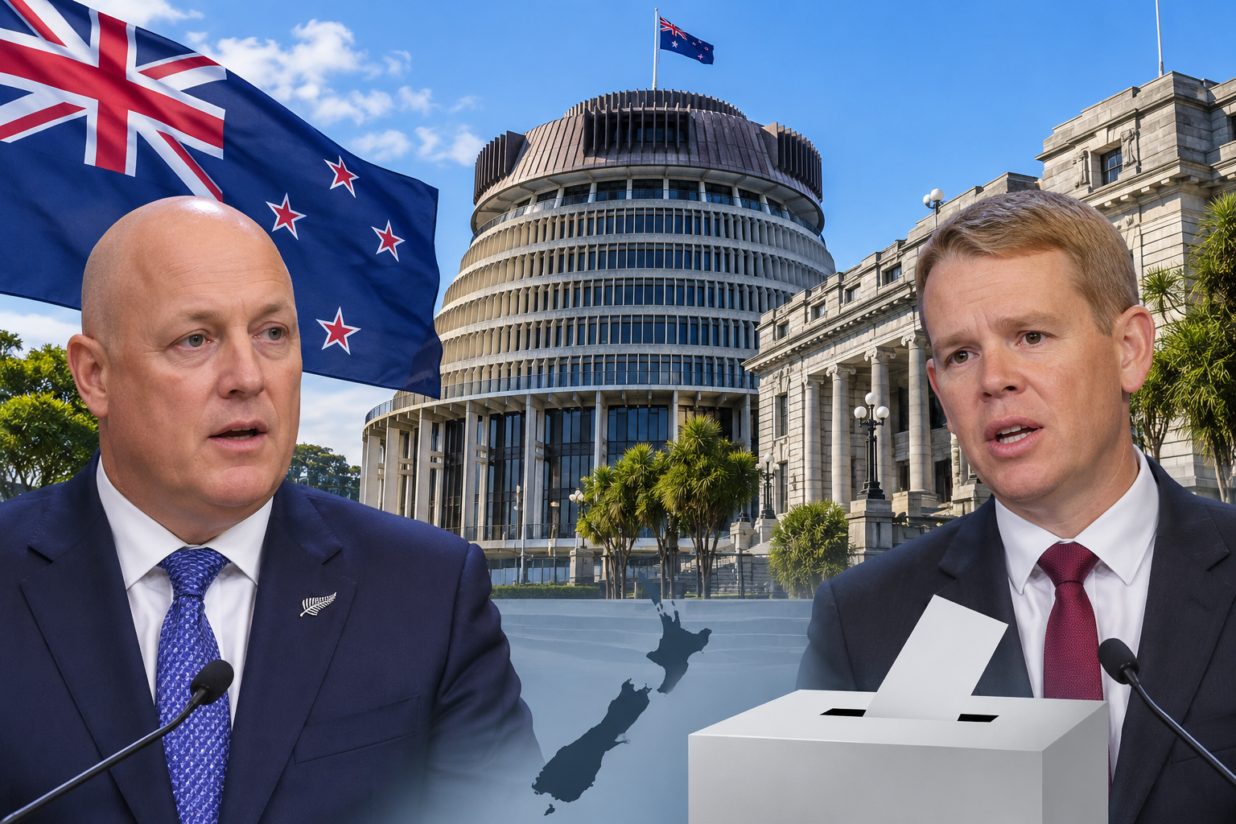
The New Zealand Election 2026 campaign is moving into its formal phase after parliament held its final sitting before the November 7 election. Prime Minister Christopher Luxon and opposition Labour leader Chris Hipkins used their final speeches to present very different views of the government’s three-year record.
The final debate in Parliament provided both leaders with one more chance to address citizens before the campaign season begins. The election is expected to be hotly contested, with neither party having a clear route to victory.
New Zealand Election 2026 Campaign Focus
Luxon defended the record of his centre-right government and said he was proud of what it had achieved during its term. He pointed to economic growth, record exports and lower government debt as some of the government’s key achievements.
The prime minister also used his speech to appeal for another term in office. He said New Zealand still had strong potential and urged voters to make the right choice when they go to the polls.
Luxon’s National Party is hoping to stay in power and could continue to collaborate with coalition partners ACT New Zealand and New Zealand First. The ad is intended to emphasise household costs, the economy, and public services.
Opinion surveys reveal a close contest, with support swinging between the ruling coalition and left-wing parties. Neither side has regularly demonstrated enough support to achieve a parliamentary majority on its own.
Also reads : Kasim, the son of Imran Khan alleges ‘death cell’ seclusion and seeks proof of life despite global appeal.
Hipkins Attacks Government Record
Labour leader Chris Hipkins had a sharply different assessment of the government’s performance. He claimed that the administration had failed to keep its primary commitments and had not done enough to alleviate household financial stress.
Hipkins claimed that the government has exacerbated the expense of living for many New Zealanders. He also accused it of having the wrong goals and being disconnected from the concerns of citizens across the country.
He told parliament that the government had run out of ideas and time after failing to deliver what it had promised during the three-year term.
The final legislative sitting now prepares for the next stage of the electoral process. Parliament is set to be formally dissolved on October 1, which will kick off the official election process ahead of the November 7 vote.
As the election approaches, both main political parties will focus on gaining voter support. The cost of living, economic management, and public services are expected to be key topics throughout the campaign.