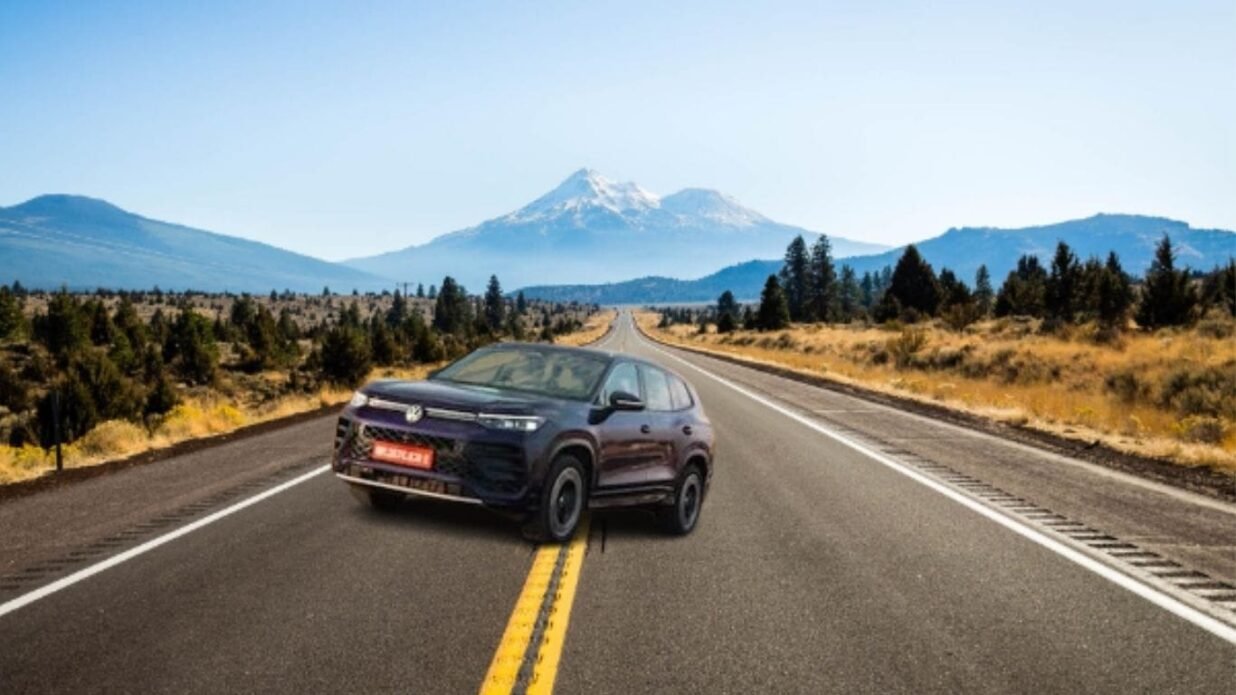
Volkswagen Tayron R-Line : Volkswagen has unveiled the Tayron R-Line, their latest flagship SUV for the Indian market. It is a full-size three-row SUV built in India at Volkswagen’s Pune plant on the MQB Evo platform. It is marketed as a premium, road-focused family SUV with cutting-edge technologies and a gasoline-only powerplant.
Engine & Performance of Volkswagen Tayron R-Line
The Tayron R-Line is powered by Volkswagen’s 2.0-liter TSI EVO turbo-petrol engine. It produces 204 PS between 4,500 and 6,000 rpm and 320 Nm of torque starting at 1,500 rpm. This power is transmitted to all four wheels via a 7-speed DSG automatic transmission and Volkswagen’s 4MOTION all-wheel drive technology.
The Tayron’s main strength is its drivetrain. The throttle response is consistent, and the midrange torque makes overtaking simple and stress-free. The DSG gearbox is swift and smooth, especially at cruising speeds when the engine maintains its torque band with little effort.
Although it is not a loud or athletic engine, it produces power in a highly controlled and sophisticated manner. It is not trying to be spectacular; it simply does its function with precision. This powerplant seems balanced and reliable on extended interstate journeys.
Also reads : New Expressway: Beginning in February, vehicles on the Delhi-Dehradun Expressway will go at full speed.
Driving Dynamics and Ride Quality
The Tayron’s dynamic ability sets it apart from most SUVs in this market. For a huge three-row SUV, it feels surprisingly stable. Even at high speeds, the Tayron retains a steady and controllable position. Long undulating portions do not disturb the cabin, and vertical movement is limited.
Body roll is well-controlled, providing the driver confidence during lane changes or quick corners. The steering is not particularly chatty, but it is precise. This accuracy is important during long travels since it lowers driver fatigue and allows the car to track straight even on bad roads.
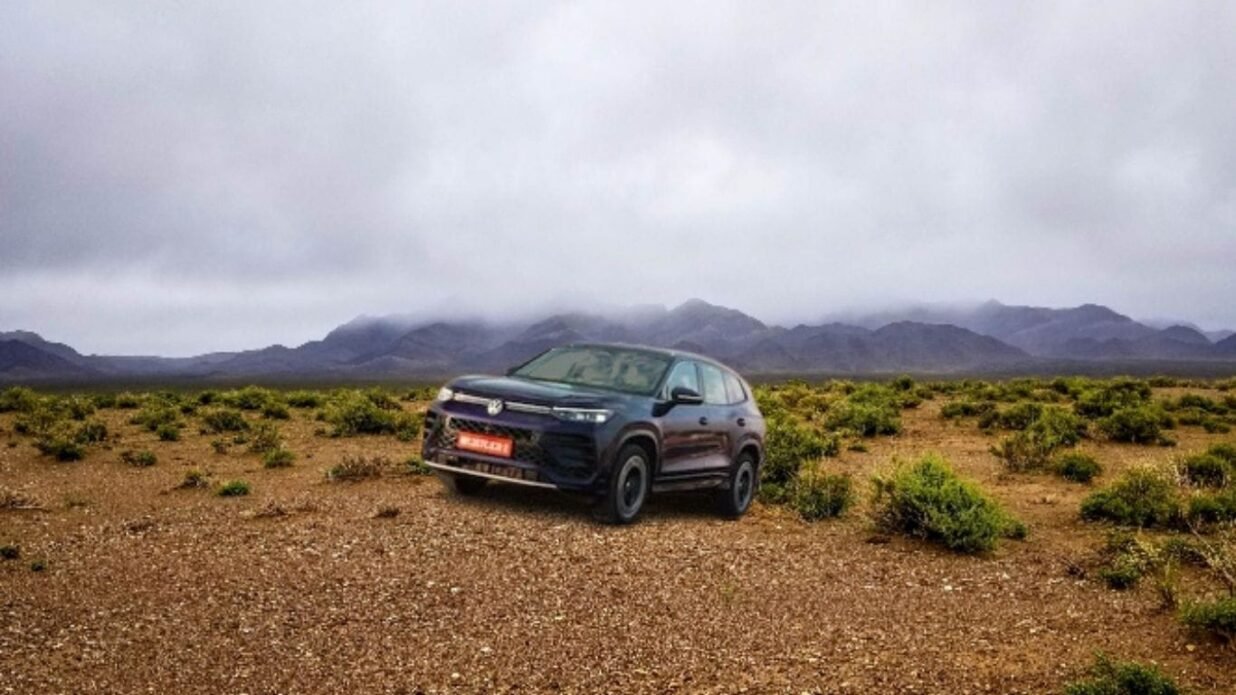
The 4MOTION all-wheel drive system also helps to improve stability. It responds automatically when it detects a lack of grip, sending power where it is required. On damp and loose conditions, the technology provides additional reassurance to the driver.
Simply put, the Tayron drives more like a well-engineered road SUV than a cumbersome high-riding vehicle. Many consumers may compare it to the Toyota Fortuner because they are both seven-seat SUVs, but the driving experience is very different. The Fortuner is body-on-frame and more designed for tough use. The Tayron is a monocoque SUV designed for comfort and driving stability. When you start driving, the difference is immediately noticeable.
Cabin Space and Comfort
The Tayron’s cabin is designed to withstand extended periods of driving. The front seats are Volkswagen’s ergoActive Plus seats, which have ventilation and an eight-program massage feature. These characteristics are not purely for show. They help to alleviate fatigue and improve comfort during long trips.
The second row provides ample legroom and shoulder space. The third row is suitable for adults traveling short distances, making it ideal for family vacations. It’s not as big as the Toyota Fortuner, and Volkswagen’s not claiming it is. Instead, the room is designed for families who prioritize flexibility above towering size.
Solid insulation is used in the cabin. Road and wind noise are kept out, even at greater speeds. With the seats folding, the Tayron can hold up to 1,905 liters of luggage, making it ideal for airport runs and road excursions.
Technology & Safety
The Tayron is one of Volkswagen’s most technologically advanced cars in India. It has Level 2 ADAS with adaptive cruise control, lane assist, and park assist plus. On highways, adaptive cruise maintains distance smoothly and responds predictably.
One of the most notable features is the augmented-reality head-up display. It displays navigation and speed information in the driver’s line of sight, avoiding the need to consult the instrument cluster.
Additional major features include:
- 15-inch touchscreen.
- Digital instrument cluster.
- 360 degree camera
- Harman Kardon 11-speaker system (700 Watt)
- Nine airbags, including a center airbag.
- Three-zone climate control.
- Wireless Apple CarPlay and Android Auto
This level of technology distinguishes it from older ladder-frame SUVs like the Fortuner, which appear archaic in contrast. Buyers who value modern amenities will see the difference right away.
Where it could have been better.
No SUV is perfect, and buyers should be aware of a few practical limits with the Tayron.
First and foremost, Volkswagen only provides a petrol engine. Some purchasers may be looking for diesel or hybrid choices, but these are not yet available.
Second, the touchscreen includes the majority of the essential controls. This contains climate settings as well as a variety of daily functions. Although the screen is wide and responsive, physical buttons would have made these functions easier to complete while driving.
Third, the suspension prioritizes stability. On rougher, sharper potholes, the cabin may feel the impact more than anticipated. It is comfy overall, but not the most plush in the market.
Finally, Volkswagen is yet to reveal the price. Because it is made in India at the Pune factory, we anticipate a price range of Rs 37 lakh to Rs 43 lakh ex-showroom. This price will be essential as the Indian client base evolves. Many shoppers are making value-driven judgments rather than simply seeking for the lowest price.
At the same time, people still value a good deal, and Volkswagen must strike a delicate balance between perception and pricing if it wants to maintain strong sales.
- Join our whatsapp channel for daily updates.
- Follow tazatimesnews Telegram Channel for latest news alerts.
- Follow TazaTimesNews on TruthSocial for exclusive updates