
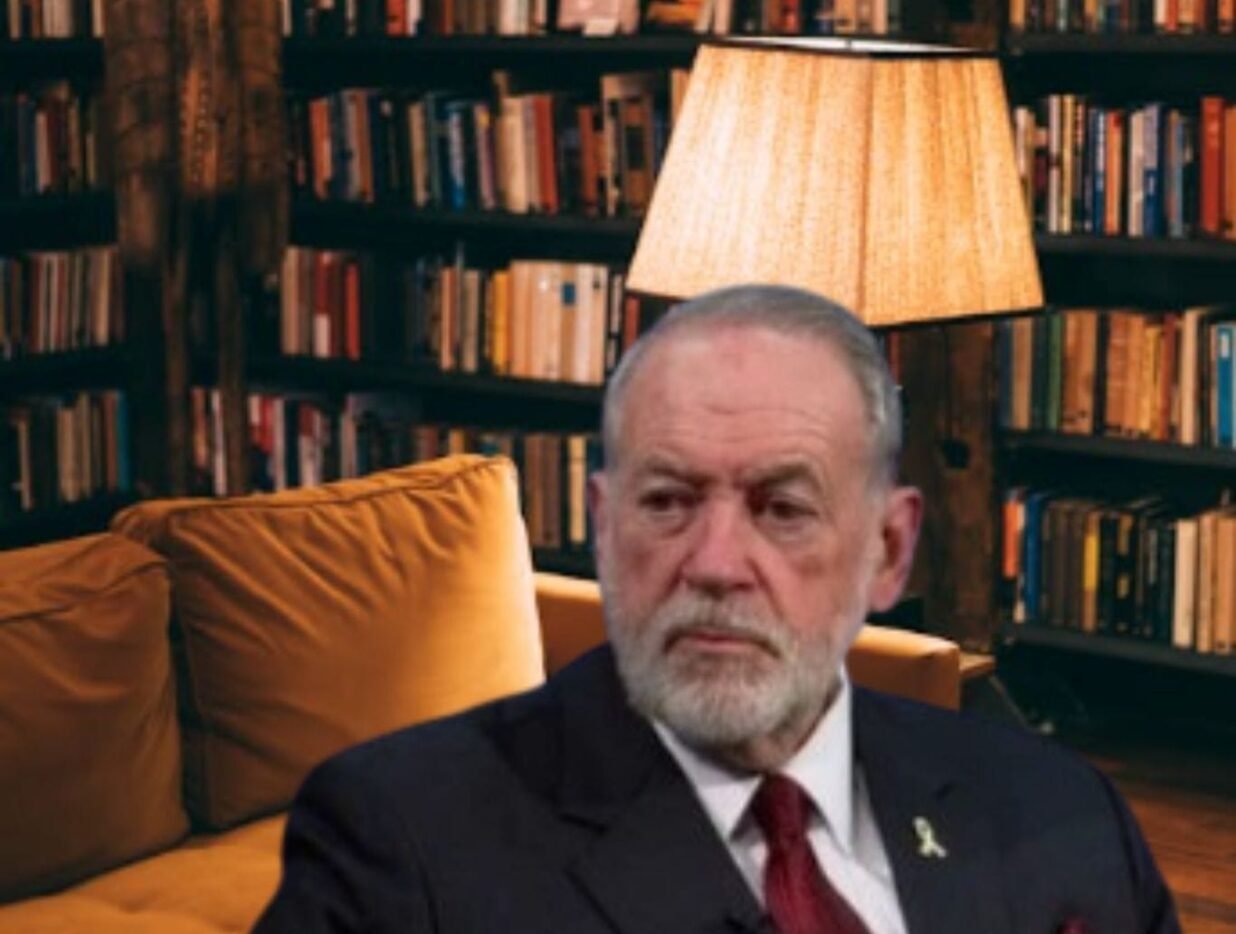
US ambassador to Israel : Arab and Muslim nations severely attacked US Ambassador to Israel Mike Huckabee on Saturday for remarks implying that Israel would be justified in claiming much of the Middle East.
The outcry came in response to Huckabee’s statements in a Friday interview with conservative commentator Tucker Carlson.
Carlson cited a biblical interpretation that Abraham’s descendants were promised land ranging from the Nile to the Euphrates and questioned Israel’s right to that territory.
According to Press, Huckabee said that it “would be fine if they took it all,” but added that Israel was not pursuing territorial expansion and had a right to security inside the land it lawfully holds.
Huckabee has continuously opposed a two-state solution and has previously questioned the use of the word “Palestinians” to describe Arab ancestors of those who resided in British-controlled Palestine.
Also reads : Modi and Lula da Silva Discuss Key Issues in High-Level Meeting
In the Carlson interview, Huckabee appeared to soften Carlson’s expansive biblical framework, stating he was “not sure we’d go that far,” but admitting it would involve “a big piece of land.”
US ambassador to Israel : Criticism from Egypt, Jordan, and Saudi Arabia
Egypt, Jordan, Saudi Arabia, the Organisation of Islamic Cooperation, and the League of Arab States all reacted strongly to the comments.
In separate statements, they described the views as radical, offensive, and contrary to the official US position.
Saudi Arabia’s foreign ministry condemned the comments as “extremist rhetoric” and “unacceptable,” and demanded the US State Department to clarify its position. Egypt’s foreign ministry described them as a “blatant violation” of international law, claiming that Israel “has no sovereignty over the occupied Palestinian territory or other Arab lands.”
The Arab League cautioned that such utterances could exacerbate religious and national tensions.
Neither Israel nor the United States responded immediately.
Israel’s borders have changed over time due to wars, ceasefires, and peace treaties. During the 1967 war, Israel took Jordan’s West Bank and east Jerusalem, Egypt’s Gaza and Sinai, and Syria’s Golan Heights. Israel later reclaimed Sinai as part of a peace accord with Egypt and withdrew from Gaza in 2005.
Israel has tightened its grip on the occupied West Bank in recent months, increasing settlement development and legalising outposts. US President Donald Trump has stated that he will oppose any Israeli move to seize the territory.
Palestinians have long sought an independent state in the West Bank and Gaza, with east Jerusalem as its capital, a goal shared by many in the international community.
Israel’s territorial position has also changed since the Gaza conflict began. Under a cease-fire agreement, Israeli forces retreated to buffer zones but still control large areas of Gaza.
- Join our whatsapp channel for daily updates.
- Follow tazatimesnews Telegram Channel for latest news alerts.
- Follow TazaTimesNews on TruthSocial for exclusive updates