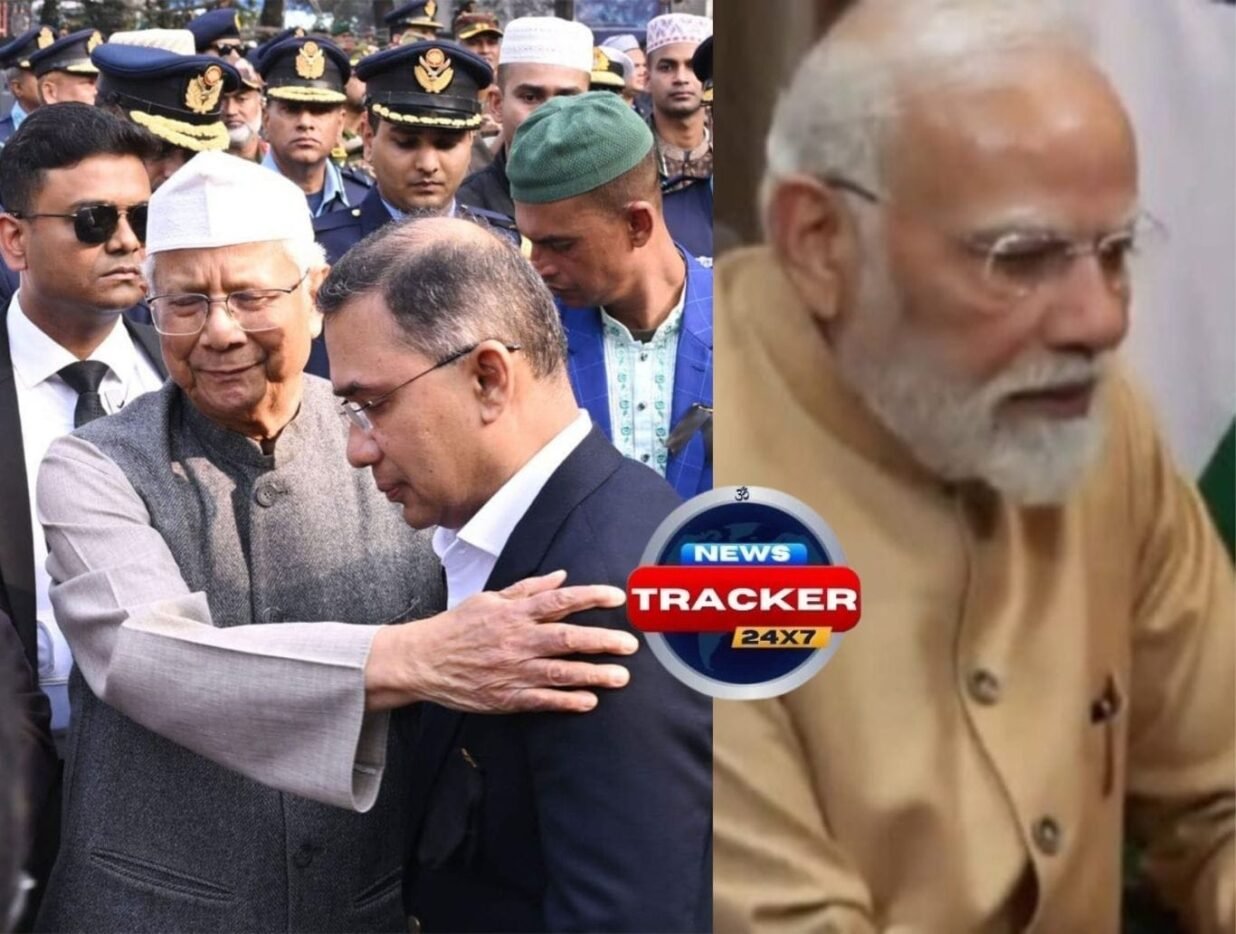
Dhaka: Bangladesh’s newly elected government, led by Bangladesh Nationalist Party (BNP) chairperson Tarique Rahman, is set to take oath on Tuesday, and the interim government’s Chief Adviser, Professor Muhammad Yunus, has invited leaders from 13 countries, including China, India, and Pakistan, to attend the cabinet swearing-in ceremony, Prothom Alo reports.
According to diplomatic reports, the countries invited so far are China, Saudi Arabia, Turkey, India, Pakistan, the United Arab Emirates, Qatar, Malaysia, Brunei, Sri Lanka, Nepal, the Maldives, and Bhutan.
Tarique Rahman new cabinet’s swearing-in ceremony will take place next Tuesday afternoon
The new cabinet’s swearing-in ceremony will take place next Tuesday afternoon at the National Parliament’s South Plaza.
On Saturday, BNP leader ANM Ehsanul Hoque Milan expressed hope that Prime Minister Narendra Modi would be invited to the upcoming government swearing-in event, emphasising the party’s inclusive foreign policy objective of “friends to all, malice to none”.

Addressing reporters in Dhaka, Milan said of inviting South Asian leaders to the event, “I’m not sure what they’re doing, but hopefully they’ll invite everyone.” I’m not sure exactly, but he (PM Modi) should be invited. It’s common courtesy. The organisers will handle it. I hope the entire world will be with us.”
Also reads : Nikhil Gupta: The Indian Citizen Linked to Alleged Khalistani Murder Plot
He emphasised the party’s broader perspective on international affairs by saying, “Friends to all, malice to none.”
The BNP thanked Indian Prime Minister Narendra Modi for his congratulatory letter after the party won a landslide victory in Bangladesh’s parliamentary elections earlier this month.
In a post on X, the BNP expressed gratitude for PM Modi’s message and acknowledged its leadership. “Thank you so much, Honourable @narendramodi. We appreciate your warm words on Tarique Rahman’s leadership in delivering the BNP’s decisive victory in the national elections. This conclusion demonstrates the Bangladeshi people’s trust and confidence in our leadership and the democratic process.”
The party reiterated its commitment to democratic governance and national prosperity. “Bangladesh remains committed to upholding democratic values, inclusivity, and progressive development for all its citizens.”
The BNP emphasised the importance of bilateral ties, indicating its intention to collaborate closely with New Delhi in the coming years. “We look forward to engaging constructively with India to advance our multifaceted relationship, guided by mutual respect, sensitivity to each other’s concerns, and a shared commitment to peace, stability, and prosperity in our region.”
Earlier, following the BNP’s electoral victory, Prime Minister Narendra Modi offered his best wishes to Tarique Rahman, signalling a dramatic political shift in Bangladesh’s leadership.
In his statement on X, Modi congratulated Rahman on leading the party to a clear victory.
“I congratulate Tarique Rahman on guiding the BNP to a convincing victory in Bangladesh’s parliamentary elections. This triumph demonstrates the people of Bangladesh’s trust in your leadership. India would continue to assist a democratic, progressive, and inclusive Bangladesh. I look forward to collaborating with you to expand our various relationships and advance our shared development goals. “@trahmanbnp @bdbnp78.”
The The 2026 Bangladeshi general election, held on February 12, 2026, was a significant political transition. It was the first election since the 2024 major demonstrations that deposed long-term leader Sheikh Hasina.
The BNP, led by Tarique Rahman, gained a huge majority in the 300-seat parliament, much exceeding the 151 seats required to form a government and establishing Rahman as prime minister-designate. The Islamist Jamaat-e-Islami alliance emerged as the primary opposition.
The voter turnout was roughly 59%, and a constitutional referendum on governance reforms passed. The results sparked reactions across Bangladesh’s political spectrum and around the world, fuelling aspirations for democratic rebirth.
- Join our whatsapp channel for daily updates.
- Follow tazatimesnews Telegram Channel for latest news alerts.
- Follow TazaTimesNews on TruthSocial for exclusive updates