Pakistan’s military launched airstrikes along the border with Afghanistan early Sunday, killing at least 70 militants in what it characterised as a targeted operation targeting Pakistani militant hideouts suspected for recent attacks within the country.
However, Kabul denied Islamabad’s assertion, accusing Pakistan of violating Afghan airspace and sovereignty.
Pakistan Deputy Interior Minister, gave no evidence
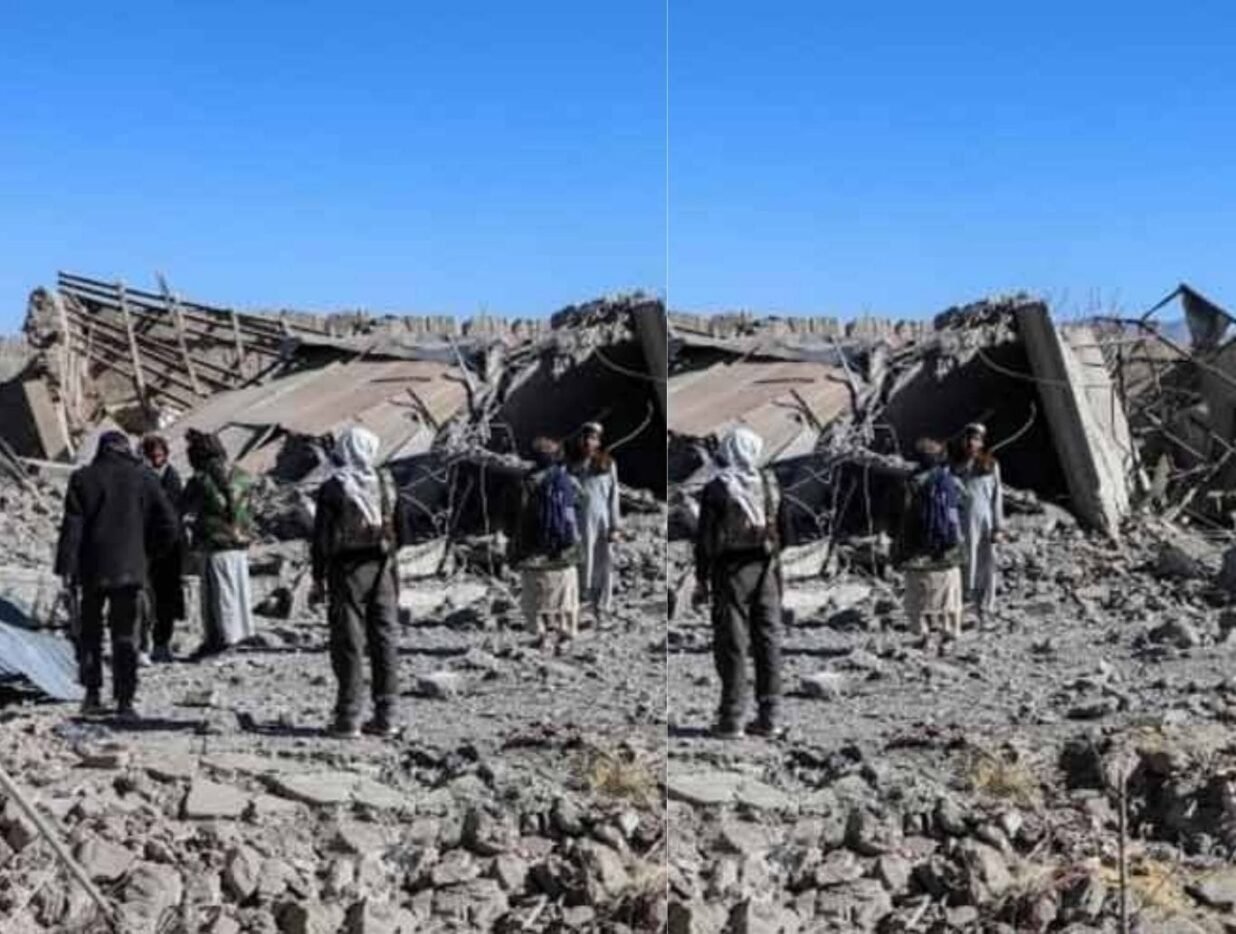
Talal Chaudhry, Pakistan’s Deputy Interior Minister, gave no evidence to support his assertion that 70 militants were killed, although Pakistan’s state-run media later increased the figure to 80. The Afghan Defence Ministry stated that civilian sites in Nangarhar and Paktika provinces were targeted, including a religious madrassa and many homes. The Ministry called the strikes “a violation of Afghanistan’s airspace and sovereignty.”
Zabihullah Mujahid, an Afghan government spokesperson, called Pakistan’s statistic “inaccurate” and stated that the assaults had killed and injured dozens, including women and children.” Mawlawi Fazl Rahman Fayyaz, the provincial director of the Afghan Red Crescent Society in Nangarhar, said 18 people were killed and several others were injured in the strikes.
Also reads : US President Trump Says Iran Has Up to 15 Days to Agree on Nuclear Deal or Face Fallout
In response, Pakistani President Asif Ali Zardari justified the airstrikes as an act of self-defence against terrorism. He claimed the strikes were conducted out after numerous warnings to Kabul went unheeded. In a statement, Zardari emphasised that Pakistan’s actions were based on its “inherent right to defend its people against terrorism” and warned that anyone guilty for strikes within Pakistan would “not remain beyond reach.” He also stated that the protection of Pakistani citizens was “paramount and non-negotiable.”
Afghan Ministry of Foreign Affairs summoned Pakistan’s envoy to Kabul to express a formal protest against the strikes.
The Afghan Ministry of Foreign Affairs summoned Pakistan’s envoy to Kabul to express a formal protest against the strikes. The Ministry maintained that the Taliban-led government had a “Sharia responsibility” to preserve Afghanistan’s land and warned Pakistan that it will be held accountable for the consequences.
In Nangarhar, residents were seen removing wreckage from airstrikes as they prepared for funerals. Local tribal elder Habib Ullah stated that those slain in the attacks were not militants, but rather “poor people who suffered greatly.” He stated, “They were neither Taliban, military personnel, or previous government officials. They led basic country life.
Attaullah Tarar, Pakistan’s Information Minister, defended the strikes, claiming that the military carried out “intelligence-based, selective operations” against seven Pakistani Taliban (TTP) and affiliated facilities. Tarar claimed that an Islamic State affiliate had also been targeted. He underlined that Pakistan had “always strived to maintain peace and stability in the region,” but that the safety and security of Pakistani nationals was still a primary priority.
Militant violence has increased in Pakistan in recent years, primarily due to the TTP and Baloch separatist groups. The TTP, while distinct from the Taliban, has close links with the Afghan government in Kabul. Pakistan has long accused the TTP of operating from within Afghanistan, which both the group and Kabul deny.
Earlier on Sunday, a suicide bomber struck a security convoy in Pakistan’s Bannu area, close the Afghan border, killing two troops, including a lieutenant colonel. Pakistan’s military has warned that it will not “exercise any restraint” in its operations against those behind such attacks.
Last week, a suicide bomber, accompanied by gunmen, smashed an explosives-laden car into a security checkpoint in Bajaur district, Khyber Pakhtunkhwa province, killing 11 soldiers and one child. Pakistani officials later identified the perpetrator as an Afghan national.
Tarar further stated that Pakistan has “conclusive evidence” tying recent incidents, such as a suicide bombing at a Shiite mosque in Islamabad that killed 31 worshippers, to terrorists working under the orders of Afghan-based officials. He urged Taliban authorities in Kabul to take decisive action to prevent militant groups from using Afghan territory to launch attacks on Pakistan, and urged the international community to put pressure on the Taliban to uphold its commitments under the Doha agreement, which prohibits the use of Afghan soil for attacks against other countries.
Security researcher Abdullah Khan cautioned that Pakistani strikes could exacerbate tensions between the two countries. “These strikes are likely to further escalate the situation,” the politician warned. Despite a Qatari-mediated truce imposed during devastating border skirmishes in October that killed dozens of military, civilians, and terrorists, relations between Islamabad and Kabul remain strained. Several rounds of talks in Istanbul in November failed to produce a formal deal, preserving the fragile truce but straining ties.
- Join our whatsapp channel for daily updates.
- Follow tazatimesnews Telegram Channel for latest news alerts.
- Follow TazaTimesNews on TruthSocial for exclusive updates