

Manage Stress Effectively : Stress affects almost every American. High-pressure jobs, caregiving, financial worries, and the pandemic’s lasting effects have increased stress levels. This guide offers simple, science-backed ways to manage stress now.
Discover quick stress relief tips to calm your mind. Learn simple daily habits to build resilience. Also, find ways to manage your time and set boundaries to avoid burnout. The article also talks about when to seek professional help and long-term lifestyle changes to reduce stress.
To manage stress well, use tools and routines that lower stress, improve mood, and boost coping skills. Expect easy-to-try tips, short exercises, and resources like apps and therapy options that fit into your busy schedule.
Key Takeaways
- Understand that rising stress levels in the U.S. come from work, caregiving, money, and pandemic aftereffects.
- Find quick stress relief tips you can use immediately to calm your nervous system.
- Adopt daily stress management strategies—sleep, movement, and nutrition—to build resilience.
- Use time management and boundaries to prevent burnout and reduce overwhelm.
- Know when professional help is wise and what evidence-based options are available.
Understand What Stress Is and How It Affects You
Stress is how your body and mind react to challenges or threats. It can be good, pushing you to grow, called eustress. But when it’s too much, it becomes distress. Knowing what stress is helps you catch warning signs early.
Definition and common triggers
In the United States, common stressors include work overload, job insecurity, and financial worries. Caregiving, relationship issues, big life changes, chronic illness, and too much screen time also cause stress. The American Psychological Association and CDC say these stressors are common and often happen together.
Physical, emotional, and cognitive symptoms to watch for
Physical signs of stress include a fast heart rate, muscle tension, and headaches. You might also feel tired, have trouble sleeping, or high blood pressure. These symptoms can look like other health issues, so it’s important to notice patterns.
Emotional signs include feeling irritable, overwhelmed, sad, or anxious. Mood swings and feeling less motivated can also happen. These feelings can hurt your relationships and daily life.
Cognitive signs are about thinking and memory. You might find it hard to focus, remember things, or make decisions. These changes can make everyday tasks seem more challenging.
Short-term vs. chronic stress and long-term health implications
Short-term stress, or acute stress, can help you focus or perform well for a short time. Most people bounce back once the stress goes away. But chronic stress, lasting for a long time, can harm your health.
Chronic stress wears down your body and mind. It can lead to depression, anxiety, heart disease, and other health problems. Symptoms often show up together and can be hard to notice at first.
Spotting these symptoms early and tracking them helps. It lets you know if you’re dealing with short-term stress or something more serious. This can guide when to seek help.
Practical Breathing and Mindfulness Techniques for Immediate Relief
When stress hits, quick methods can change your body’s response fast. Simple breathing and mindfulness can calm you down quickly. These methods help right before a big meeting, during a panic, or when you wake up in the night.
How diaphragmatic breathing calms the nervous system
Diaphragmatic breathing, or belly breathing, involves slow inhales through the nose. Your diaphragm expands, then you hold briefly before slow exhales through the mouth. Aim for 4–6 seconds in and 6–8 seconds out.
This breathing pattern turns on the vagus nerve, lowers your heart rate, and cuts cortisol. It shifts your body from stress to calm, giving you real stress relief.
Try this breathing before a big talk, while waiting for news, or during a panic. If it’s hard because of trauma, look for gentler options or talk to a professional.
Simple mindfulness exercises you can do anywhere
Grounding and quick scans are great when you’re short on time. The 5-4-3-2-1 exercise asks you to notice five things you see, four you can touch, three you hear, two you smell, and one you taste. It brings you back to the present.
A quick body scan takes 30–60 seconds. Slowly move your attention from head to toes, noting any tension. Mindful walking focuses on your feet and breath for 2–5 minutes.
For a quick anchor, focus on one full inhale and exhale. This single breath can stop stress and give you space to choose your next step.
Using guided meditations and apps to support a practice
Guided meditation apps make sticking to a routine easier. Calm, Headspace, and Insight Timer are popular in the U.S. The UCLA Mindful Awareness Research Center and the National Center for Complementary and Integrative Health offer free tracks.
Apps have timers, stress-relief sessions, and short exercises. Start with small daily practices and gradually increase. It’s consistency, not length, that matters.
Combine these techniques with small routines. Practice breathing while your coffee brews, do a quick scan in line, or use an app for a minute before a call. Small habits lead to big changes.
Daily Habits to Reduce Stress and Improve Resilience
Small daily choices shape how we handle pressure. Create routines that protect your energy, boost mood, and build resilience over time. The tips below cover sleep, food, fluids, and movement so you can pick practical steps that fit your life.
Good rest is the base of stress relief. Aim for seven or more hours each night as recommended by the CDC. Keep consistent sleep and wake times, even on weekends. Build a wind-down routine and limit blue light 60–90 minutes before bed. Make your bedroom cool, dark, and comfortable. Skip heavy meals and caffeine late in the day. If insomnia persists, consult a clinician to rule out sleep disorders.
Food fuels both body and mind. Eat balanced meals with lean protein, whole grains, healthy fats like salmon or walnuts, fiber-rich vegetables, and complex carbs that steady blood sugar. These choices support the gut-brain axis and help make neurotransmitters such as serotonin. Cut back on high-sugar processed foods and limit alcohol that can destabilize mood. Thoughtful eating links directly to nutrition and stress management.
Mild dehydration hurts thinking and mood. Keep a reusable water bottle with you and sip regularly. Adjust intake for activity level, climate, and health conditions. Prioritizing fluids helps hydration and mood, which in turn supports steady focus and emotional balance.
Movement eases tension fast. Aim for 20–30 minutes of moderate activity most days: brisk walking, cycling, swimming, strength training, or yoga. Short bursts work too: a 10-minute brisk walk, stair climbs, or a bodyweight circuit can lower anxiety and lift energy. Practices like restorative yoga, progressive muscle relaxation, and tai chi calm the nervous system. Spend time outdoors when possible to gain ecotherapy benefits and reduce rumination.
Build simple resilience-building habits that last. Keep a predictable daily structure, maintain regular social contact with friends or family, and limit news or social media when it spikes anxiety. Try gratitude journaling for a few minutes each day. Schedule one enjoyable activity per week to recharge. Small, consistent choices add up into stronger coping over months and years.
Manage Stress Effectively: Top Tips for Relief
When stress peaks, small actions can change the moment. Use quick stress relief tips that interrupt the spike and return you to focus. Start with short, doable steps and build a personalized stress plan that fits your routines.
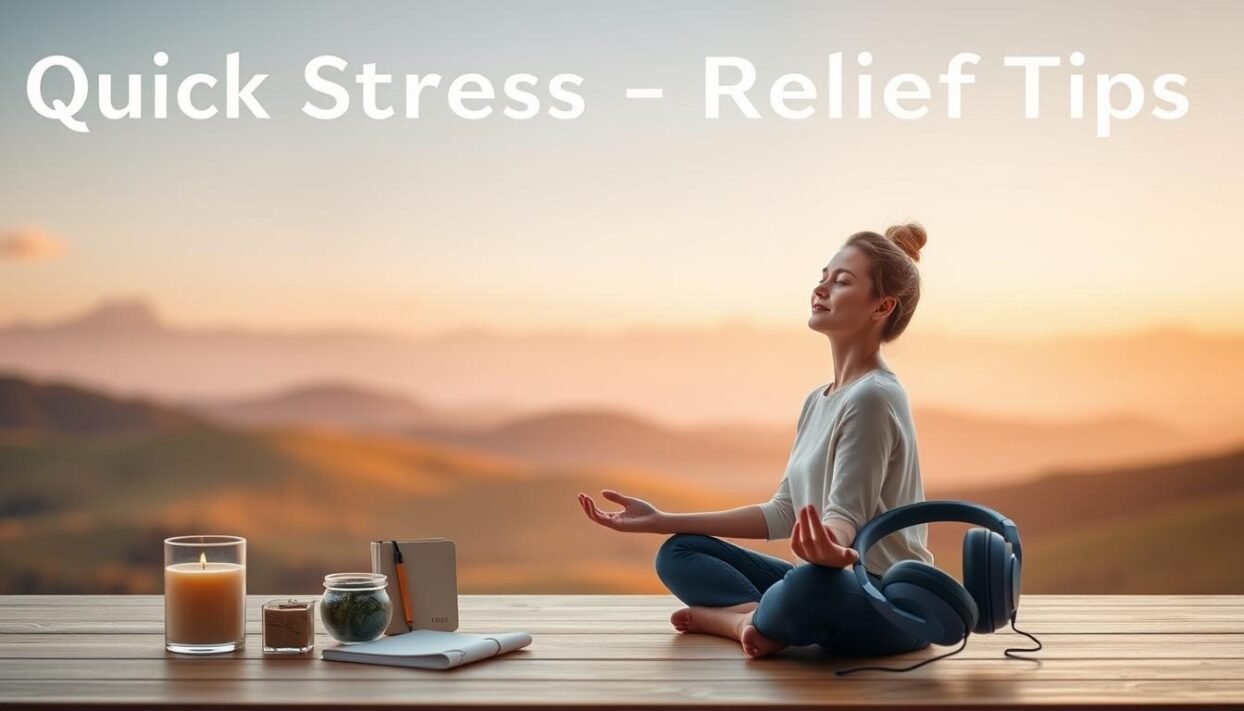
Box breathing (4-4-4-4) calms the nervous system fast. Try grounding: name five things you see, four you can touch, three you hear, two you smell, one you taste. Use progressive muscle relaxation by tensing and releasing major muscle groups over 5–10 minutes. A 20–60 second movement break, like jumping jacks or a stretch, can stop a stress cascade. Keep sensory anchors handy: a favorite song or a scented handkerchief so you can shift state quickly.
Planning and prioritization
Sort tasks with the Eisenhower Matrix: urgent versus important. Time-block similar work and batch small tasks to reduce context switching. Set a daily “top three” to prevent overwhelm and lower perfectionism-driven stress. Break big projects into small increments so progress feels steady and manageable.
Preventive tactics to protect your day
Create buffer time between meetings so you can reset. Check email at set windows instead of constant monitoring. Make a transition ritual between work and home, such as a short walk or a change of clothes, to compartmentalize stress and preserve energy for what matters next.
Building a stress-relief toolkit
Assemble items you trust: breathing scripts, favorite app playlists like Calm or Spotify mixes, short exercise routines, a comforting photo or stress ball, and a list of helpful contacts. Include go-to self-care activities: hot shower, a cup of tea, or journaling prompts. Add emergency professional resources such as a therapist contact or crisis hotline.
Test and refine your personalized stress plan
Try techniques for two weeks and keep a simple log of what helps. Rate each item for speed, ease, and effect. Keep top hits on your phone or on a small card for quick access. Over time, fine-tune the stress-relief toolkit so it meets real moments, not ideal ones.
Time Management and Boundaries to Prevent Burnout
Good time management helps keep your energy up and stress down. Use clear goals and simple routines to avoid burnout and stay focused during busy times.
Start by setting realistic goals using the SMART framework. Make each goal specific, measurable, achievable, relevant, and time-bound. Break big tasks into smaller ones, lasting 15–60 minutes, with a clear next step. This approach reduces overwhelm and boosts focus.
Setting realistic goals and breaking tasks into steps
Try the Pomodoro method: work for 25 minutes, then rest for 5. Use time blocking to reserve hours for focus. Theme days group similar tasks to reduce switching context. These strategies cut down on decision fatigue and speed up progress.
Saying no and establishing healthy boundaries at work and home
Practice scripts for polite refusals. Say, “I can’t take that on right now; here’s what I can do instead.” Framing limits as a way to improve your contributions makes it easier to set boundaries without guilt.
Limit after-hours email, create meeting-free blocks, and share your calendar to signal availability. Tell family and coworkers what you need and when you will be reachable. Clear rules stop tasks from creeping into every hour.
Using planners and digital tools to reduce cognitive load
Choose productivity tools that match how you work. Paper planners like Moleskine or Full Focus Planner suit those who prefer analog lists. Digital apps such as Google Calendar, Todoist, Microsoft To Do, and Notion help automate reminders and track projects.
Set email filters, scheduled messages, and templates so routine choices disappear. Automation and templates free up working memory and lower stress while keeping projects moving.
| Strategy | How it helps | Examples |
|---|---|---|
| Goal setting | Clarifies priorities and reduces wasted effort | SMART goals, 15–60 minute subtasks |
| Time techniques | Improves focus and cuts context switching | Pomodoro, time blocking, theme days |
| Boundary scripts | Protects energy and prevents overload | “I can’t take that on right now; here’s what I can do instead” |
| Scheduling rules | Stops work from spilling into personal life | Meeting-free blocks, shared calendars, limited after-hours email |
| Productivity tools | Reduces cognitive load and automates routine tasks | Moleskine, Full Focus Planner, Google Calendar, Todoist, Notion |
| Organizational practices | Maintains balance and spots early warning signs | Regular breaks, peer check-ins, workload reviews |
Social Support and Communication Skills for Emotional Relief
Good social bonds help reduce emotional stress and aid in physical recovery. Studies from the American Psychological Association show that people with strong support systems heal faster. They also report less depression and handle challenges better. Building strong relationships and clear communication makes dealing with daily stress easier.
Start by learning to ask for help in small steps. First, state your need clearly, choose someone you trust, and be straightforward. Try using short phrases at work or home to practice asking for help without feeling guilty.
- “Can you take two minutes to hear one quick idea?” — at work when you need a fast check.
- “I need help with the grocery run this week” — with a friend or family member.
- “I feel overwhelmed and could use someone to talk to tonight” — when you want emotional support.
Strong communication skills help avoid conflicts and keep relationships stable. Use active listening, repeat what you hear, and express your feelings using I-statements. For example, say, “I feel overwhelmed when deadlines shift,” instead of blaming others.
Practice de-escalation by taking a short break if arguments start. Focus on specific actions, not personal attacks. If work issues continue, consider mediation or talk to HR to protect your well-being.
Build a diverse network that meets different needs. Friends offer companionship, coworkers provide practical help, mentors give guidance, and clinicians offer targeted care. A diverse network reduces pressure and improves access to support.
Community mental health resources offer more options beyond personal networks. In the U.S., 211 can help find local services. The National Alliance on Mental Illness runs peer-led support programs. University counseling centers and faith-based groups often host free or low-cost meetings.
Support groups and moderated online forums provide flexible ways to connect. Look for groups with clear moderation, privacy policies, and trained facilitators. Use Meetup to find gatherings that combine social activity with support.
| Need | Who to Contact | What to Say | Resource Type |
|---|---|---|---|
| Immediate emotional check-in | Close friend or family member | “Can we talk for 15 minutes? I could use emotional support.” | Personal support |
| Work task help | Supervisor or trusted coworker | “I need help prioritizing these tasks. Can you review them with me?” | Professional/occupational |
| Ongoing mental health care | Licensed clinician or university counseling | “I’m looking for regular support for stress and coping.” | Clinical resource |
| Peer connection | NAMI support group or Meetup community | “I’d like to join a group for people managing similar stress.” | Support groups/community |
| Local services and referrals | 211 helpline | “Please connect me to community mental health resources in my area.” | Referral network |
When to Seek Professional Help and Evidence-Based Treatments
Stress can feel like a short-term issue or a constant problem. Knowing when to seek help is key for your well-being. If you feel anxious or down for weeks, if work or relationships suffer, or if you have thoughts of harming yourself, get help right away.
In the United States, call 988 for the Suicide & Crisis Lifeline or visit an emergency room for immediate help. Call 911 if someone is in danger. Your doctor can help figure out if there’s a medical reason for your symptoms.
Signs that stress requires professional attention
Look for symptoms that last a long time and affect your daily life. If you miss work, have strained relationships, or can’t sleep, it’s a sign. Also, if you use more alcohol or drugs to cope, or if you think about harming yourself, get help fast.
Therapies that help manage stress: CBT, ACT, and more
There are proven therapies for stress. Cognitive Behavioral Therapy (CBT) helps change negative thoughts and behaviors. Acceptance and Commitment Therapy (ACT) teaches you to accept your feelings and act on your values.
Mindfulness-Based Stress Reduction and Dialectical Behavior Therapy also help manage emotions. You can find these therapies in individual, group, or online sessions. Online platforms like BetterHelp and Talkspace make it easier to access therapy.
Medication, coaching, and other clinical options
Medication might be needed if therapy and self-help don’t work. SSRIs and SNRIs are common types. But, benzodiazepines should only be used for short-term anxiety because of addiction risks.
Stress coaching and health psychologists offer practical advice for work stress. Biofeedback and heart rate variability training can also help. Employee Assistance Programs and in-network providers can help with costs.
To find help, ask your doctor for recommendations, use the Psychology Today directory, or check state licensing boards. Before choosing a provider, ask about their approach, session length, and how they track progress.
Lifestyle Changes and Long-Term Strategies for Stress Reduction
Small routines can lead to big changes in reducing stress. Begin with a morning routine that includes light exercise, a healthy breakfast, and setting three daily goals. End your day with a digital break and a calming activity to reduce stress and build stability.

Make clear boundaries between work and personal life. Use a specific commute, a dedicated workspace, and set breaks. Also, schedule time for fun and relaxation. These habits help you stay focused and protect your downtime.
Engage in hobbies and creative activities to reduce stress. Try playing music, painting, gardening, or writing for fun. Learning a new skill, like playing the guitar, can also lower anxiety. Choose activities that bring you joy.
Spending time in nature is beneficial. Take walks in parks, go forest bathing, or care for indoor plants. Even listening to nature sounds or having a window garden can help. Nature is a great way to find calm and clarity.
Connect your stress goals to your values, like family, health, or career. When your goals align with what’s important to you, sticking to stress-reducing habits feels meaningful. Use your values to guide your routines and decisions.
Keep track of your progress with simple tools. Use a journal, apps like Daylio or Moodpath, and weekly reviews. Set goals and check your progress every 4–8 weeks. Tracking your progress helps you see patterns and make adjustments.
Plan for stressful times ahead. Before busy periods, prepare your stress-relief tools, delegate tasks, and increase social connections. These steps help you stay on track and maintain your stress reduction efforts.
Conclusion
This summary offers practical steps to manage stress today and in the future. Knowing what stress is helps you catch signs early. Simple breathing and mindfulness can help right away.
Good sleep, healthy food, and regular exercise also build resilience. Keep quick coping strategies and planning in your daily life. Strong social support and clear communication also help.
Know when to seek professional help. Therapy or medical support can add to your self-care efforts. For a stress management conclusion, try a diaphragmatic breath or a five-minute grounding exercise now.
Choose one daily habit to change and make a small stress-relief toolkit card. Save this article for future reference or share it with someone who might find it helpful. Remember, asking for help is a sign of strength.
Combining self-care with professional support can lead to lasting well-being improvement.
FAQ
What are the most effective immediate techniques to calm down when stress spikes?
Simple, evidence-based techniques work quickly. Try diaphragmatic breathing (inhale 4–6 seconds, exhale 6–8 seconds), box breathing (4-4-4-4), or a 30–60 second progressive muscle relaxation. Grounding exercises like the 5-4-3-2-1 method or a single-breath anchor also interrupt rumination. Short movement—two minutes of brisk walking or stretching—shifts physiology fast. Keep one or two favorite scripts or an app (Calm, Headspace, Insight Timer) on hand for immediate use.
How can I tell if my stress is acute or becoming chronic and harmful?
Acute stress is short-lived and often tied to a clear event; symptoms resolve after the situation passes. Chronic stress persists for weeks or months and shows up as ongoing sleep disruption, persistent fatigue, frequent headaches, immune changes, worsening mood, or declining work performance. If stress impairs daily functioning, causes panic attacks, leads to substance misuse, or includes suicidal thoughts, seek professional help. Tracking symptoms for several weeks helps reveal patterns.
Are breathing exercises safe for everyone?
Most people benefit from paced breathing, but some with trauma histories or certain respiratory conditions may feel lightheaded or distressed. If breathing exercises trigger strong reactions, try trauma-informed alternatives: shorter exercises, guided body scans, or work with a therapist skilled in somatic approaches. When in doubt, consult a mental health professional or your medical provider before starting intensive breathwork.
How long should I practice mindfulness or breathing each day to see benefits?
Consistency matters more than duration. Start small: 1–5 minutes daily and gradually increase to 10–20 minutes as you’re able. Even brief, regular practice—paired with micro-routines like during coffee or waiting in line—builds resilience. Track progress over 4–8 weeks to notice improvements in calm, focus, and sleep.
What sleep habits most reduce stress and improve resilience?
Prioritize 7+ hours per night and keep consistent sleep/wake times. Create a wind-down routine 60–90 minutes before bed, limit blue light from screens, keep the bedroom cool and dark, and avoid heavy meals, caffeine, or alcohol late in the day. If insomnia persists despite good habits, consult a clinician—CBT-I (cognitive behavioral therapy for insomnia) is an effective, evidence-based option.
Which foods and hydration habits help stabilize mood and lower stress?
Eat balanced meals with lean protein, whole grains, fruits and vegetables, healthy fats (like salmon or walnuts), and fiber to support the gut-brain axis and steady blood sugar. Limit high-sugar, highly processed foods and reduce excessive alcohol. Stay hydrated—mild dehydration can worsen mood and concentration—so carry a water bottle and sip regularly. Small, consistent nutritional changes support emotional stability over time.