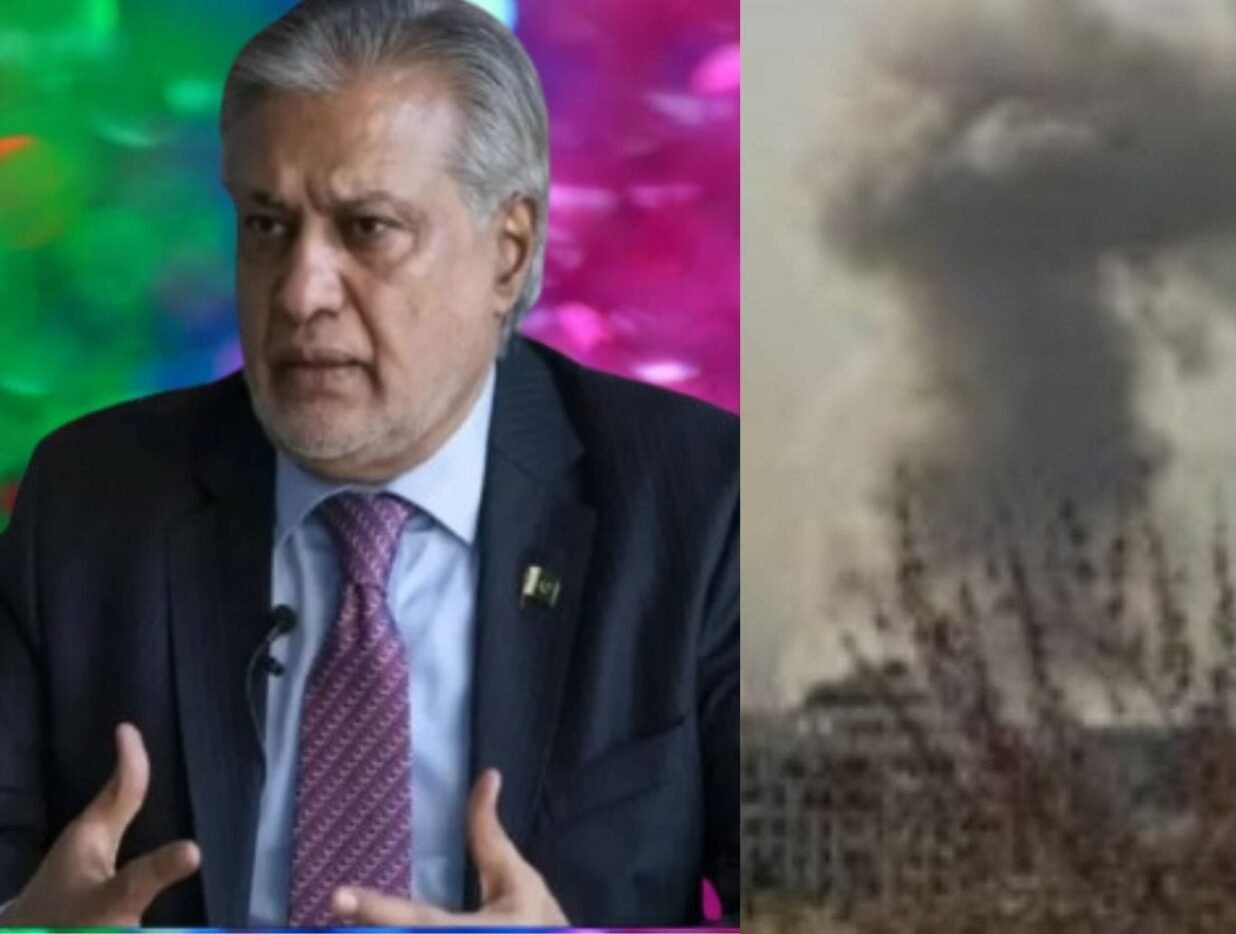
Ishaq Dar : Pakistan has hinted that it may be drawn into the escalating Iran conflict, citing a bilateral security deal with Saudi Arabia. Riyadh is one of several Gulf states targeted by Tehran in a series of retaliatory missile and drone strikes. According to the Financial Times, Pakistani Foreign Minister Ishaq Dar warned his Iranian counterpart against initiating attacks on Saudi land.
“I made them (Iran) understand that we have a defence agreement,” Dar revealed. This is the first direct indication from a Pakistani official that the defence treaty may be implemented in the context of the Iran war, which erupted after the US and Israel launched coordinated strikes last week. Iran has now targeted American military outposts, diplomatic facilities, and crucial energy sites, bringing multiple regional players into the battle.
Ishaq Dar stated that Iran wanted guarantees from Islamabad
Dar underlined that the Pakistan-Saudi security pact served as a deterrent, preventing more serious attacks on Riyadh. “Unlike all other countries, Saudi Arabia faced the least attacks,” he claimed. At the same time, Dar stated that Iran wanted guarantees from Islamabad that Saudi land would not be utilised to start attacks against Tehran. He pointed out: “They asked for some assurances that their soil shouldn’t be used against Iran.”
The agreement, signed in September of last year, operates on a NATO-style basis in which an attack on one country is considered an attack on both. It was a major moment of increased security collaboration between the two Muslim nations following years of tense relations.
Also reads : Trump Warns Iran of Force ‘Never Seen Before’ Amid Threats of Retaliation
The region is on edge as the Iran-Israel conflict deepens.
Tensions in the Middle East rose considerably when Iran launched missiles at Israel early Thursday, marking the sixth day of aerial attacks. The strike happened shortly after allegations surfaced that an American submarine had sunk an Iranian warship, prompting Tehran to threaten extensive devastation of military and economic infrastructure throughout the region.
Israel acknowledged incoming Iranian missiles shortly after announcing new strikes in Lebanon. These operations targeted Hezbollah strongholds in southern Beirut as part of a larger campaign against Iranian-backed forces. Meanwhile, the US and Israel continued to pound Iran on Wednesday, targeting military forces and important centers of authority.
Chaos worsens as the Iranian leadership crisis unfolds.
The ferocity of the attacks on Iran increased so quickly that state media announced the postponing of the mourning service for Supreme Leader Ayatollah Ali Khamenei, who was slain at the start of the battle. This development drew parallels with the immense public sorrow upon Ayatollah Ruhollah Khomeini’s funeral in 1989.
On Saturday, the United States and Israel launched a coordinated war against Iran, targeting its leadership, missile infrastructure, and nuclear capabilities. Although Washington and Tel Aviv have hinted at regime change as a long-term aim, shifting pronouncements on goals and timings indicate that the conflict could be extended and unpredictable.
- Join our whatsapp channel for daily updates.
- Follow tazatimesnews Telegram Channel for latest news alerts.
- Follow TazaTimesNews on TruthSocial for exclusive updates