Ghost Tapping Scam : If you enjoy traveling and shopping using credit or debit cards, you should be aware of the following. A new digital payment scam known as ‘ghost tapping’ has emerged worldwide and is rapidly spreading to tourist attractions (in many countries). This new digital payment scam exploits tap-to-pay (NFC) technology used on debit or credit cards and smartphones. The scammers primarily target travelers, seeking to steal their account balances/money while they are in popular venues such as airports, festival gatherings, and bustling markets.
Here’s everything you need to know about the fraud and how it bothers the unconcerned and content traveler. I’ll also explain how to stay safe when traveling.
What is ‘Ghost Tapping Scam ‘?
As contactless payments have grown in popularity, scammers have devised a strategy to quickly adapt to and capitalize on this opportunity. Ghost tapping is a technique in which a fraudster utilizes an NFC-enabled gadget to initiate contactless payments surreptitiously, while the victim is unaware.
According to several reports, the latest scamming technique requires no card details or OTP. If your credit card or phone has tap-to-pay enabled, the scammers might simply stand near you and collect payment information or initiate a transaction using a similar wireless technology.
Also reads : Vivo S50 Pro Mini will come with an iPhone Air-like best style and cutting-edge functionality.
How the Scam Works
- Ghost tapping is based on Near Field Communication (NFC) technology, the same advanced technology used in contactless cards, Apple Pay, Google Pay, and Samsung Wallet.
- Scammers operate this deception very smartly, without letting the traveller detect it:
- Scammers carry portable NFC readers or modified smartphones.
- They stay with their target victims in crowded tourist areas, airports, or at any celebration gathering.
- Fake sellers may ask you to ‘tap to pay’ for small purchases
- Victims may be charged more than is disclosed, or charged without their knowledge.
- One thing to bear in mind is that scammers frequently demand the fraudster to remain near the target for a little period of time in order for the transaction to be completed.
Where is Ghost Tapping most frequently reported?
While no country-specific data has been disclosed and made official yet (by the time of writing), cybersecurity experts have stated that Ghost Tapping occurrences have increased in high-tourism regions, including:
- United States (during festivals and huge gatherings)
- The United Kingdom and some regions of Western Europe
- France
- Spain
- Italy
- Thailand
- Indonesia
- Several popular international airports and transportation hubs
Why are visitors and tourists such easy targets?
- Tourists are susceptible when traveling, particularly to overseas destinations, because they frequently rely largely on tap-to-pay technology for speed and convenience.
- Crowded surroundings lower awareness.
- Tourists might not check transaction alerts quickly.
- Fake sellers fit seamlessly into marketplaces and festivals.
- Foreign currency uncertainty conceals overcharging.
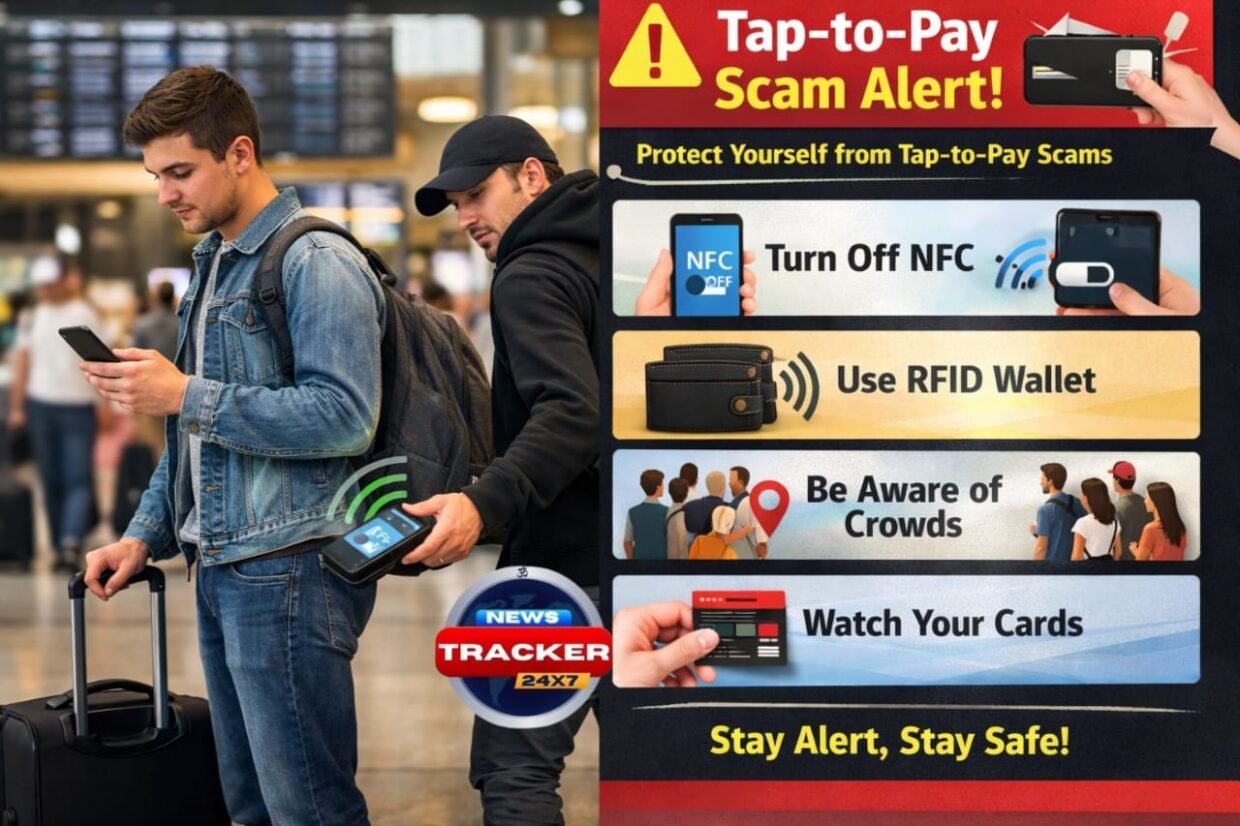
How to prevent yourself from ghost tapping on your next international vacation.
Here are some steps to take while traveling:
- When not in use, turn off NFC on your smartphone. Stay aware!
- Use RFID-blocking wallets or card sleeves, which are wallets with a shield that holds your card for any payments while it is inside.
- Avoid touching your card at unverified stalls or vendors, such as unbranded stores and street-side shops.
- Have quick transaction alerts enabled in your bank applications.
- Use mobile wallets with biometric authentication—a big security feature.
Is tap-to-pay still safe?
Yes! According to experts, tap-to-pay is still safer than swiping or inserting cards because transactions are encrypted and difficult to clone. The danger is low, although it increases in crowded or unfamiliar settings.