The Muhammad Yunus government in Bangladesh is upset that New Delhi has allowed former Prime Minister Sheikh Hasina to openly communicate with the media while turmoil erupted in Dhaka and other major cities before to her trial for last year’s demonstrations, which killed hundreds. Bangladesh’s Foreign Minister called India’s Deputy High Commissioner in Dhaka on Wednesday to express worries over Hasina using “a platform to spew hatred and advocate terrorist acts inside Bangladesh.”
Days prior to her trial for alleged atrocities during her reign and the protests in August of last year, Hasina spoke to a number of Western and Indian media sources for the first time since her removal from Bangladesh in August 2024.
A special tribunal in Dhaka has declared that the verdict against Hasina, who is accused of crimes against humanity for cracking down on student-led protests that ended her 15-year rule, will be delivered on November 17.
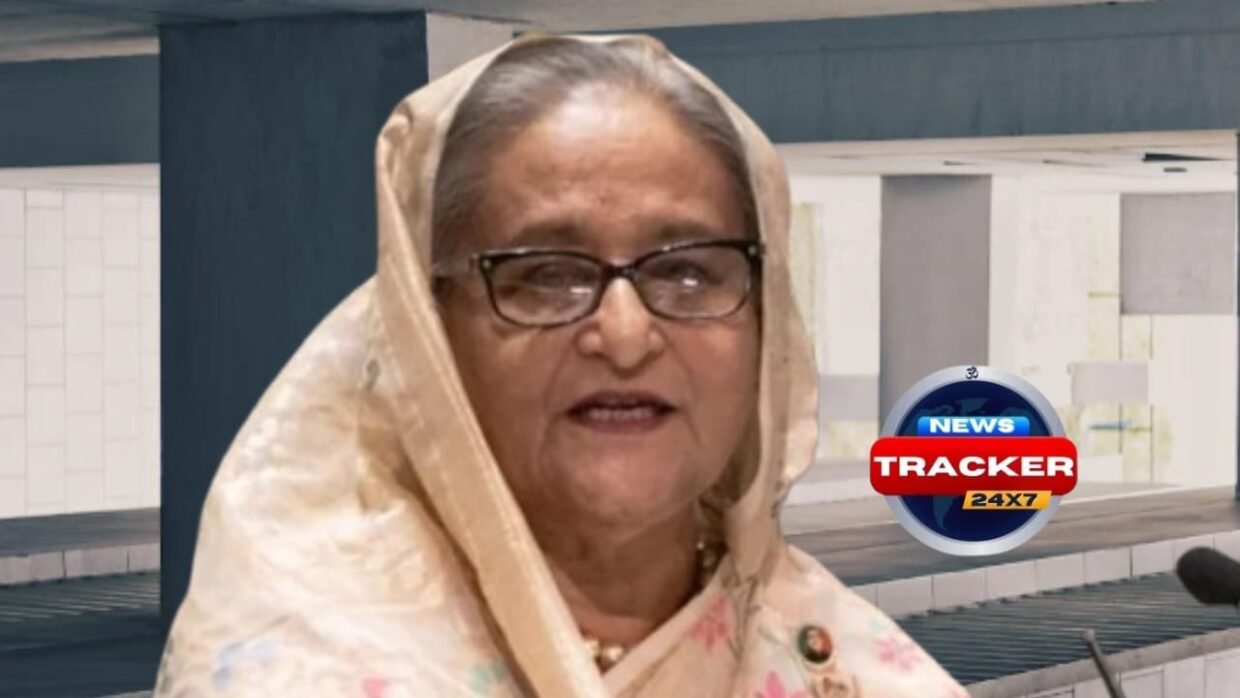
Sheikh Hasina Interviews
Hasina moved to Delhi 15 months ago and is currently living in a secret place in India. In an interview with the Indian Express, the former Prime Minister stated that she would love to return to Bangladesh, but that “free, fair, and participatory elections” must be held first.
In another interview with the New Indian Express, Hasina stated that if given the opportunity, her party, the Awami League, will undoubtedly take part in the country’s future parliamentary elections. She also took “leadership responsibility” for the deaths of “thousands of citizens” during the widespread protests against her administration from July 15 to August 5, 2024.
During an interview with PTI, she accused the unelected Yunus administration of “endangering ties with India and empowering extremist forces”.
In contrast to the present interim government’s foreign policy, she stated that the “broad and deep” relationship between Dhaka and New Delhi should be able to endure the “foolhardiness of the Yunus interlude”. Hasina also expressed gratitude to the Indian government for giving her with asylum, saying she was “immensely grateful to India’s government and its people for their kind hospitality”.
In an interview with News18, she denied that the US played any part in helping groups seeking her ouster from power, claiming that she had “good relationships with successive US administrations”. She stated that there is “no reason to believe” that Washington or other foreign forces were directly involved in the country’s political developments.
Hasina Effect in Bangladesh
Hasina and her now-banned Awami League party have also declared a statewide “lockdown” on Thursday in protest of her trial, disrupting daily life in the South Asian country.
Crude bomb blasts and vehicle torching have been recorded in Dhaka and other regions of Bangladesh in the last three days, implying that political upheaval is likely to persist in a country with a history of political violence. A train and a bus were reportedly set on fire in Dhaka on Wednesday evening, following the detonation of crude bombs on the Dhaka University campus the previous day.
During the tumult and protests on Thursday, schools in Dhaka and other major cities shifted to online lessons and exams, while public transit remained disrupted, with the Yunus-led temporary administration increasing security around the country.
The Awami League, in a statement, denied any involvement in the violence, saying, “Now, in an attempt to undermine the triumph of this democratic movement, the so-called administration and its allies are colluding. They are either perpetrating or instigating acts of terrorism and bloodshed, and then attempting to shift blame to the Awami League. “There is no evidence that Awami League leaders or activists were involved in any of the incidents.”
Rioters also set fire to the Awami League office in Dhaka. Following the collapse of the Awami League government last year, the structure was also set on fire.
Meanwhile, the interim administration has sent forces in various cities, including Dhaka. To preserve peace and order, at least 17000 Dhaka Metropolitan Police officers, as well as other security units such as the Border Guard Bangladesh (BGB), have been deployed around the country, including Dhaka.
As the protests intensify, no vehicles are permitted to approach Jamuna, the state guest house that serves as the official residence of the Interim Government’s chief adviser, Muhammad Yunus.
Haishna’s Trial
On November 17, Bangladesh’s International Crimes Tribunal (ICT) will pronounce its verdict in Hasina’s trial. The former prime minister and two others have been charged with crimes against humanity by the International Crimes Tribunal for alleged atrocities committed during her tenure, as well as protests that overthrew the Awami League administration in August of last year.
Former Home Minister Asaduzzaman Khan and former Inspector General of Police (IGP) Chowdhury Abdullah Al-Mamun are the other two accused in the case. Mamun has become an approver and has given a statement as a state witness throughout the trial. The tribunal formally indicted the three suspects on July 10, and the trial was broadcast live on state television.
Sheikh Hasina and Asaduzzaman Khan are still on the run, leaving just former IGP Chowdhury Abdullah Al-Mamun in captivity. Tajul Islam, the case’s chief prosecutor, has suggested that former Prime Minister Sheikh Hasina and former Home Minister Asaduzzaman Khan should face the death penalty for alleged crimes against humanity.