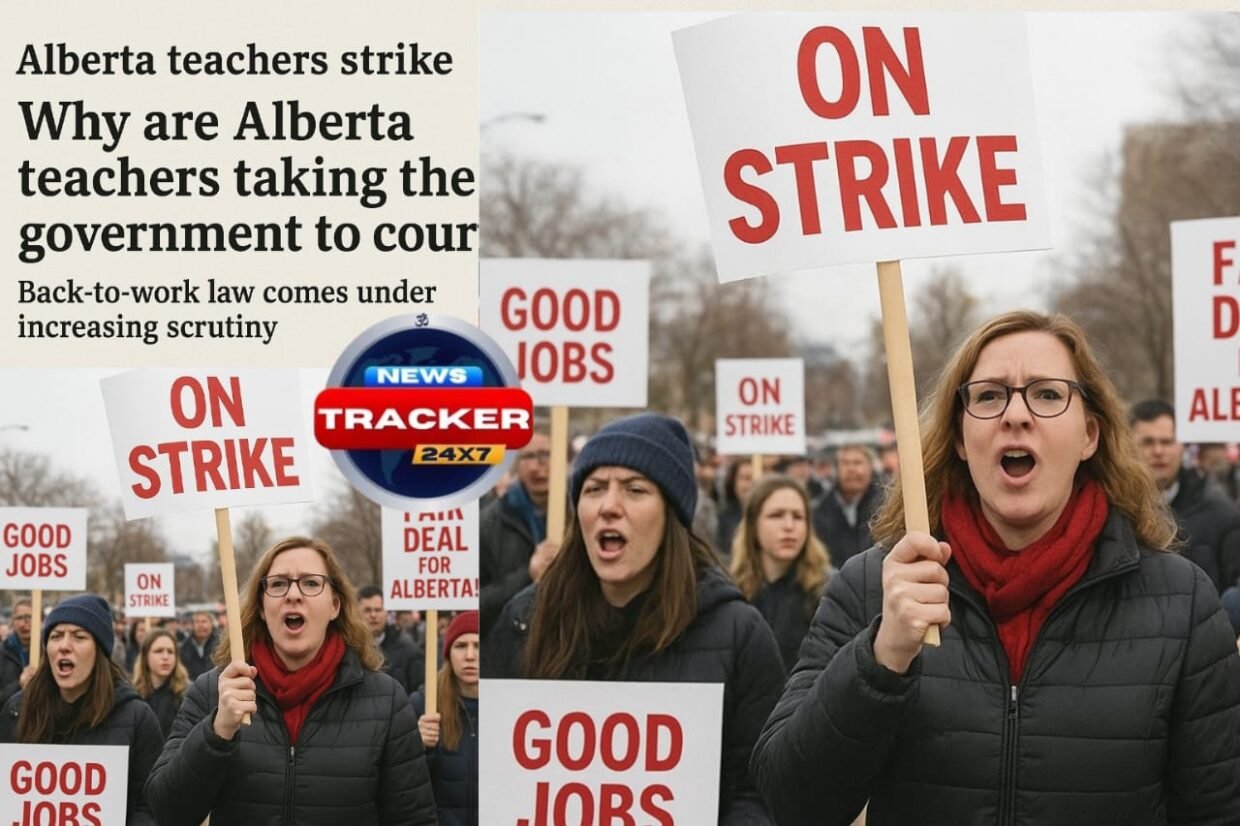
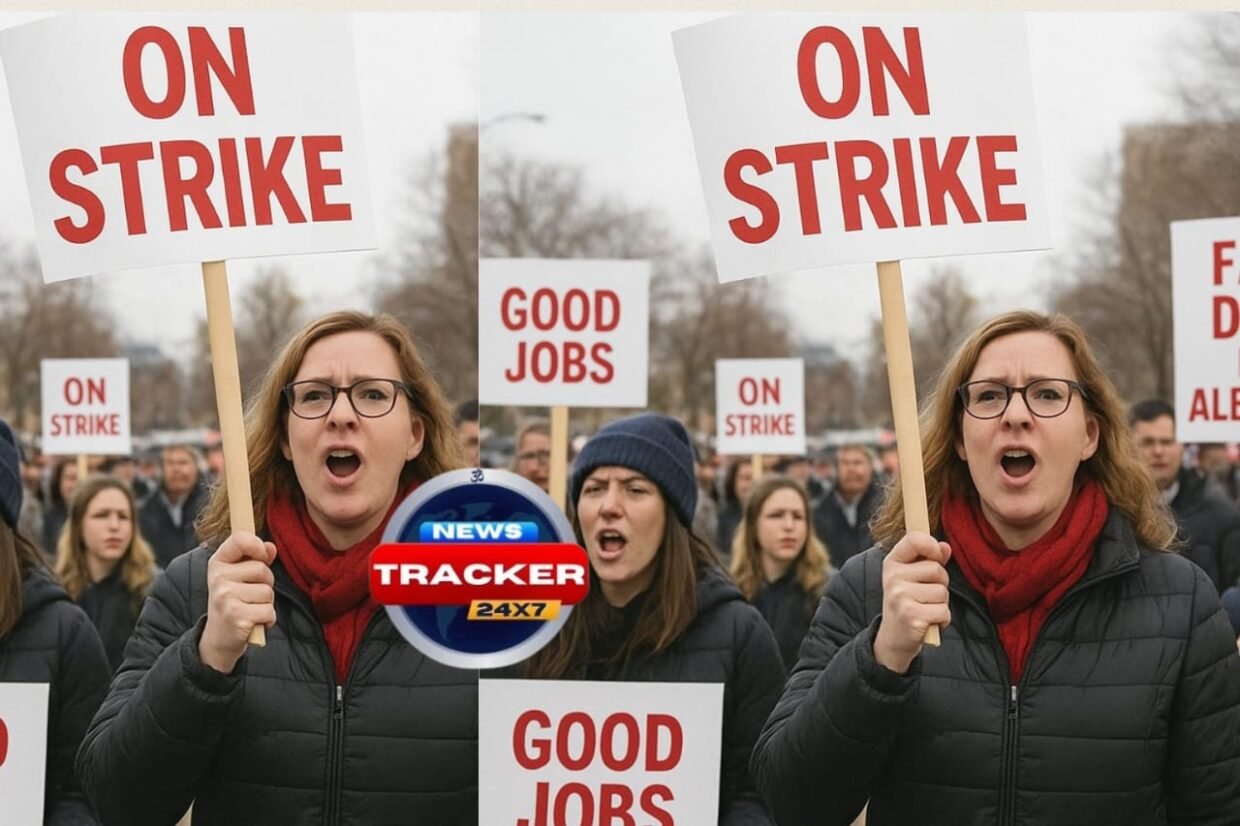
Alberta teachers strike : Alberta’s three-week provincial teachers’ strike, which kept more than 740,000 pupils out of school and suspended operations in all regions, has now moved from picket lines to the courts. According to a recent investigation by The Globe and Mail. The Alberta Teachers’ Association (ATA) is attempting to overturn the provincial law that halted the strike and pushed instructors back into classrooms, claiming that the intervention breaches the Charter of Rights and Freedoms’ essential democratic principles.
The walkout, the first on this scale in decades, broke out after months of negotiations over class sizes, workload, and compensation. Teachers rejected Premier Danielle Smith’s proposed settlement, causing negotiations to freeze. After weeks of shutdowns, Smith’s United Conservative Party passed legislation to reinstate teachers in a single night, citing the Charter’s notwithstanding provision, which empowers governments to violate constitutional rights for up to five years, according to The Globe and Mail.
Alberta teachers strike : Union claims rights violation and hazardous precedent.
ATA President Jason Schilling stated on Thursday that the union has filed an urgent case with Edmonton’s Court of King’s Bench.
A hearing has been scheduled for November 20, according to The Globe and Mail.
Schilling stated that the legal action wants to halt the bill immediately and eventually have a judge find the government’s use of the notwithstanding clause “improper and invalid.”
He said that the Act violates teachers’ freedom of organization and expression, binds workers to an imposed collective agreement that they had previously rejected, and imposes fines of up to $500 per person per day for anyone who refuses to comply.
He warned that allowing the rule to continue would set a precedent that the government may use in other sectors.
“This legal action is not symbolic. It’s necessary,” he told The Globe and Mail. “We are standing up for the Charter itself.”
The government defends harsh action.
Justice Minister Mickey Amery stated that Alberta will forcefully defend the legislation, stressing that the aim was to get children back in school permanently.
“We invoked the notwithstanding clause because students and parents deserve certainty,” Amery stated, adding that the government is certain the Charter issues have been resolved.
Smith has argued that the intricacy of bargaining, the breadth of the strike, and the pressure on families necessitated “extraordinary action,” as previously reported by the Globe and Mail.
Labour organizations call the action an overreach.
Labour leaders, civil-rights groups, attorneys’ organizations, Amnesty International, and the Anglican Diocese of Edmonton have all condemned the law, claiming that the provincial government went too far in restricting democratic rights in order to resolve a labor dispute.
The Alberta Federation of Labour first indicated that a general strike could be considered in response, but later noted that such an action would require substantial planning and union endorsement. It has begun a survey to see whether workers support an escalated response.
Political consequences within the UCP
According to the Globe and Mail, there is rising dissent inside Premier Danielle Smith’s caucus as the back-to-work law ignites public outrage. Two recall petitions have been granted against UCP MLAs, Education Minister Demetrios Nicolaides and Airdrie-East MLA Angela Pitt, with organizers claiming they failed to serve public education and constituent interests.
Other United Conservative members say their offices have received a torrent of complaints. Agriculture Minister R.J. Sigurdson told The Globe and Mail that his staff and family had received threats and harassment. MLAs Grant Hunter and Tany Yao also claim that animosity has risen dramatically.
A key Charter fight is ahead
The case will decide whether Alberta’s government went beyond its jurisdiction by overriding worker rights in the name of public interest, and if the notwithstanding clause can be used to end a strike without exhausted traditional negotiation mechanisms.
With classrooms reopened but legal tensions rising, both sides say they are bracing for a long battle over the balance of governance and constitutional safeguards – a war that will affect far more than teachers.
you join our whatsapp channel
you join our tazatimesnews Telegram Channel
you join our tazatimesnews truthsocial.com Channel
Also reads : Haryana School Education Board will open registration for the Class 10 and 12 exams today