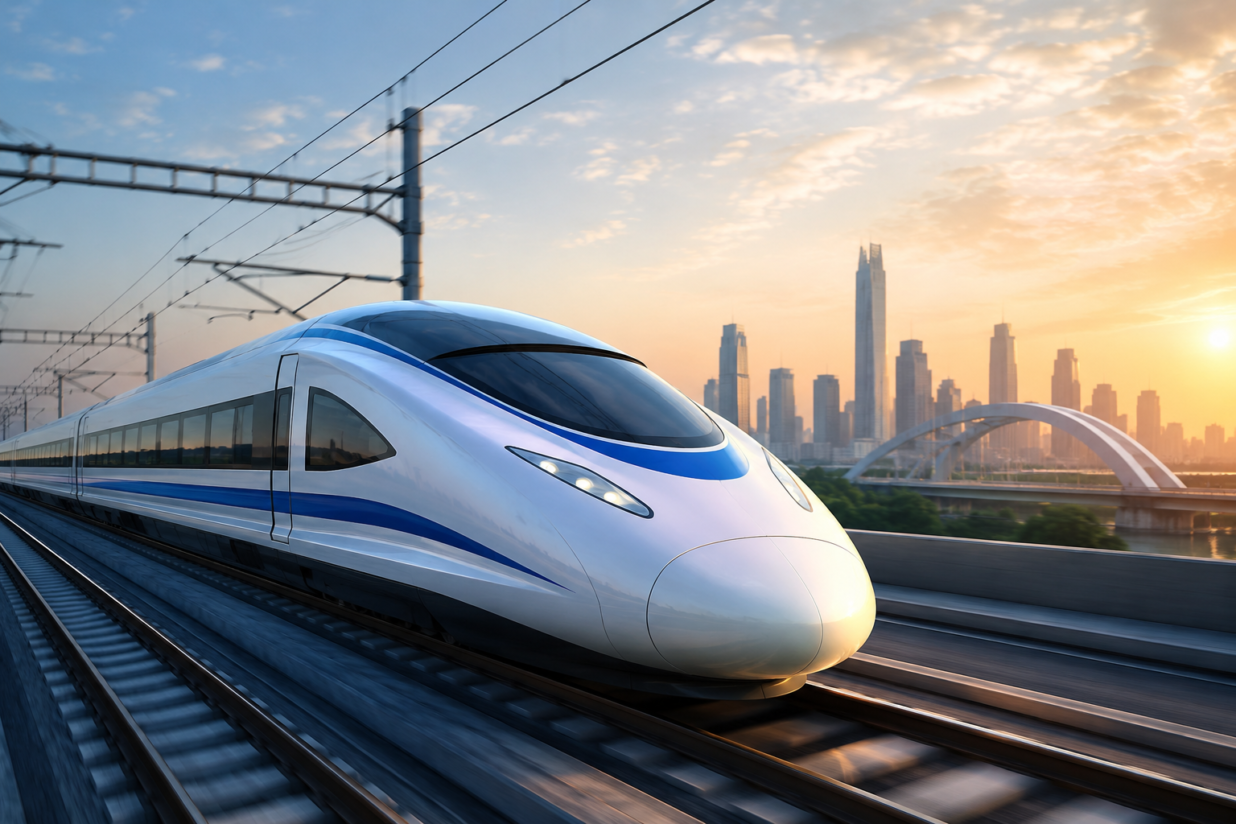
India Bullet Train :Japan confirmed its support for completing the Mumbai-Ahmedabad High-Speed Rail (MAHSR) project on time, providing additional impetus to India’s ambitious high-speed rail initiative. The revelation comes as India plans to expand its bullet train network to about 7,000 kilometers, a huge step toward revolutionizing long-distance rail travel across the country.
During meetings between Indian and Japanese authorities, Japan expressed confidence that the MAHSR corridor will meet its critical 2027 milestone. The project, which uses Japanese Shinkansen technology, is India’s first bullet train corridor and will serve as the foundation for a much larger high-speed rail network in the following decades.
India Bullet Train Expansion Gains Momentum With MAHSR Timeline
The Mumbai-Ahmedabad High-Speed Rail line is moving along gradually, with construction underway in numerous sections. The first operational leg between Surat and Vapi is scheduled to open in 2027, with the entire corridor to be completed subsequently. The project is being carried out with financial and technical aid from Japan, whose Shinkansen system is world-renowned for its speed and safety.
Officials say the successful completion of the first bullet train track will boost India’s confidence in expanding high-speed rail services nationally. As part of its long-term transportation policy, the government has identified many future corridors that would connect significant economic and demographic centres.
According to government estimates, India intends to build over 7,000 kilometres of high-speed rail lines throughout time. These routes are planned to improve connectivity, shorten travel times between major cities, and spur economic development in various regions.
Experts believe that high-speed rail can assist passengers transition from automobile and plane travel to a speedier and more ecologically friendly railway system. Better connection is also projected to enhance tourism, business travel, and regional investment, thereby benefiting India’s burgeoning urban economy.
The National High Speed Rail Corporation Limited continues to oversee the development and construction of present and future bullet train corridors.
MAHSR Timeline Supports India Bullet Train Growth Strategy
Japan’s sustained support demonstrates the two countries’ close strategic collaboration in infrastructure development. Since the start of the MAHSR project, Japanese organizations have supplied financing, engineering experience, and modern rail technology to assist India in establishing its first high-speed railway.
Officials from both countries feel that the expertise gathered from the Mumbai-Ahmedabad project will make future bullet train development more efficient. Collaboration with Japanese professionals provided vital technical expertise to Indian engineers and workers, potentially reducing reliance on foreign support in future projects.
The proposed expansion is also consistent with India’s overall infrastructure aims of developing faster, safer, and more dependable transportation systems. Several new high-speed rail lines are being considered to connect major commercial and industrial areas across the country.
Despite the hope, obstacles persist. Large-scale land acquisitions, environmental approvals, funding, and construction complexity continue to have an impact on project schedules. Authorities said they are collaborating closely with state governments and stakeholders to address these concerns while upholding quality and safety standards.
Industry analysts believe that a successful development of India’s bullet train network could considerably improve national logistics and regional connections. It may also spur new investments in manufacturing, technology, and urban development around future high-speed rail stations.
As India works toward a modern railway network, Japan’s backing for the 2027 MAHSR milestone boosts confidence in one of the country’s most ambitious transportation projects. The success of this route is projected to influence the future of high-speed rail expansion in India for decades.
- Join our whatsapp channel for daily updates.
- Follow tazatimesnews Telegram Channel for latest news alerts.
- Follow TazaTimesNews on TruthSocial for exclusive updates
- Also reads : Trump Iran Conflict : Trump Says Iran Conflict Nearing End, Claims Tehran Eager for Deal