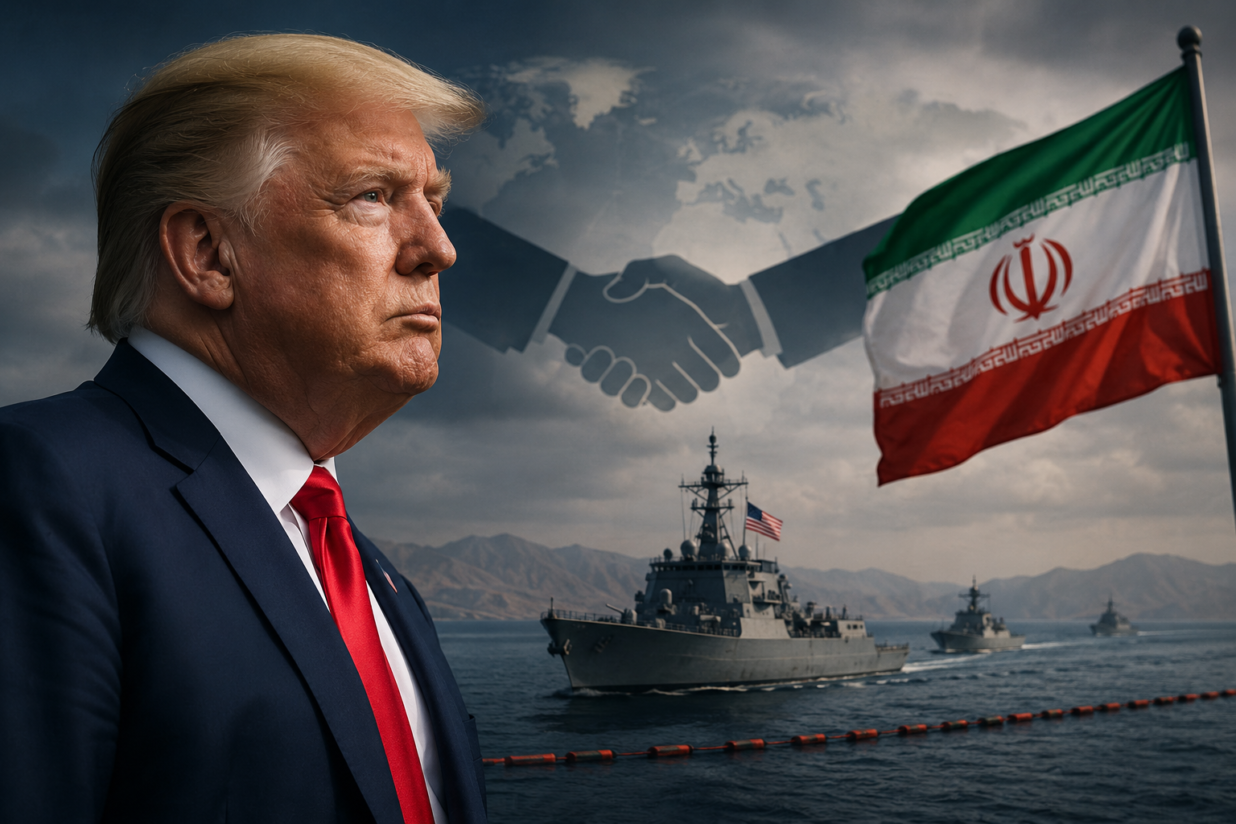
US-Iran Relations :The United States has rejected Iran’s claim that it has closed the strategically important Strait of Hormuz, adding to uncertainty as American and Iranian officials prepare for diplomatic talks aimed at reducing tensions. The issue has raised questions about regional stability and the future of global energy supplies.
Iran’s Islamic Revolutionary Guard Corps (IRGC) announced the closure of the important canal, accusing the US of failing to comply with pledges made under a recently agreed ceasefire accord. Iranian sources stated that the decision was related to ongoing hostilities between Israel and Hezbollah in Lebanon.
The US military, on the other hand, contradicted the announcement, claiming that commercial traffic via the waterway was still ongoing. The US Central Command reported that dozens of commercial vessels carrying millions of barrels of oil had passed through the Strait of Hormuz, demonstrating that shipping activity had not ceased.
The Strait of Hormuz is one of the world’s most vital energy corridors, linking the Persian Gulf to international markets. Any disturbance in this area has the potential to effect global oil prices, shipping costs, and economies.
Strait of Hormuz tensions increase as US Iran talks seek progress
The debate occurs at a crucial time, as US and Iranian negotiators prepare to meet in Switzerland. The negotiations are tied to efforts to sustain the truce and resolve larger problems, such as regional security concerns.
Vice President JD Vance and other top officials are anticipated to join the US group, while Mohammad Baqer Qalibaf will lead Iran’s mission. International mediation efforts, including Pakistan’s participation, are assisting with the negotiations.
Washington has claimed that keeping the Strait of Hormuz open is critical for global trade and energy security. US officials stated that they are watching the situation and working to protect freedom of navigation.
Iran, meantime, has warned that it may take more steps if it deems promises under the ceasefire accord are not fulfilled. The disagreement demonstrates how unstable the diplomatic situation is, despite recent efforts to reduce confrontation.
The most recent occurrences also demonstrate how regional conflicts can quickly impact global markets. Even temporary uncertainty in the Strait of Hormuz can cause anxieties among oil importers, energy corporations, and consumers.
Global energy markets watch Strait of Hormuz situation amid Middle East risks
The protracted disagreement has heightened concerns about the security of one of the world’s busiest energy corridors. The waterway transports oil and gas supplies from Gulf countries to worldwide purchasers.
Although the US insists shipment is continuing, contradicting comments from Washington and Tehran have caused confusion among traders and governments. Energy markets frequently react significantly to potential supply interruptions, particularly in regions threatened by military conflicts.
The situation also puts strain on diplomatic efforts. A successful deal might boost regional stability, but repeated disagreements over military activities and ceasefire terms could stymie progress.
Officials from both sides must continue communication while preventing additional escalation. The Strait of Hormuz’s destiny remains inextricably linked to larger Middle Eastern political trends.
For the time being, the US insists that the channel stay open, despite Iran’s warning, which has raised worries of another showdown. The upcoming negotiations will be widely monitored as leaders try to avoid a fresh crisis and safeguard global energy flows.
- Join our whatsapp channel for daily updates.
- Follow tazatimesnews Telegram Channel for latest news alerts.
- Follow TazaTimesNews on TruthSocial for exclusive updates
- Also reads : Trump Iran Deal Draws Sharp Reaction From Senate GOP