
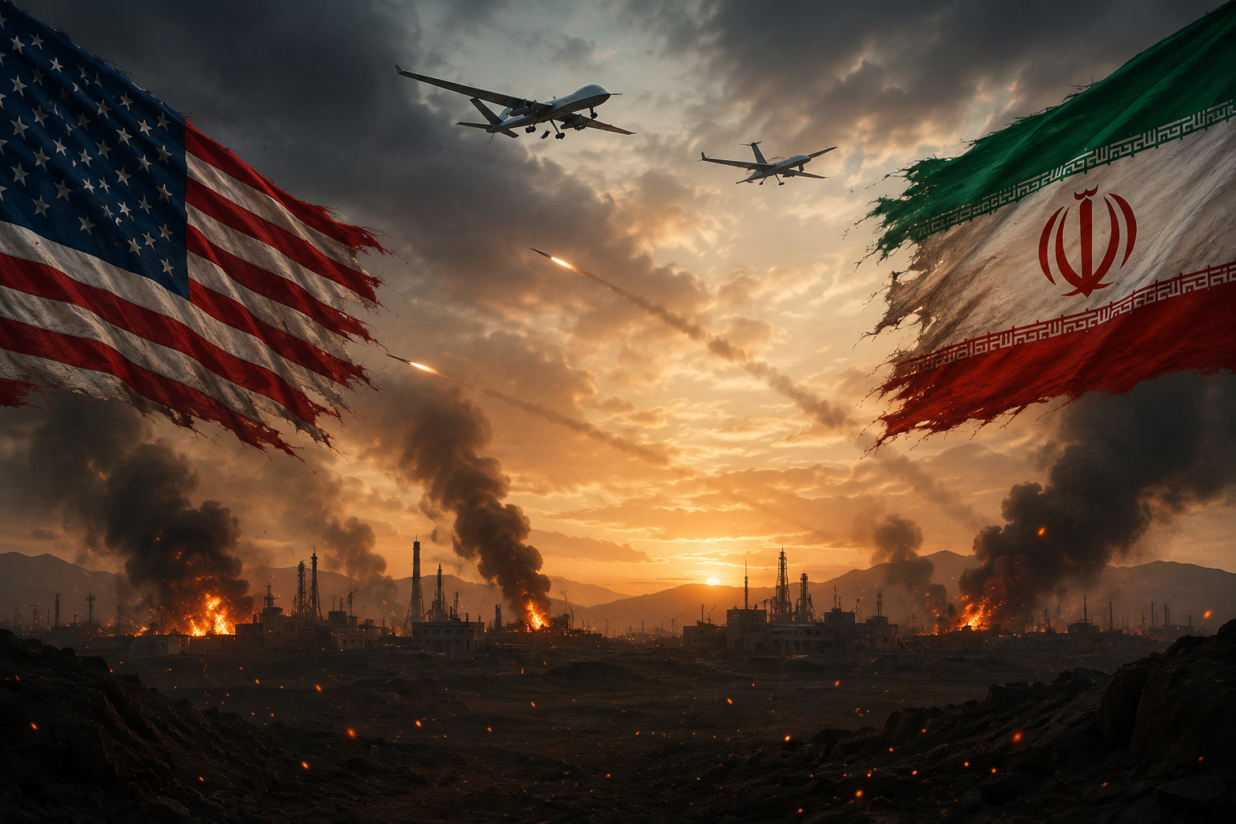
US Iran Conflict : The US conducted military strikes on Iranian coastal surveillance installations after intercepting and destroying several Iranian drones near the Strait of Hormuz, escalating the continuing tension between Washington and Tehran. The most recent clash has sparked fears about regional security, global oil supply, and the future of diplomatic efforts to resolve months of hostility.
According to the US military, four Iranian attack drones were fired toward the Strait of Hormuz, one of the world’s busiest maritime routes. American officials stated that the drones presented a threat to maritime activity in the vicinity. US military retaliated by shooting down the drones before unleashing strikes on Iranian radar and monitoring sites along the country’s southern coast. The targeted locations included Goruk and Qeshm Island installations.
The event occurs at a crucial time, since both governments have been engaged in indirect conversations aimed at easing tensions and laying the groundwork for a broader ceasefire. However, frequent military encounters have complicated those attempts, raising doubts about whether a diplomatic breakthrough can be achieved soon.
US Iran Conflict Update Shows Fragile Peace Under Pressure
Military officials in Washington characterized the latest action as defensive and required to secure international commerce lines. The Strait of Hormuz is a crucial conduit for global oil exports, and any disruption to vessel transit through the strait can have a significant impact on international energy markets.
Meanwhile, Iran has accused the United States of escalating tensions in the Gulf. Iranian military statements have previously stated that warning rockets and drones were employed against American naval ships operating in the Gulf of Oman. Several of these assertions have been refuted by US authorities, who argue that American efforts are aimed at ensuring regional stability and maritime security.
The battle, which has been ongoing for more than three months, has already had an impact on shipping activities, increased vessel insurance rates, and contributed to global oil price volatility. Analysts warn that any more escalation near the Strait of Hormuz might have far-reaching economic ramifications beyond the Middle East.
US Iran Conflict Update Raises Concerns Across Middle East
Regional governments are attentively monitoring developments as tensions between the United States and Iran spread beyond direct interactions. Recent missile alarms, drone mishaps, and military exchanges have affected a number of Gulf countries, raising concerns about regional security and trade.
Domestic audiences continue to put pressure on political leaders from both parties. Rising fuel prices and concerns about a long-term war in the United States have fueled calls for a diplomatic resolution. Meanwhile, Iran has tied any long-term peace to economic demands, including as sanctions relief and access to frozen assets.
Despite the most recent military action, diplomats have not entirely abandoned negotiations. However, the most recent exchange of force demonstrates how rapidly tensions can escalate and how fragile present peace attempts remain. As military operations and diplomatic conversations continue concurrently, the Middle East confronts yet another period of uncertainty, with enormous ramifications for global security and oil markets.
- Join our whatsapp channel for daily updates.
- Follow tazatimesnews Telegram Channel for latest news alerts.
- Follow TazaTimesNews on TruthSocial for exclusive updates
- Also reads : Oil Price Surge as US-Iran Tensions Disrupt Strait of Hormuz