
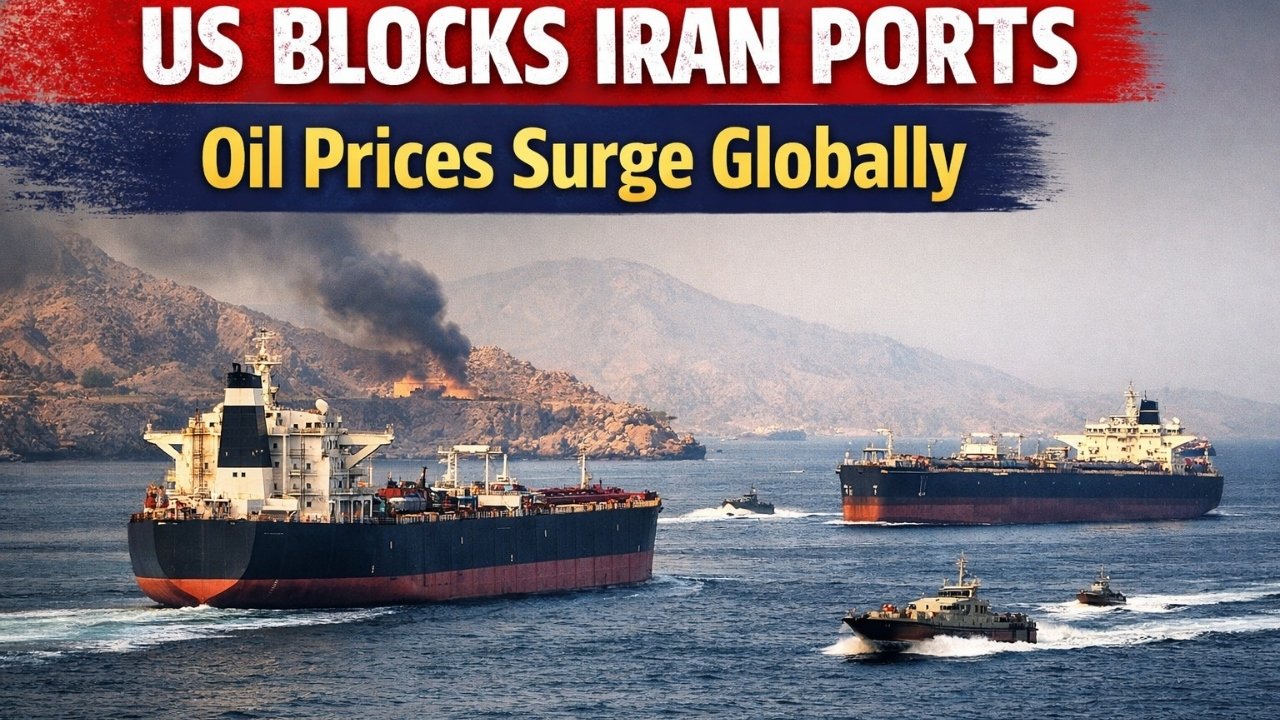
US Blockade Iran Ports : Oil prices jumped in early trading on Sunday after the US announced that it would launch a blockade of Iranian ports on Monday.
The price of US crude oil increased by 8% to $104.24 a barrel, while the worldwide benchmark, Brent crude oil, jumped by 7% to $102.29.
Market Fluctuations Amidst Geopolitical Tensions
Brent crude oil prices have risen from around $70 per barrel in late February to highs of more than $119. Prior to the recent peace talks, Brent crude for June delivery slipped 0.8% on Friday to $95.20 per barrel.
Strategic Importance of the Strait of Hormuz
Iran has effectively controlled the Strait of Hormuz, a critical route for global oil shipments. Every day, around 20% of the world’s oil commerce goes via this tiny waterway, with significant exporters including Saudi Arabia, Iraq, the United Arab Emirates, Kuwait, and Iran.
U.S. Central Command Enforcement Measures
The US Central Command declared that the blockade would be applied impartially to vessels from all nations that enter or exit Iranian ports and coastal areas. Ships transiting between non-Iranian ports will be allowed to pass through the Strait of Hormuz.
US blockade Iran ports impact pushes global oil prices higher
Global oil prices have risen substantially on rumors of a US blockade hitting Iranian ports. This decision has caused stress in the energy market and generated fears about supply disruptions.
According to reports, the blockade has hampered Iran’s oil shipments. As a result, supply in the global market has constricted, resulting in a sharp increase in crude oil prices. Traders and investors are responding fast to the issue.
Energy experts believe that even minor disruptions in key oil-producing regions can have a significant impact. Iran is a significant player in global oil supplies, and any restrictions on its exports can cause prices to rise within days.
Crisis for consumers or opportunity for producers?
Oil price increases could have a direct impact on global fuel costs. Countries that rely significantly on oil imports may suffer greater costs, raising inflation and putting pressure on ordinary citizens.
The transportation and manufacturing sectors are projected to bear the brunt of the damage. Higher gasoline prices frequently result in greater expenses for goods and services. This can limit economic growth in a variety of places.
On the other side, oil-exporting countries may benefit from the situation. Higher prices can boost their revenue and help their economies in the near run.
Some analysts believe this situation could also push countries to look for alternative energy sources. It may speed up investment in renewable energy as nations try to reduce dependence on unstable oil markets.
What happens next in global energy market?
The future of oil prices depends on how long the blockade lasts. If tensions build, prices may rise further. However, if diplomatic negotiations begin and the situation improves, the market could stabilize.
Global organizations and governments are closely monitoring events. Any abrupt change in policy or military action might quickly influence market sentiment.
The oil market is now unpredictable. This circumstance demonstrates how geopolitical events can have a direct impact on everyday living, ranging from fuel prices to general economic stability.
- Join our whatsapp channel for daily updates.
- Follow tazatimesnews Telegram Channel for latest news alerts.
- Follow TazaTimesNews on TruthSocial for exclusive updates
- Also reads : Trump Iran Strike Warning: Powerful Weapons Threat Sparks Hope and Fear