
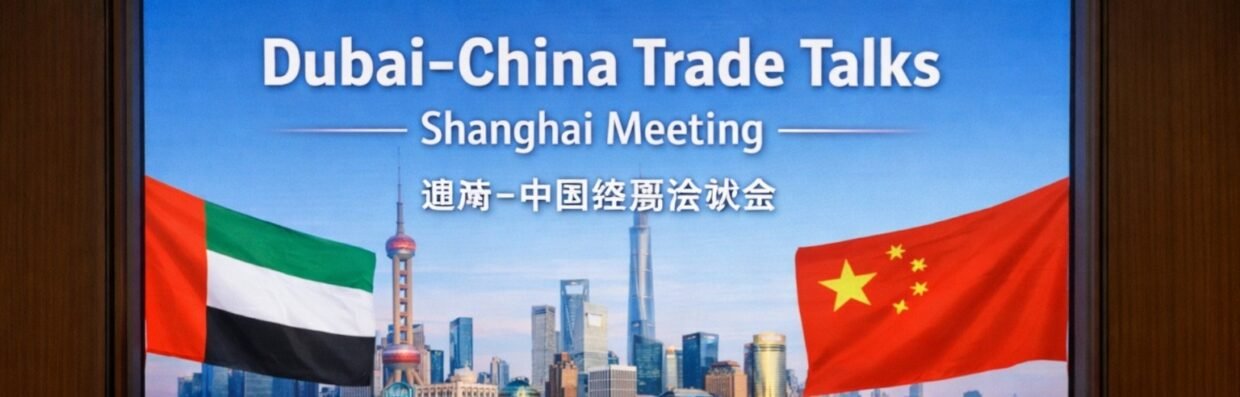
Dubai-China Trade Push : The China Council for the Promotion of International Trade (CCPIT) Shanghai and Dubai Chambers have met to discuss ways to improve economic cooperation and broaden trade and investment connections between China and Dubai.
Yang Dongsheng, Vice Chairman of CCPIT Shanghai, and H.E. Mohammad Ali Rashed Lootah, President and CEO of Dubai Chambers, were present. Discussions were on improving cooperation between important development sectors, with a focus on the digital economy, which still offers enterprises in both regions a lot of prospects.
According to H.E. Mohammad Ali Rashed Lootah, Dubai and China have a robust and active economic partnership with much room for growth. “We are dedicated to promoting two-way investment flows, investigating new opportunities across priority sectors, including the digital economy, and bolstering cooperation between the business communities in both markets,” he stated.
The meeting takes place in the context of China’s expanding commercial presence in Dubai. In 2025, 1,583 Chinese companies joined the Dubai Chamber of Commerce, ranking seventh among countries of origin. This is a seven percent yearly growth rate.
By promoting company growth, opening up access to foreign markets, developing Dubai’s digital economy, and bolstering the emirate’s standing as a major international hub for commerce and investment, Dubai Chambers continues to play a crucial role in propelling the emirate’s economic development.
Dubai is making a significant move to strengthen its international trading network. Building stronger economic connections and creating new investment avenues have been the main topics of recent discussions between Dubai Chambers and China’s trade association.
Dubai China Trade Talks Strengthen Future Business Growth
During discussions with the China Council for the Promotion of International Trade, Dubai officials discussed how to expand trade and investment flows between the two regions. The discussions aimed to improve cooperation and open up new commercial prospects across sectors.
China remains one of Dubai’s top trading partners, making this collaboration critical. Leaders emphasized that better linkages might boost growth in sectors such as manufacturing, healthcare, and digital technology.
While this indicates strong economic growth, analysts caution that over-reliance on a single large partner may pose future problems if global markets move.
Focus on Digital Economy and Advanced Industries
The presentations emphasized future industries such as the digital economy, science, and sophisticated manufacturing. Dubai intends to establish itself as a global hub for innovation and corporate growth.
Officials believe that collaborating with Chinese enterprises will bring new technology and investments to Dubai. This has the potential to create jobs while also improving the general business climate.
However, issues remain. Competition in global marketplaces is increasing, and success will be determined by how well these plans are implemented.
Strategic Agreements and Long-Term Vision
These negotiations build on previous agreements reached during business meetings in Dubai and China. The purpose is to help enterprises develop into both markets and strengthen long-term economic collaboration.
Dubai’s objective is clear: become a global gateway connecting Asia, Europe, and Africa. Strong relationships like this are essential to realizing that ambition.
On the plus side, this may attract more foreign investment and accelerate economic growth. On the downside, it necessitates careful balancing to avoid economic dependency.
Final View: Growth Opportunity with Strategic Risks
The recent Dubai-China negotiations demonstrate a strong desire to strengthen trade and investment ties. While the relocation presents significant growth prospects, its long-term success will be dependent on diversification, prudent regulations, and global market stability.
- Join our whatsapp channel for daily updates.
- Follow tazatimesnews Telegram Channel for latest news alerts.
- Follow TazaTimesNews on TruthSocial for exclusive updates
- Also reads : Trump Iran Strike Warning: Powerful Weapons Threat Sparks Hope and Fear