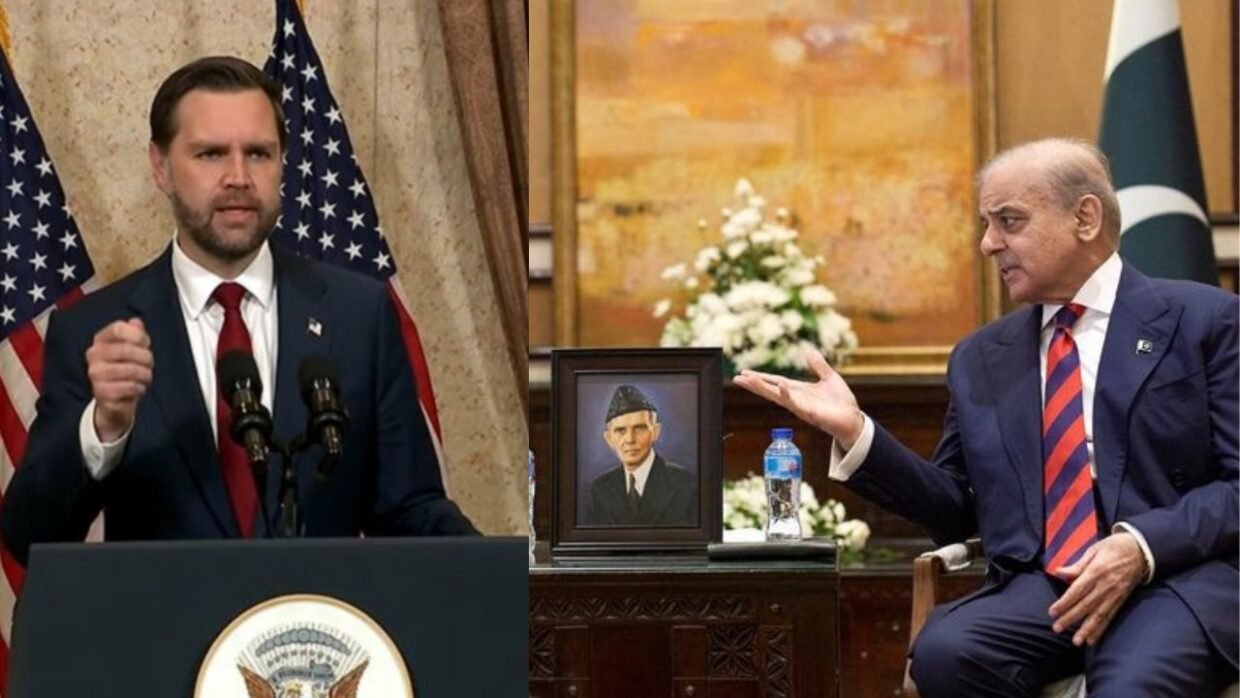
US-Iran Talks Breakdown : After hours of negotiations in Pakistan between the United States and Iran, talks came to a halt on Sunday, with US Vice President JD Vance stating that no agreement had been achieved. He stated that, while they will be returning to the United States, the move is “bad news for Iran” rather than for the United States.
Addressing reporters from Islamabad, Vance stated that several significant conversations occurred during the 21-hour negotiations, but no conclusions were made.
“The good news is that we have reached some substantive agreements with the Iranians. The unfortunate news is that we did not reach an agreement. This is bad news for Iran more than for the US.We return to the United States without having reached an agreement,” Vance said.
He emphasized that, while the US made it clear what its red lines were and what subjects it was willing to compromise on, Iran “chose not to accept our terms”.
In a statement to the media, Vance repeated that Washington had demanded Tehran’s affirmative promise not to seek nuclear weapons and the means to acquire them.
A important round of peace talks between the United States and Iran has concluded without an accord. The high-level summit in Islamabad aroused hopes for stability, but the conclusion has caused new uncertainty in world affairs.
US Iran Islamabad talks stalemate and JD Vance statement
JD Vance said that no agreement was achieved following lengthy conversations with Iranian authorities. The talks lasted several hours, but neither side could reach an agreement on important points.
According to officials, the talks were serious but ended in a deadlock. The United States has set explicit criteria, including limitations on Iran’s nuclear development. However, Iran refused to accept these criteria, resulting in a collapse in the discussions.
Vance termed the conclusion as “bad news for Iran” rather than the United States. He further stated that the US has already given its final offer and is now awaiting Iran’s reaction.
The meetings were held with Pakistan serving as a mediator, demonstrating its rising influence in international diplomacy.
Key issues behind the failure of negotiations
One of the most serious debates was over nuclear policy. The US wants Iran to stop building nuclear weapons, but Iran is determined to preserve its national interests.
Another big concern was control over key trade routes such as the Strait of Hormuz. This route is crucial to world oil supplies, making the discussions all the more important.
Despite nearly 20 hours of meetings, neither side could find common ground. This demonstrates how profound the contrasts remain between the two countries.
Also reads : UAE Crisis: Leaders Credit Unity and Strong Institutions for Overcoming Crisis
Positive signals and rising global concerns
Despite the fact that no agreement was achieved, neither party has completely ruled out further negotiations. There are indications that conversations may continue on a technical level.
On the plus side, ongoing dialogue might still alleviate tension. However, failure to establish an agreement may increase the possibility of regional violence.
Experts warn that if the discussions fail again, it might have an impact on world oil supply and regional stability.
Final thought
The Islamabad talks represent both optimism and challenge in global diplomacy. Although no agreement was reached, the attempt itself is significant.
Future conversations will determine whether this situation results in peace or deeper war. For the time being, the globe is keeping a careful eye on everything because tensions are still high.
- Join our whatsapp channel for daily updates.
- Follow tazatimesnews Telegram Channel for latest news alerts.
- Follow TazaTimesNews on TruthSocial for exclusive updates