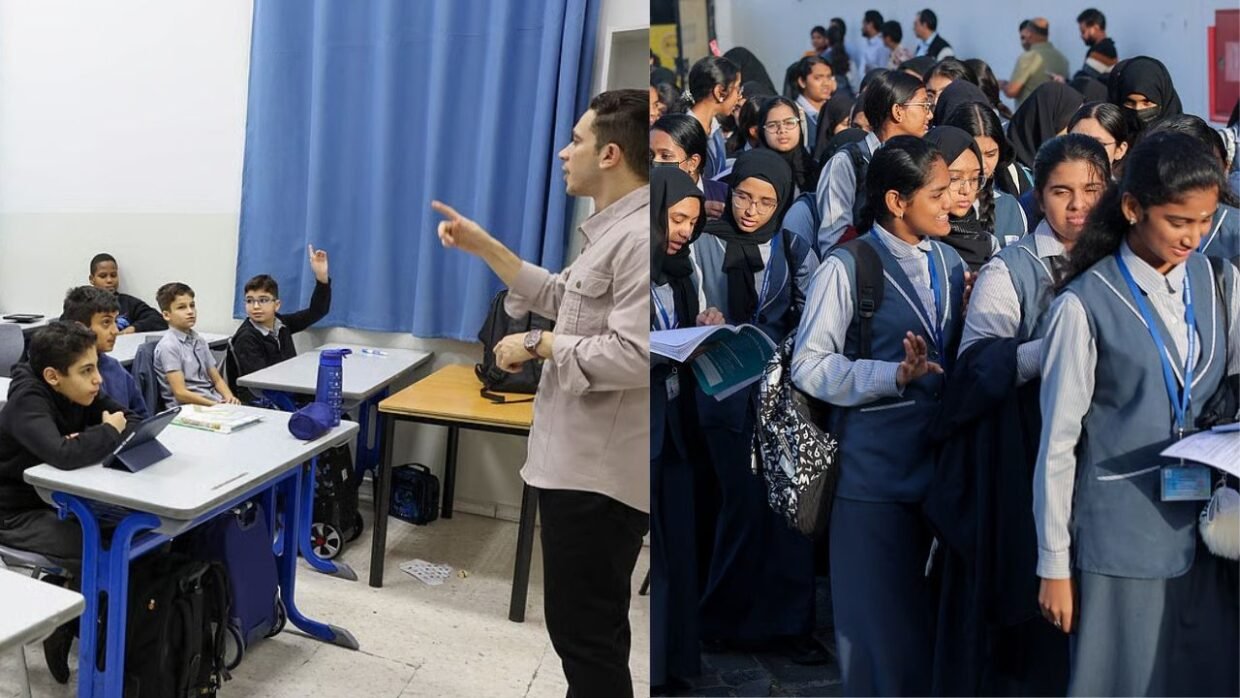
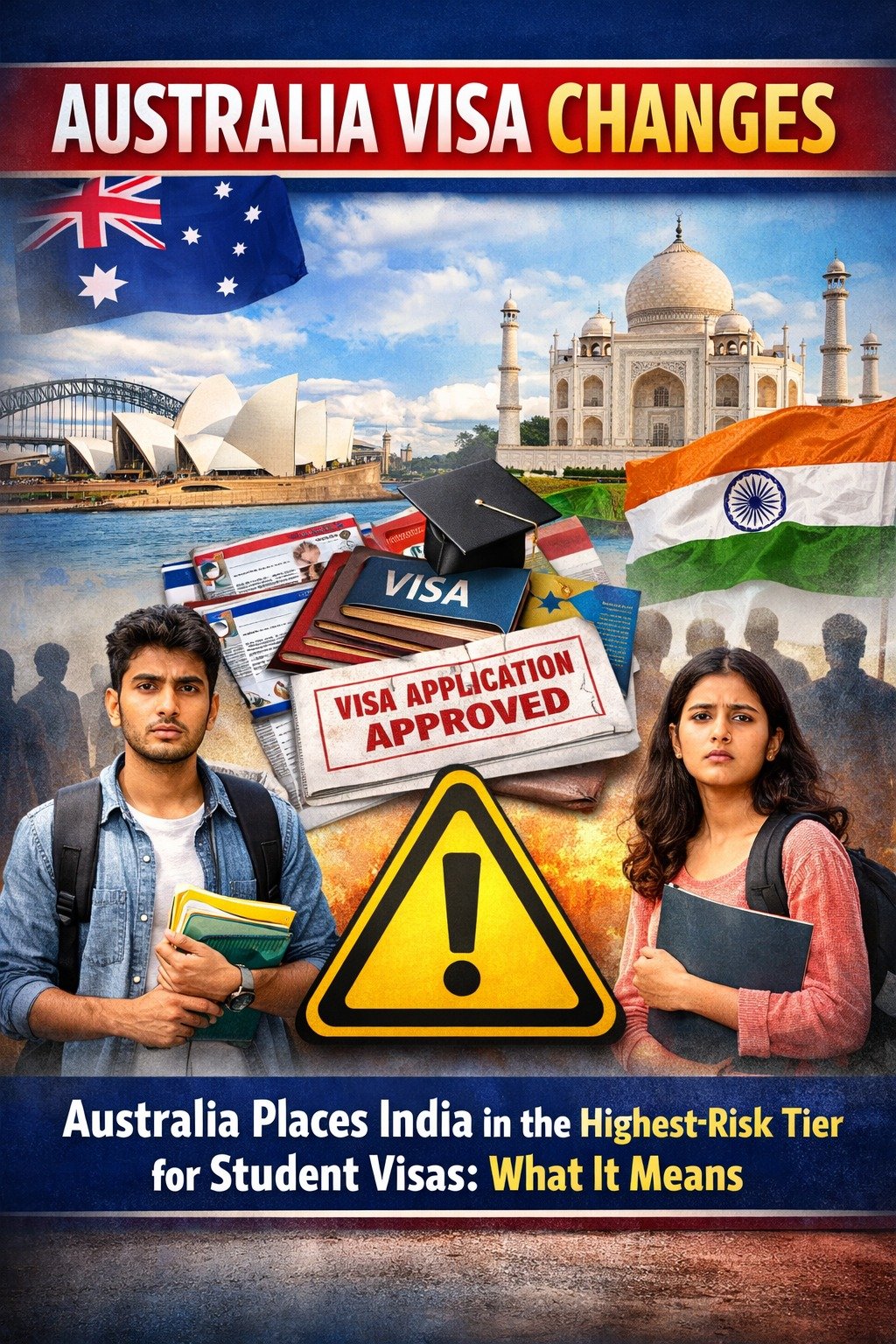
Australia Visa Changes : Australia has categorized India under the highest-risk category (Assessment Level 3, or AL3) for student visas, a move that will require stricter documentation and increased scrutiny of applicants. The risk assessment framework consists of three levels: AL1 (lowest risk) to AL3 (highest risk). This decision shifts India from AL2 to AL3, despite the country being one of Australia’s largest sources of international students, accounting for nearly 140,000 of the country’s approximately 650,000 enrollments.Australia has announced major australia visa changes by placing India in the highest-risk tier for student visas, leading to stricter checks and documentation requirements for applicants.
The changes came into effect on January 8, 2026. In an official statement, authorities noted, “This change in Evidence Levels will assist with the effective management of emerging integrity issues, while continuing to facilitate genuine students seeking a quality education in Australia.”
Other South Asian countries, including Nepal, Bangladesh, and Bhutan, have also been placed in the AL3 category. Pakistan has remained in the highest-risk tier.
According to Australia Today, Julian Hill, Minister for Overseas Education, stated that Australia has become “the least worst country of choice among the Big Four” destinations for international students. The other three countries in this group are the United States, the United Kingdom, and Canada.
New Documentation Requirements
According to the report, students will now be required to submit more extensive proof of financial capacity, English language proficiency, and genuine temporary entrant intentions, along with other supporting documents.
Abul Rizvi, former Deputy Secretary of the Australian Department of Immigration, explained that higher-risk categories require more documentation, with visa officers closely inspecting and verifying submitted papers. “They will contact institutions to verify transcripts, and they may also approach banks to confirm financial statements,” he said.
Also reads : How to Prepare for CTET Exam Successfully
Rizvi suggested that the recent large-scale fake degree bust in India may have contributed to India’s reclassification.
Kerala Fake Diploma Racket
Kerala Police recently uncovered a fake certificate racket that allegedly issued fraudulent diplomas to nearly one million people enrolled in international colleges.
Australian Senator Malcolm Roberts accused Prime Minister Anthony Albanese’s administration of failing to adequately address the issue.
“Police in India have reportedly seized 100,000 forged certificates from 22 universities, with more than one million likely used for jobs overseas,” Roberts wrote in a post on X on January 6.
“I warned about this in August and raised questions during the October Estimates. Around 23,000 foreign students in Australia were found with ‘purchased’ degrees, many working in aged care and early childhood,” the senator stated.
However, it remains unclear whether these changes are temporary or signal a long-term shift in Australia’s international student visa policy.
How Australia Visa Changes Affect Indian Students
According to recent visa reforms in Australia, Indian students may face stricter screening, longer processing times, and increased documentation requirements. Applicants must provide stronger financial proof, clear academic intent, and genuine study plans. Despite the heightened scrutiny, well-prepared students can still obtain visas.
- you join our whatsapp channel
- you join our tazatimesnews Telegram Channel
- you join our tazatimesnews truthsocial.com Channel