Philippines-Australia Defence Pact : The Philippines and Australia have agreed to make joint military cooperation easier by reducing administrative delays under a new defence arrangement signed in Manila on Sunday. The agreement is expected to simplify coordination between their armed forces and expand cooperation across maritime, air and land operations.
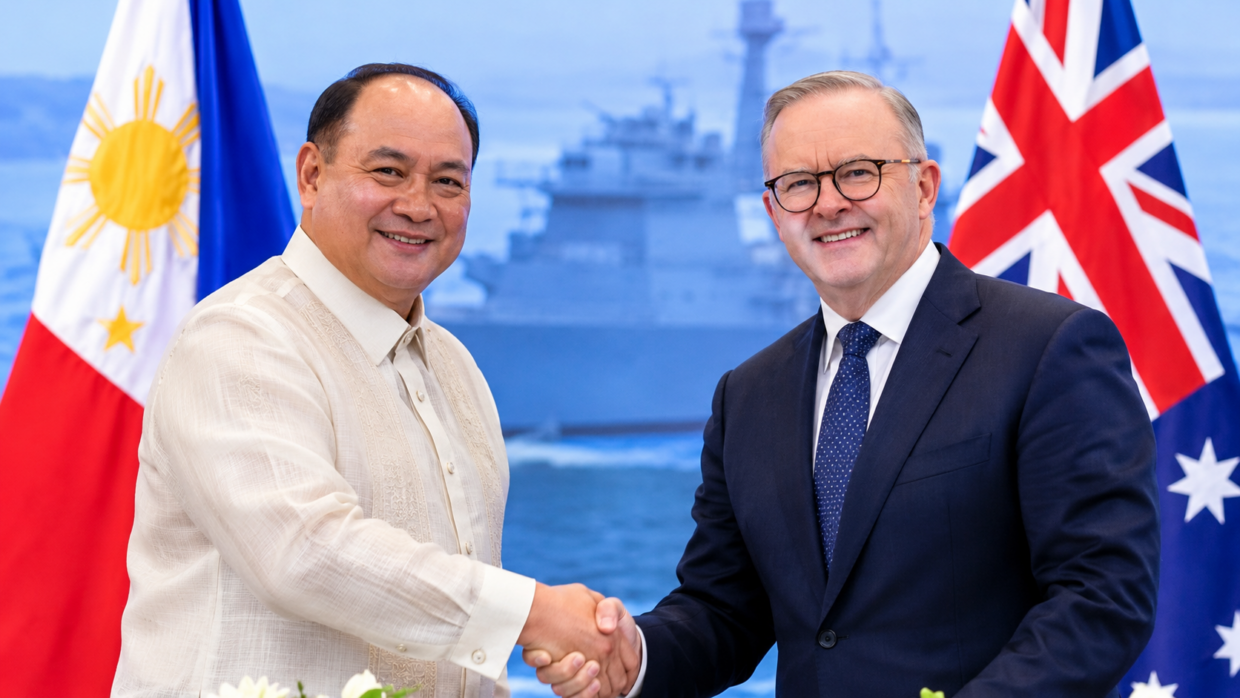
As both nations worked to fortify their security ties, the signing took place. While visiting the Philippine capital for an Association of Southeast Asian Nations (ASEAN) meeting, Australian Prime Minister Anthony Albanese saw the ceremony.
According to Gilberto Teodoro, the Philippine Defense Secretary, the new arrangement will facilitate the implementation of the current Status of Visiting Forces Agreement (SOVFA). It seeks to minimize the number of steps necessary for cooperative military operations.
According to Teodoro, the agreement is a safeguard against needless paperwork. He clarified that a procedure that used to take about 100 stages could now be finished in about 10.
Philippines-Australia Defence Pact Cuts Military Delays
The new structure will make the execution of SOVFA easier by enhancing collaboration between the two nations. It is intended to eliminate administrative barriers that often stymie cooperation initiatives involving their military personnel.
Cooperation will extend to marine security, aviation operations, and ground troops. The agreement also covers humanitarian aid and disaster response, allowing the two countries to collaborate more closely in a variety of scenarios.
Teodoro stated that the agreement will enhance the Philippines’ attempts to establish a credible deterrent posture, notably in the South China Sea. Because multiple nations have competing maritime claims, the vital waterway continues to play a key role in regional security concerns.
Manila is increasing its defense relationships while preserving its long-standing treaty alliance with the United States. Its increased security cooperation with other countries comes as the Philippines continues to express alarm about China’s actions in the disputed waters.
Australia has supported the Philippines’ position in the South China Sea. Canberra supports a 2016 verdict by an international arbitration tribunal that declared China’s wide maritime claims unfounded under international law. Beijing has challenged the judgment, insisting that its actions on the canal are legal and professional.
China has also routinely criticized joint military exercises involving the Philippines and its security allies, claiming that they exacerbate regional tensions.
Philippines-Australia Defence Pact Expands Maritime Security
Albanese stated at the signing ceremony that the pact will boost collaboration in numerous key defense areas. These activities include marine awareness, information exchange, strategic talks, and military training.
He also spoke about initiatives to strengthen cooperation between the two military services. This would be aided by more collaboration in defense infrastructure development and other military tasks.
Along with the deal, the Australian prime minister pledged extra funding for marine domain awareness. The assistance will consist of drone technology, equipment, and training.
These materials are meant to aid with the detection of maritime and cybersecurity hazards. The strengthened collaboration also includes improved information exchange and monitoring capabilities.
The current agreement strengthens the two countries’ security partnership. Both governments hope to make their defense efforts easier to organize and carry out by streamlining military processes and enhancing practical collaboration.
Conclusion
The defense accord between the Philippines and Australia simplifies their cooperation on military and security issues. The deal offered by Manila has a crucial aspect of reducing administrative procedures from about 100 stages to 10. The pact also includes sea, aviation, and land operations, as well as humanitarian support and disaster relief. Australia’s further investment in drone technology, equipment, and training will help to identify marine and cybersecurity concerns. The two countries also want to enhance intelligence exchange, military training, and strategic collaboration. The South China Sea remains a critical regional security problem, and the new agreement adds another layer to their developing defense collaboration while boosting their capacity to perform cooperative actions.
- Join our whatsapp channel for daily updates.
- Follow tazatimesnews Telegram Channel for latest news alerts.
- Follow TazaTimesNews on TruthSocial for exclusive updates
- Also read : Samir Abu Younis Killed in Gaza Airstrike, Hamas Confirms