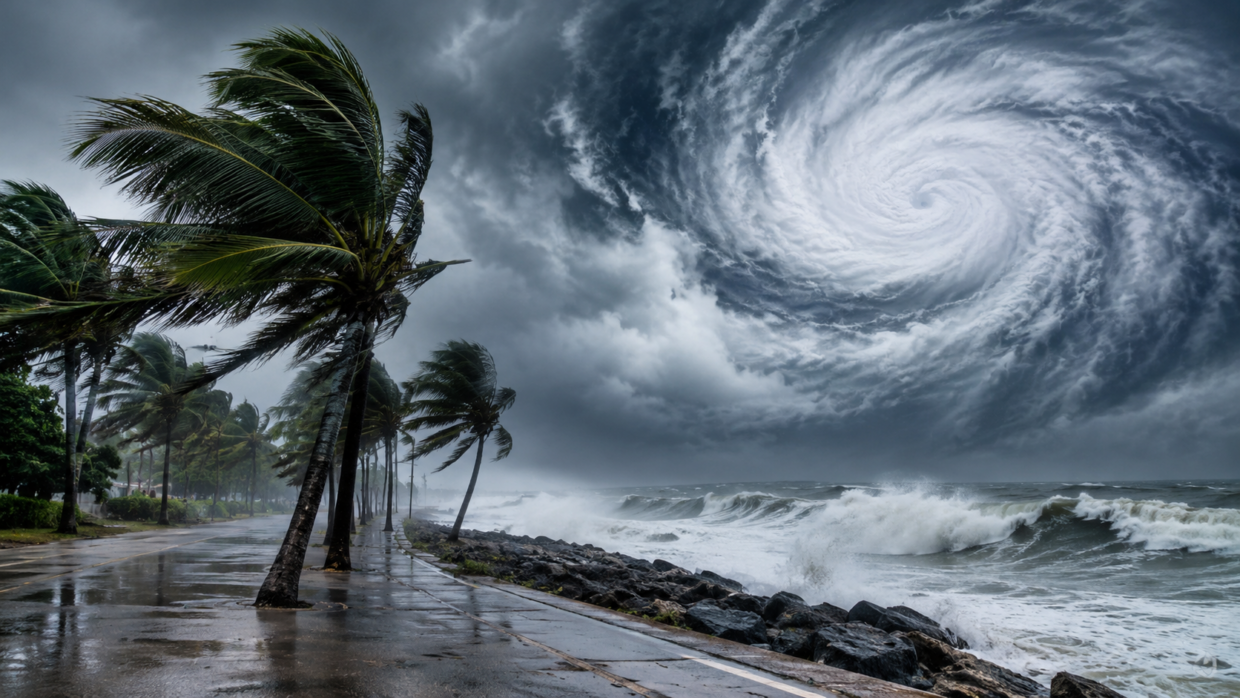
Cyclone Murasu made landfall on the Andhra Pradesh coast early Tuesday, November 3. The storm made landfall in Ongole, between Nellore and Narsapur, with winds gusting to 110 kmph. The India Meteorological Department (IMD) reported strong gusts of up to 120 kmph.
The cyclone passed over the shore between 3:30 and 5:30 a.m. Its center was located in latitude 15.53°N and longitude 80.22°E.
Heavy rain has caused waterlogging in numerous areas of Vijayawada. Roads are flooded, and transportation has been disrupted. Tamil Nadu has also despatched 500 electricity workers to Andhra Pradesh to help restore power.
Cyclone Murasu Causes Waterlogging in Vijayawada
The storm began moving over the Andhra Pradesh coast at 1 a.m. on Tuesday. Its spiral bands and wall cloud landed before the storm’s eye.
At roughly 3:30 a.m., the IMD reported that the storm’s inner spiral belt had begun reaching the coast. By 4:30 a.m., Cyclone Murasu’s eye had reached the shoreline.
The storm made ashore about 5:30 a.m. It proceeded north-northwest at rates ranging from 100 to 110 km per hour.
Vijayawada had severe rain beginning late Monday nite. The rain persisted throughout Tuesday morning, covering several roadways with water.
Bandar Road and Polyclinic Road were among the affected areas. Parts of One Town also faced waterlogging, making travel difficult for commuters.
Tamil Nadu Sends 500 Workers for Power Restoration
Tamil Nadu has despatched 500 electricity department staff to assist Andhra Pradesh in restoring power. They’ve been grouped into 25 teams.
R Nirmal Kumar, the Tamil Nadu Electricity Minister, said the decision was made in response to a plea from Andhra Pradesh Chief Minister N Chandrababu Naidu. The teams will help fix the cyclone-damaged power supply.
The National Disaster Response Force (NDRF) has also deployed three teams to Andhra Pradesh. These teams consist of 90 people and are from the force’s 4th Battalion at Arakkonam in Tamil Nadu.
Each team has 30 members. They will work in areas including Nellore, Prakasam and Markapuram. Their duties include rescue work, debris removal and relief operations.
Cyclone Murasu Puts Odisha on Weather Alert
Odisha has also made measures to prepare for severe rains. The IMD predicts rainfall of 7 cm to 20 cm in southern areas on November 2 and 3.
On November 3, certain sections of the state may see gusts of 50-60 kilometers per hour. Wind gusts might reach 70 kilometers per hour.
The NDRF and Odisha Disaster Rapid Action Force (ODRAF) have been prepared in high-risk locations. Fishermen have been instructed not to enter the water from November 2 to 4.
Officials in Ganjam district have been urged to organize for needed supplies. They’ve also been told to relocate individuals from high-risk regions to approved shelters.
Andhra Pradesh is now grappling with the aftermath of the cyclone, which includes severe rain and power outages. Rescue personnel and electrical workers are assisting in impacted regions, while Odisha stays prepared for the expected downpour.
Cyclone Murasu caused severe winds and heavy rains in Andhra Pradesh after hitting the coast near Ongole. Waterlogging in Vijayawada hampered multiple roadways, and rescue and relief teams were deployed at strategic spots. Tamil Nadu also deployed 500 electrical workers to assist with restoration efforts in Andhra Pradesh.
The influence of the weather system extended beyond Andhra Pradesh. Odisha was also bracing for heavy rain and severe gusts. Disaster response teams were on standby, and fishermen were urged to keep away from the sea. Ganjam officials were instructed to organize for needed supplies and relocate individuals from risky regions to safer locations.
Authorities in both states continued to prepare for any weather-related issues. People in impacted and warned regions should follow government directions and be vigilant until the situation improves.
- Join our whatsapp channel for daily updates.
- Follow tazatimesnews Telegram Channel for latest news alerts.
- Follow TazaTimesNews on TruthSocial for exclusive updates