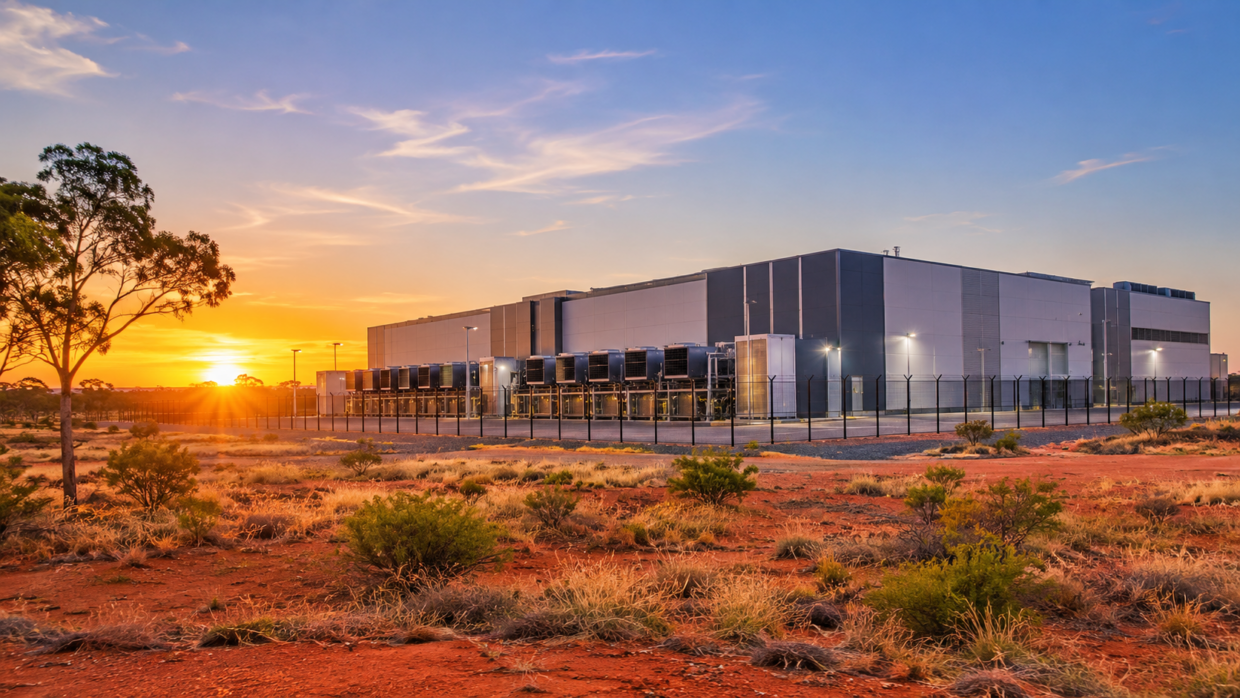
Energy North Data Centre : Energy North has canceled its planned June 2028 start date for a massive data center in Australia’s Northern Territory after an environmental authority postponed its evaluation deadline. The decision makes the project’s timeline unknown as the territory seeks investment in artificial intelligence infrastructure.
The business had earlier said that the facility will receive its first power on June 28, 2028. However, the Northern Territory Environment Protection Authority has deferred its seven-week deadline for determining the environmental conditions that the development must fulfill.
Daniel Hunter, Energy North’s vice president of project development, said the date was only an estimate when the project was submitted for regulatory review. The company is no longer working towards that target and plans to confirm a new schedule after the regulator sets the terms for an environmental impact statement.
Energy North Data Centre Faces Environmental Review
The proposed development, known as Project Ares, would encompass 191 square kilometers (74 square miles) of a cattle ranch in Australia’s far north. The site is 683 kilometers from the nearest city, and the proposed plant has a capacity of one gigawatt.
The proposal comprises a gas-fired power plant, a solar farm, an airfield, and housing for 4,300 construction workers. Energy North has stated that money for the project has been secured, but Hunter failed to disclose the intended lenders.
The environmental authority outlined eleven probable consequences in its finding. These included strain on water supplies and the potential damage of Aboriginal holy places. It also expressed concern about the proposed measures’ ability to properly control possibly significant environmental repercussions.
The regulator has not set a new deadline. It stated that it will seek assistance from the federal government, which is establishing policy guidelines for data centers and AI infrastructure companies.
Hunter said Energy North remained committed to the project despite the delay. The company is waiting for the regulator to define the requirements for the environmental impact statement, which must identify and address possible adverse effects.
Energy North Data Centre Highlights Wider Challenges
The delay occurs as Australia’s Northern Territory seeks to lure huge technological ventures by leveraging its vast territory, abundant sunshine, and gas supplies. The region has over 260,000 persons and covers an area almost twice the size of Texas.
Project Ares is far larger than other Australian data center ventures that have had problems. Its one-gigawatt capacity is four times larger than NextDC’s delayed expansion in Melbourne, and ten times larger than Goodman’s Sydney proposal, which was abandoned due to local resistance.
According to urban planner Adam Beck, existing planning mechanisms were not equipped to handle plans of this size. He also mentioned community issues as something that might hamper big infrastructure projects.
Energy North is not the only enterprise planning large-scale computer facilities in the region. Beetaloo Energy has proposed a second data center in Darwin that is double the size of Project Ares. Its anticipated gas consumption might exceed 400 terajoules per day.
The two planned plants would have a combined capacity of three gigawatts, or around ten times the territory’s peak energy consumption. Both corporations have stated that they plan to eventually mix renewable energy with their own gas-fired power generation rather than relying on the electrical grid.
Consultation with Aboriginal groups is another critical topic. The Northern Land Council has told a government investigation that effective consultation involves travel, translators, and many visits, and that expediting the process does not ensure timely consent.
The Northern Territory Cattlemen’s Association has also advocated for adequate regulations to preserve pastoral activities, land, water, and the environment.
In certain cases, the territory administration can overrule stakeholder concerns, although appeals that reach the federal or High Court might cause further delays in projects. Energy North’s next important step is to get the regulator’s environmental evaluation requirements before establishing a new timeline.
- Join our whatsapp channel for daily updates.
- Follow tazatimesnews Telegram Channel for latest news alerts.
- Follow TazaTimesNews on TruthSocial for exclusive updates
- Also read : Finland FM Criticises US Move on Russian Oil, Urges Visa Curbs