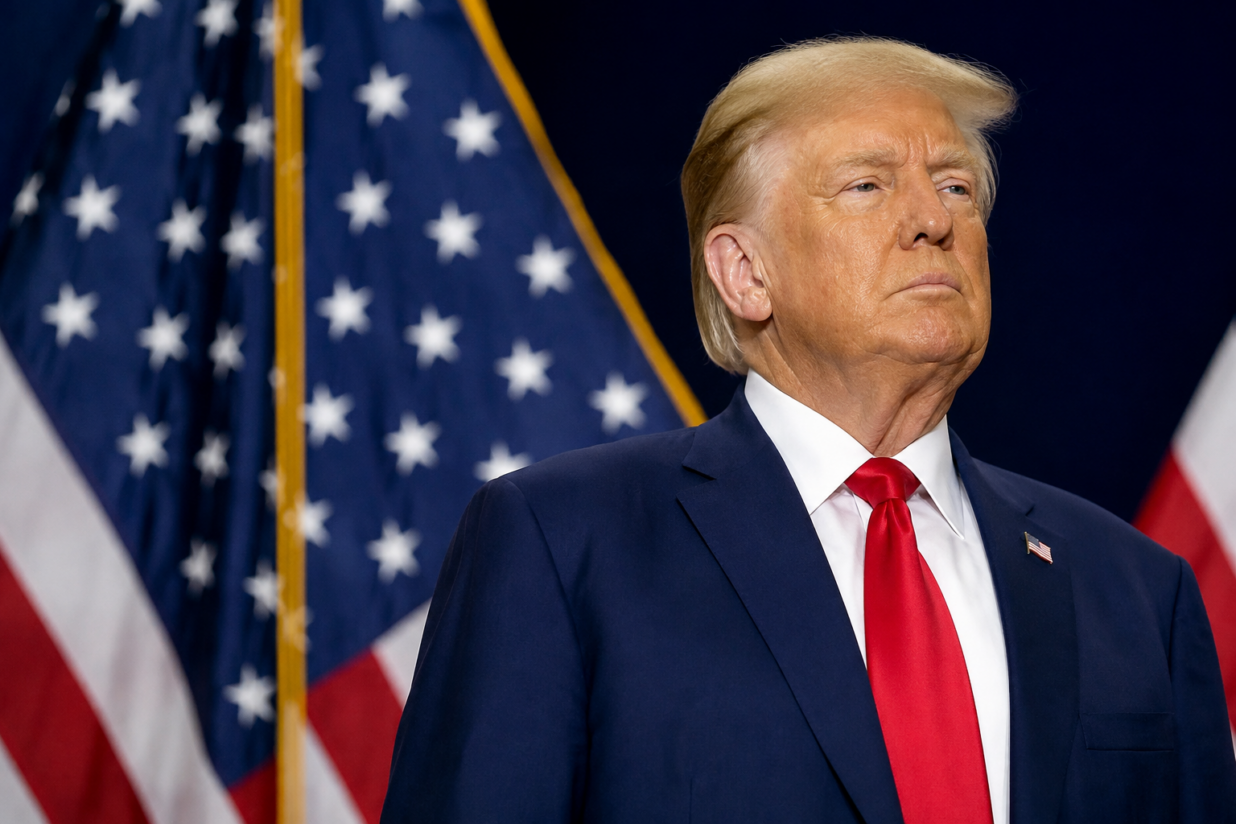
US President Donald Trump said on Tuesday that the Trump-Iran confrontation might be one of the most significant events of his presidency, expressing confidence that the issue with Tehran will be resolved soon. Speaking in Washington, DC, while launching a new AI-powered federal platform, Trump anticipated a dramatic drop in oil prices once supplies via the Strait of Hormuz recovered.
Trump stated that future historians would consider the confrontation as a significant part of his administration’s record. He also compared the conflict to the Iraq conflict, which has drawn condemnation in the United States.
The president stated that Iran was confronting major challenges and reiterated his belief that Tehran should not be permitted to build nuclear weapons. He also stated that the conflict could be resolved in the near future.
Trump Iran War: President Predicts Conflict Will End Soon
During his remarks, Trump stated that the Iran war will be remembered when US history is written. He described the conflict as one of his administration’s most significant initiatives.
Trump also alluded to criticism of the Iraq War, suggesting parallels between the two conflicts. Despite his optimism that the combat will cease soon, he did not specify a clear date for its conclusion.
The US president further linked the violence to global oil market trends. He anticipated that oil prices will fall dramatically, returning to levels reached before the United States launched military action against Iran.
His comments came as oil shipments via the Strait of Hormuz increased. The waterway is a critical route for global energy supplies, hence vessel activity in the area is an essential component in international oil markets.
Oil Shipments Through Strait of Hormuz Show Recovery
Oil flows through the Strait of Hormuz have grown, despite ongoing tensions and reported attacks on commercial ships. According to Kpler data, shipping across the waterway reached 13.2 million barrels per day over the preceding week, reaching about 77% of prewar levels.
From September 24 to 27, daily confirmed flows ranged between about 6.5 million and 12.6 million barrels. Kpler stated that the most recent data were tentative and could rise once additional shipments are confirmed.
The recovery has occurred while Iran has threatened to strengthen attacks on vessels seeking to traverse the strait. At the same time, talks are ongoing on an Iranian proposal to fully restore the waterway in seven days.
The issue remains critical for oil markets, as any stoppage in shipping via the strait can impair the transportation of crude oil and energy supplies. The increase in shipments suggests that maritime activity is improving, yet the security situation remains unpredictable.
Iranian Official Challenges US Position as Vance Comments on Leadership
While Trump projected an early end to the conflict, Iranian parliament member Ebrahim Azizi stated that the US and Israel would eventually depart the region, leaving Iran and its neighbours. Azizi, the head of the Iranian parliament’s national security and foreign policy commission, predicted that the US will eventually exit, as well as Israel’s future in the region.
Meanwhile, US Vise President JD Vance stated that Washington thought Iran’s supreme leader was still alive, but admitted that the administration could not confirm this with certainty. Despite the lack of recent public appearances, Vance stated that the leader was alive based on the information available.
Vance also blamed Iran’s leaders for the failure of a proposed memorandum of understanding. He stated that attacks on commercial ships in area waterways had contributed to the breakdown in negotiations.
The vice president defined Iran’s leadership as a complex system that includes hardliners, conservatives, moderates, and religious leaders. He also stated that Iran’s new supreme leader is not actively involved in day-to-day operations or publicly addressing negotiations.
As the confrontation continues, Washington and Tehran’s recent pronouncements underline their disparities. Trump has voiced confidence that the war will be over soon, but Iranian officials have taken a clear stance on the future of the US and Israeli involvement in the region. Meanwhile, the potential reopening of the Strait of Hormuz and the progress of diplomatic conversations are important topics to monitor.