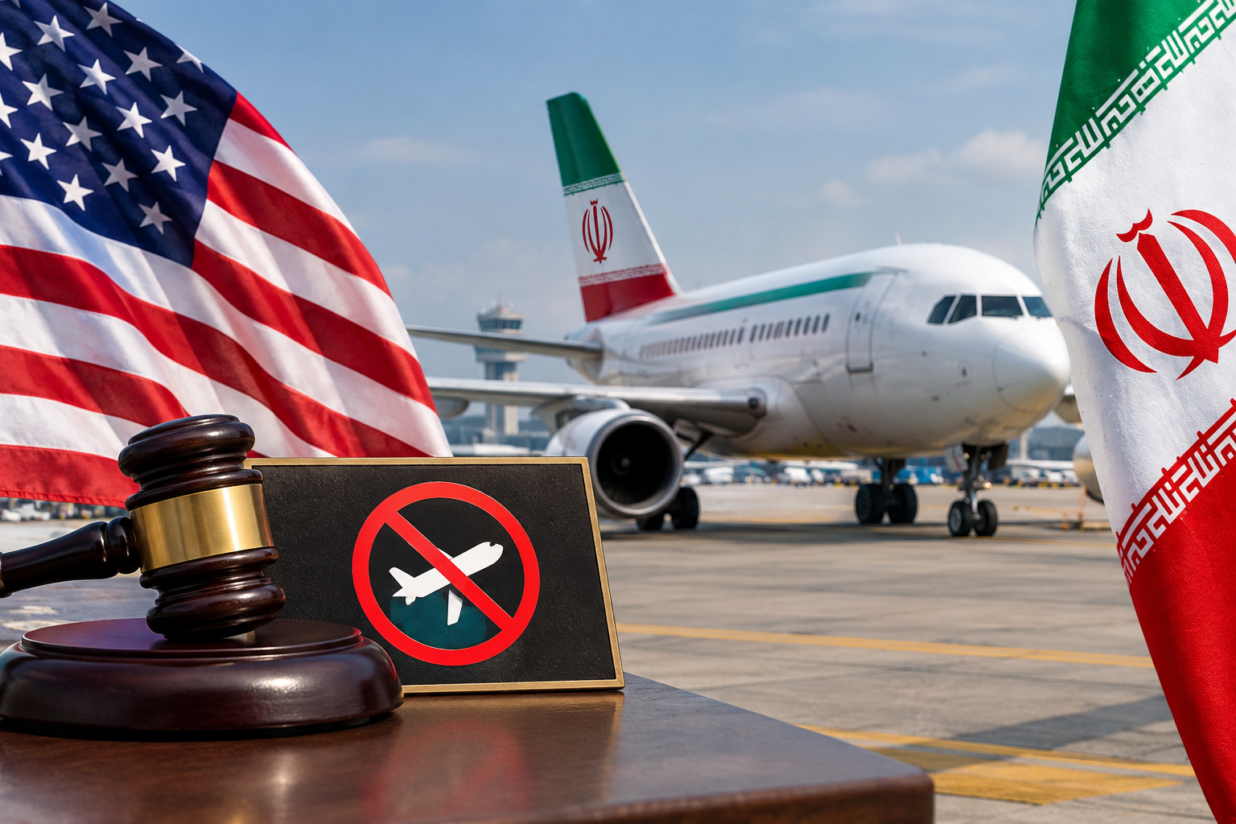
US Iran airlines sanctions could make it much harder for Iranian commercial carriers to operate international flights from September 23, US Treasury Secretary Scott Bessent has warned. Foreign airports, ground-service providers and ticketing companies that continue working with Iranian airlines could also face US sanctions.
According to Bessent, Iranian airlines may lose access to a number of fundamental services outside of Iran. These include aeroplane fuel, landing services, and ticket sales. Companies who provide such services risk losing access to the US currency system if they continue to work with the targeted carriers.
US Iran Airlines Sanctions Target Aviation Services
The warning comes following a new round of restrictions released by the US Treasury earlier this month. On September 8, the agency sanctioned 36 targets associated with Iran’s aviation industry.
The list consisted of 27 Iranian airlines, as well as international corporations and brokers. US officials accused the targets of assisting Iran in acquiring aeroplanes, aviation technology, and associated services.
The Treasury has also cautioned international companies who offer commercial or financial support to sanctioned Iranian airlines. Such firms might risk legal prosecution, especially if their operations affect the US financial system.
The measures are part of a wider campaign called Operation Economic Outcast. The campaign was launched in August and targets Iran’s financial networks and sectors that Washington considers important to the country’s economy.
Iranian Airlines Face Problems Operating Abroad
Even if a government has not publicly barred Iranian aeroplanes from landing, the new restrictions may apply to them. Local services including as refuelling, ground handling, maintenance, and ticketing are critical to international operations.
If firms refuse to supply those services because to potential US sanctions, Iranian carriers may struggle to sustain international flights. The impact can already be seen with Mahan Air.
Mahan Air cancelled flights to Turkey on September 21 after Turkish officials ordered the airline to do so. The action occurred as fears grew about possible vulnerability to US sanctions.
US Expands Pressure on Iran’s Financial Network
The aviation sanctions are part of a larger US campaign to limit Iran’s access to foreign money. In recent weeks, the Treasury has targeted foreign institutions and financial networks suspected of assisting Iran in evading sanctions.
Washington has also cautioned financial firms that participation in sanctions evasion may result in limits on their access to the US financial system.
The US has previously targeted firms associated with Mahan Air. Treasury sanctions were imposed in July on people and businesses from China, India, and Russia for providing financial, logistical, and commercial assistance to the airline.
China Could Face Pressure Over Iran Trade
Bessent’s fresh statements come as the United States and China continue to debate Iran and sanctions enforcement. He recently conducted economic talks with Chinese Vise Premier He Lifeng in preparation for a summit between US President Donald Trump and Chinese President Xi Jinping.
China remains a key economic partner for Iran, so Beijing’s reaction to the new US measures is vital to the larger sanctions effort. According to Bessent, Chinese banking authorities met with US officials to discuss sanctions compliance.
The September 23 deadline will now determine how foreign aviation companies react to the US warning and if Iranian planes can continue to get critical services outside Iran.