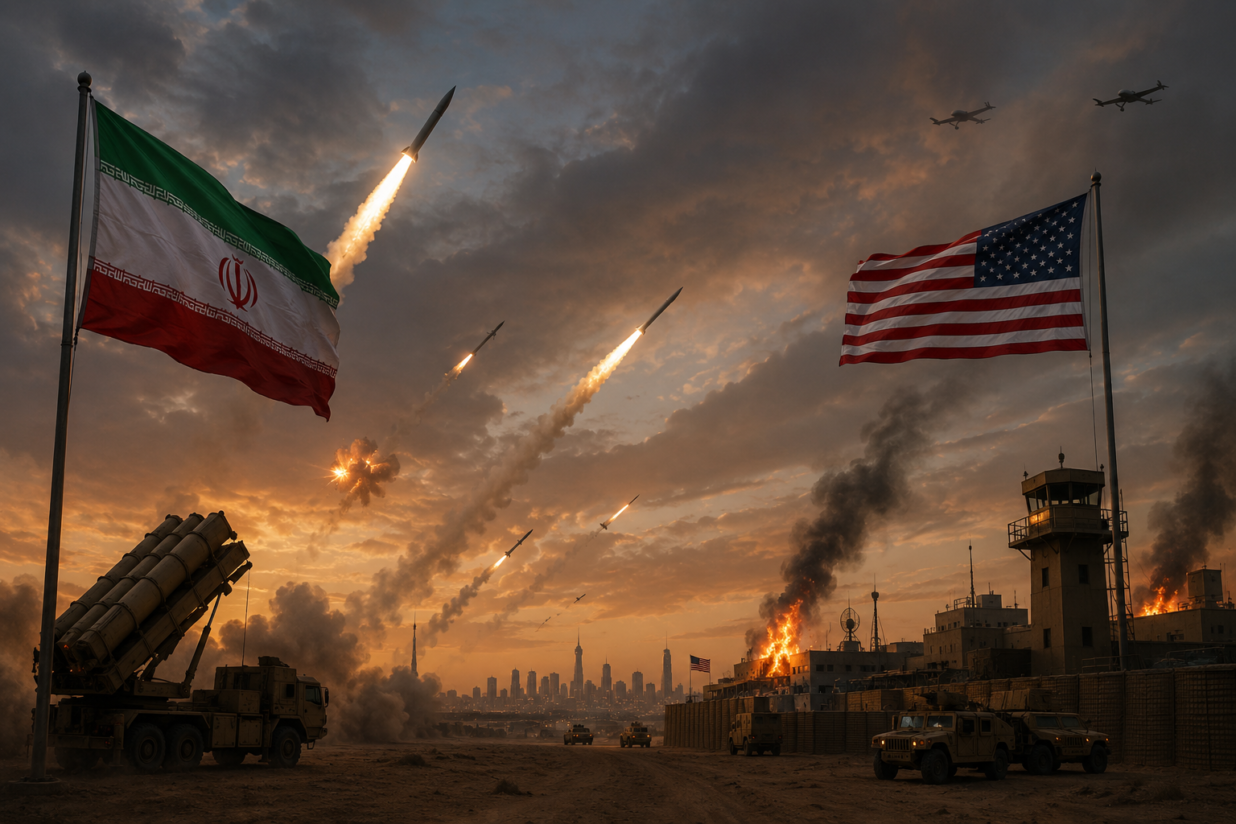
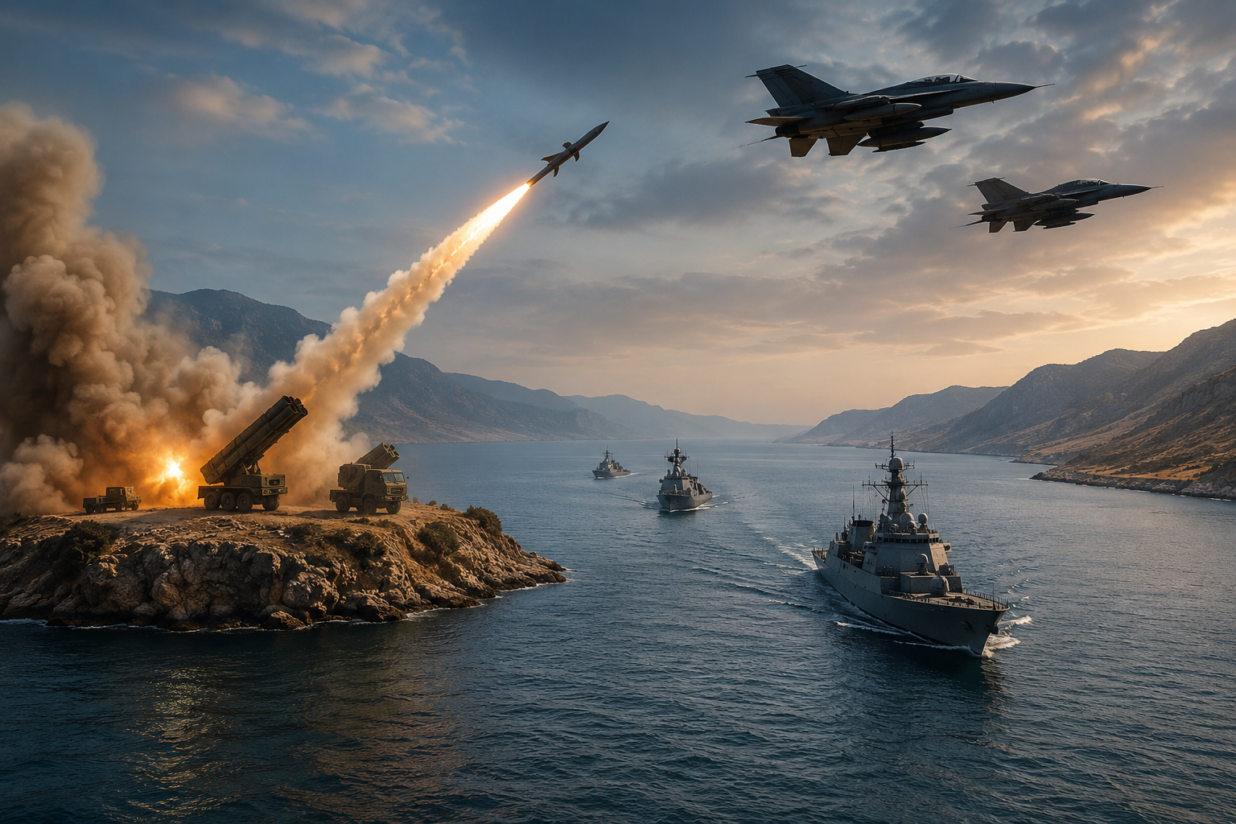
US strikes Iran : After a month-long break, the United States struck Iran again on Sunday, this time targeting two Iranian missile launchers on Larak Island in the Strait of Hormuz. Following the incident, Iran launched missiles against US military facilities in Jordan, sparking a new round of fighting between the two countries.
The US military said it struck two launchers after Iranian Revolutionary Guard soldiers were spotted assembling rockets suspected of delivering naval mines into the Strait of Hormuz. The operation was meant to prevent Iran from laying further mines in one of the world’s most important shipping lanes.
US Strikes Iran Over Rocket Launchers Near Strait of Hormuz
According to the US Central Command, the two launchers were destroyed on Larak Island. According to Navy Captain Tim Hawkins, a CENTCOM spokeswoman, Iranian Revolutionary Guard forces were ready to utilize rockets to lay naval mines into the channel.
The US Navy announced the previous week that it had cleared naval mines from international transport routes in the Strait of Hormuz. Hawkins stated that American forces were still monitoring the area and were prepared to safeguard commercial vessels.
According to Iran’s Revolutionary Guard, the US attack resulted in casualties. Iranian state television later announced that Iranian forces had launched ballistic missiles toward American military sites in Jordan.
Iran Responds With Ballistic Missile Attacks
Iranian state media reported that the objectives included technical infrastructure, maintenance centers, and locations used by US fighter planes at King Hussein and Al-Azraq airbases. Iranian officials said the attacks caused significant damage, however more information was not immediately available.
The exchange reflects another escalation in the conflict, which has lasted months despite periods of reduced fighting and diplomatic efforts to find a long-term settlement.
The Strait of Hormuz remains one of the most important pressure points. Before the conflict, the waterway carried nearly one-fifth of the world’s oil. Iran’s effective blockage of the route has resulted in rising energy costs and fuel and fertilizer shortages.
US-Iran Conflict Enters a New Phase
The latest violence came six months after the crisis began. The heaviest fighting ended in April with a truce, but attacks continued at times, particularly around the Strait of Hormuz.
The Trump administration has also increased its emphasis on economic sanctions against Iran. A US Navy counterblockade of Iranian ports has hampered gasoline supplies in Iran, which is experiencing a scarcity of domestic manufacturing.
For months, mediators, including Pakistan and Qatar, have been working on diplomatic issues. A cease-fire was reached in April, followed by a memorandum of understanding in June, which was meant to pave the way for a comprehensive peace accord. However, no formal settlement has yet been struck.
Previous US Attack Came in July
Sunday’s operation marked the first US strike on Iran since July 29. According to the US military, the earlier attack followed an attempted surprise attack on American personnel in the region.
Earlier in July, US forces attacked Iran for 13 consecutive nights. During the fight, Iran launched attacks against US installations and allied targets throughout the Gulf, including places in Kuwait, Oman, Saudi Arabia, and the UAE.
Oil Prices Rise After Fresh Fighting
The new military exchange prompted a rapid reaction from the oil markets. Brent crude, the international benchmark, increased past $90 per barrel to $90.31, while West Texas Intermediate rose to $85.41.
The renewed fighting comes as the war remains politically divisive in the United States, with the November midterm elections looming. Senator Jack Reed, the top Democrat on the Senate Armed Services Committee, slammed President Donald Trump on Friday, saying the fight had failed to achieve its claimed goals and had harmed the United States’ influence in the Middle East and around the world.
- Join our whatsapp channel for daily updates.
- Follow tazatimesnews Telegram Channel for latest news alerts.
- Follow TazaTimesNews on TruthSocial for exclusive updates
- Also reads : North Korea Warns of ‘Powerful Response’ Over US Arms Sales to South Korea