
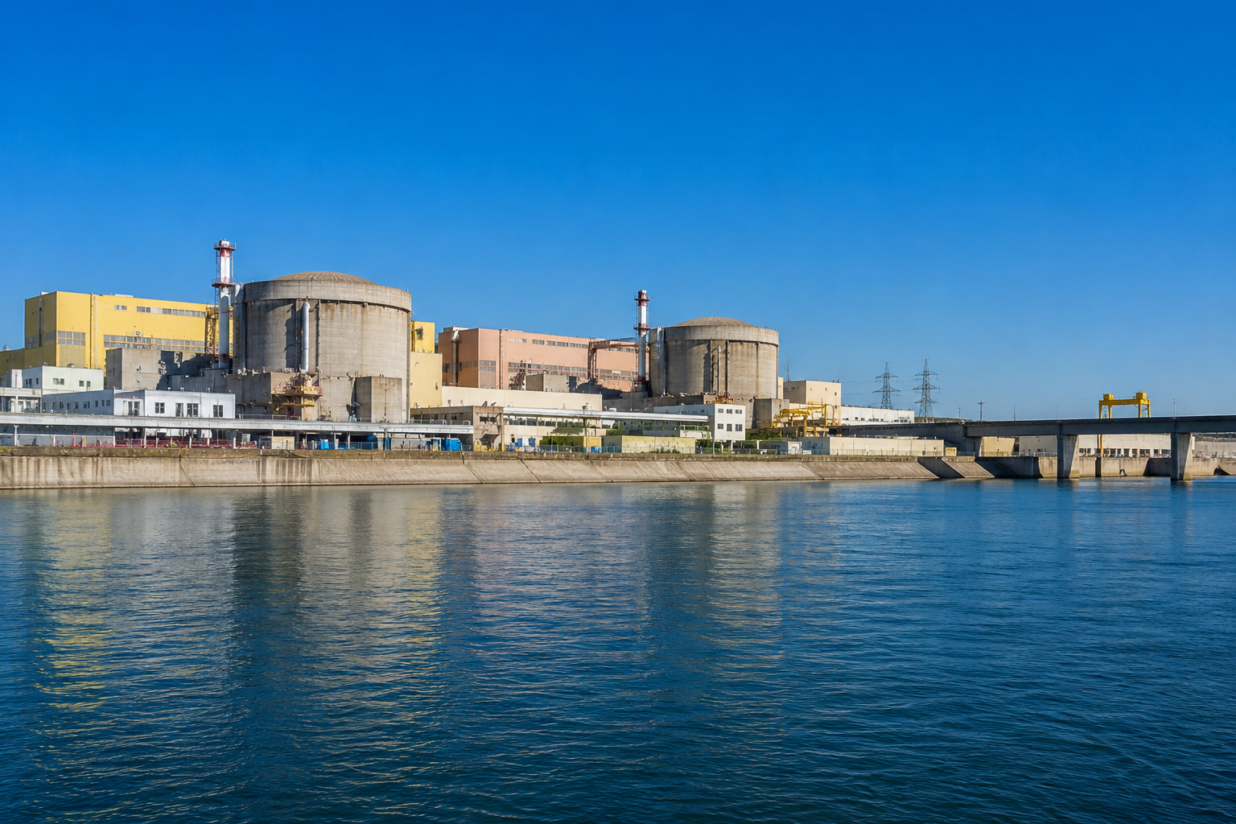
Cernavoda Nuclear Plant : Romania has approved emergency steps to improve the flow of water to the Cernavoda nuclear station, which was forced to shut down due to historically low Danube water levels. The measures are intended to provide safe cooling conditions and protect Romania’s electrical supply during an extremely severe drought.
The National Committee for Emergency Situations (CNSU) authorized the measures on Friday, August 21. The Romanian government announced them on Saturday, August 22, stating that urgent action was required due to the Danube’s unusually low water flow.
The Cernavoda nuclear power plant is an important component of Romania’s electrical infrastructure. Its shutdown has lowered domestic power generation and increased strain on the country’s energy supply. The situation also emphasizes the threats that extreme weather and extended drought can pose to essential energy infrastructure.
Romania Takes Emergency Water Measures for Cernavoda Nuclear Plant
Under the emergency plan, intensive dredging will proceed in the Danube at Cernavoda. The Lower Danube River Administration will carry out the work in collaboration with Romania’s Apele Romane water authority.
Authorities will also construct a temporary water-guiding structure, known as an epiu, on the Old Danube near Cernavoda. The construction is designed to channel part of the available river flow toward the Danube-Black Sea Canal and, ultimately, toward the water intake used by the plant’s cooling systems.
Romania’s Defence Ministry is also likely to assist with the operation. Military specialists will undertake underwater and geographical measures, while military divers may be deployed for underwater tasks if necessary.
Another key solution is to release more water from the Olt River reservoirs. Romania’s Energy Ministry and state energy generator Hidroelectrica are scheduled to offer an average increased flow of 50 cubic metres per second for five days.
Officials expect the additional water will improve conditions around the nuclear site while also helping energy generation.
High-capacity pumps will also be mobilised by Romania’s Department for Emergency Situations. If required, the pumps can help maintain the water level needed for the plant’s cooling systems.
Cernavoda Nuclear Plant Shutdown Raises Energy Concerns
The emergency procedures are in response to the Cernavoda facility being shut down when the Danube plummeted to abnormally low levels. Nuclear power facilities require a steady supply of cooling water, therefore river conditions play a crucial role in ensuring safe operations.
Romania is now striving to restore the water conditions needed for the plant while dealing with the larger consequence of lower energy generation. The Cernavoda facility generally supplies a considerable portion of the country’s electricity, making its operation critical to national energy security.
The dilemma is not restricted to Romania. Extremely low Danube water levels have also hampered nuclear power generation elsewhere in the region.
Hungary’s Paks nuclear plant has recently faced restrictions linked to low river levels, while Bulgaria’s Kozloduy nuclear facility has also been affected by declining Danube flows.
Drought Creates Wider Energy Risks Across Southeast Europe
Romania’s latest emergency measures may provide a temporary solution to the water scarcity, but the larger issue remains critical.
Continued drought and falling river levels could put additional pressure on electricity production across Southeast Europe. For Romania, restoring a reliable water supply to the Cernavoda nuclear plant is both a nuclear safety priority and an important step toward stabilising the country’s electricity supply.
- Join our whatsapp channel for daily updates.
- Follow tazatimesnews Telegram Channel for latest news alerts.
- Follow TazaTimesNews on TruthSocial for exclusive updates
- Also reads : Space Security Milestone: Coalition Marks Major Step in Defending Space