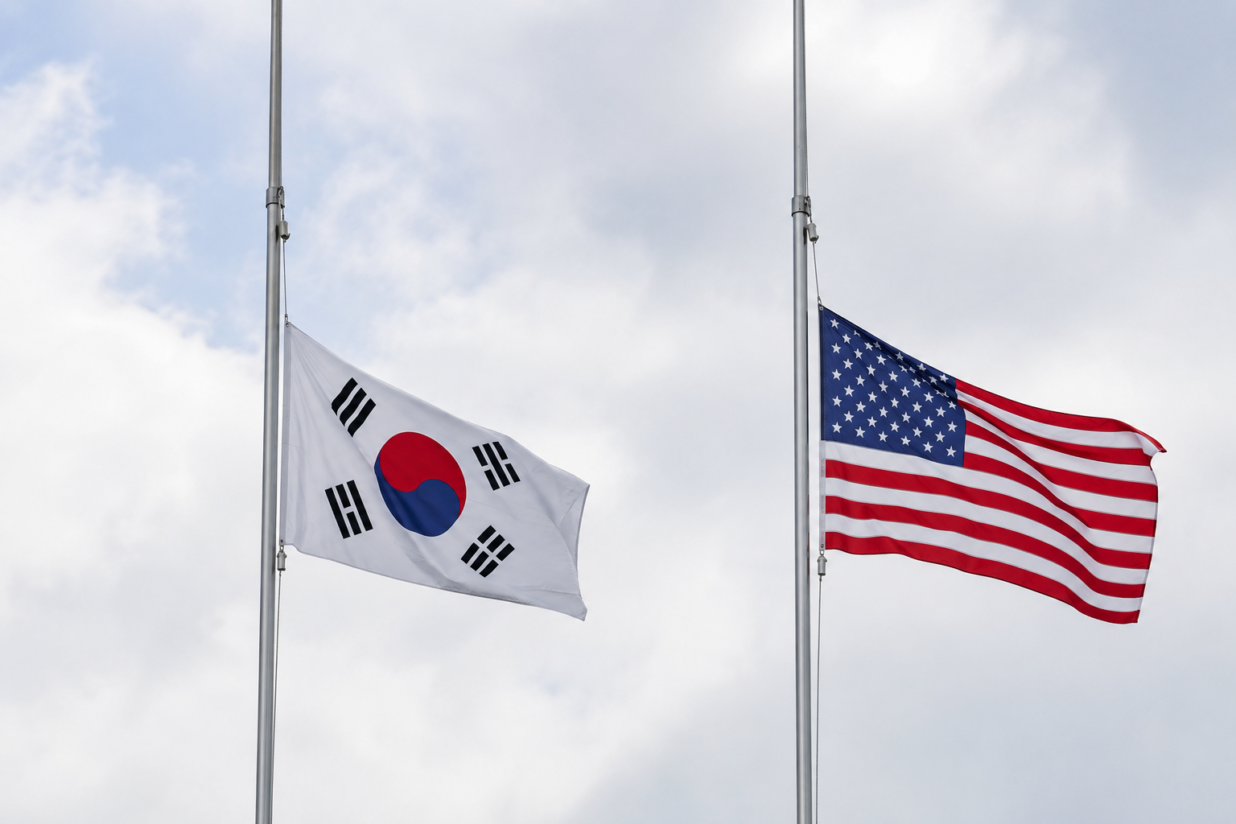
South Korea Military Drill Cuts : South Korea was taken off guard by US President Donald Trump’s decision to curtail American involvement in joint military exercises.
South Korean Foreign Minister Cho Hyun stated that officials received no advance notice of the decision. He made the remarks at a parliamentary session in Seoul on Wednesday, August 19.
Cho stated that neither South Korean nor US authorities in Seoul were aware of Trump’s order prior to its announcement.
The decision has generated new worries about the two partners’ future military cooperation.
South Korea Military Drill Cuts Raise Concerns Over Defence Readiness
The judgment pertains to the Ulchi Freedom Shield (UFS) exercises. The biennial drills bring together South Korean and American military.
The exercises assist both militaries enhance their coordination. They also allow troops to train responding to any North Korean threats.
The drills started as planned. However, the two sides are currently negotiating potential alterations to their size and duration.
On Tuesday, General Xavier Brunson, commander of US Forces Korea, paid a visit to South Korea’s Defense Ministry. He addressed potential modifications with South Korean officials.
The exercises are set to continue until August 27.
South Korean leaders continue to emphasize the significance of the US relationship. At the same time, Seoul seeks to improve its own defense capabilities.
President Lee Jae Myung has advocated for increased military autonomy. He also intends to continue strong security collaboration with Washington.
Lee’s administration supports attempts to hand over wartime operational control from the United States to South Korea. The administration is also concentrating on developing new military capabilities.
One significant plan is to build a nuclear-powered submarine program.
The issue arises at a critical time for the Korean Peninsula. North Korea continues to represent a significant security threat to South Korea and the United States.
Pyongyang has consistently criticized joint military exercises. North Korea describes the drills as provocative and has stated that it will continue to improve its military capabilities.
However, the exercises continue to be defensive in Seoul and Washington. They also enable both forces to maintain their operational preparedness.
South Korea Military Drill Cuts Come as Trump Seeks North Korea Dialogue
Trump’s decision comes as he wants to restart talks with North Korean leader Kim Jong Un.
On August 17, Trump announced that Kim had responded to his diplomatic outreach. However, he did not go into detail regarding the reaction.
The US president has previously expressed concerns about the cost of massive military drills with South Korea. He has also expressed questions about their overall worth.
His latest order looks to be consistent with his overall strategy. Trump wants to cut military spending that he believes is unneeded. At the same time, he wants to maintain the door open for talks with North Korea.
Seoul will face a difficult scenario as a result of the decision.
South Korea wishes to preserve the strong US security commitment that has supported its defense for decades. However, the government also seeks to improve its defense capabilities.
The reduced number of military drills may have an impact on how the two allies prepare for any security challenges.
What Could the Military Drill Changes Mean?
Regular military drills allow South Korean and American forces to train cooperative operations. They also assist both parties in identifying flaws and improving coordination.
A lesser exercise may require the allies to find alternative measures to maintain military preparedness.
Supporters of the shift may argue that smaller drills will allow for more diplomatic engagement with North Korea. Critics may have a different viewpoint.
They could claim that if North Korea continues to build up its military capabilities, less training will diminish deterrence.
The unexpected statement has caused military and diplomatic concern in Seoul.
South Korea now has the difficulty of sustaining its alliance with Washington while adapting to a shift in American policies.
The following months will reveal whether the reduction is a temporary adjustment. It could potentially be part of a broader shift in US-South Korean security cooperation.
- Join our whatsapp channel for daily updates.
- Follow tazatimesnews Telegram Channel for latest news alerts.
- Follow TazaTimesNews on TruthSocial for exclusive updates
- Also reads : Goldman Sachs Says Japan Leads Asia’s Buyout Opportunities as Private Equity Activity Grows