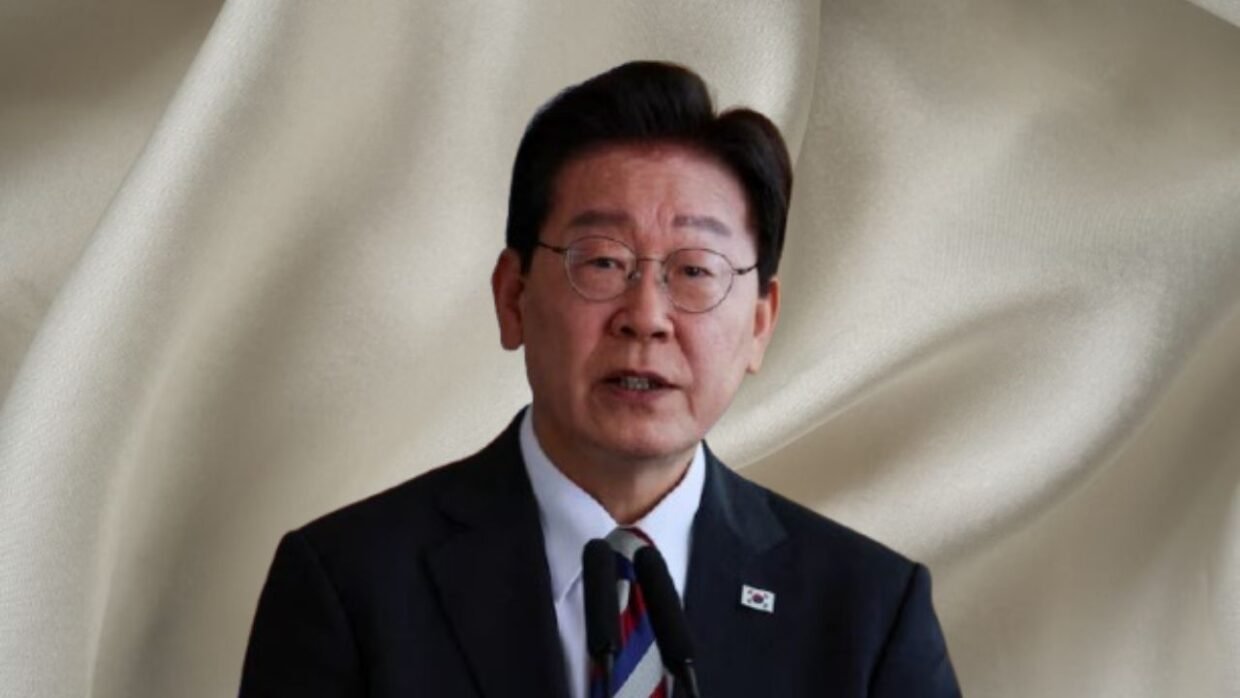
South Korean President Lee Jae Myung has called for new mechanisms to manage North Korea tensions, saying dialogue is essential to move the Korean Peninsula away from its decades-long state of military uncertainty.
During a speech commemorating Korea’s freedom from Japanese colonial control on Saturday, August 15, Lee urged North Korea and other countries with security interests on the peninsula to engage in dialog. His comments came as relations between the two Koreas remained tight as Pyongyang pursued its nuclear and missile programs.
Lee stated that the current security arrangements on the Korean Peninsula are not permanent. The Korean War, which lasted from 1950 to 1953, ended in an armistice rather than a formal peace treaty, leaving the two Koreas technically in conflict.
Lee Jae Myung Calls for Dialogue to Ease North Korea Tensions
South Korea’s president stated that the decades-old armistice would eventually be replaced with a “peace regime.” He contended that a permanent peace framework would increase stability and lessen the possibility of an unintentional or deliberate armed clash.
Lee’s idea comes at a critical time in inter-Korean ties. North Korea has continued to prioritize its nuclear weapons and missile programs, whilst South Korea maintains a tight security partnership with the United States.
Despite the tensions, Lee insisted that communication is still necessary. He explained that discourse could provide possibilities for the countries involved to explore real actions to lessen tensions and address long-standing security issues.
One of the most pressing challenges is North Korea’s nuclear development. Lee suggested that future talks could help to limit Pyongyang’s nuclear capabilities while also fostering a more stable relationship between the two Koreas.
Reducing tensions is critical not only for South Korea’s national security, but also for regional stability in a region with numerous major military and economic powers. A severe escalation on the Korean peninsula might have far-reaching effects.
Lee Jae Myung Faces a Difficult North Korea Policy Challenge
It will not be easy to restart meaningful dialog. Previous talks on North Korea’s nuclear program have frequently failed, and trust between Seoul and Pyongyang remains extremely low.
Lee’s remarks reflect the tough balance his administration must strike. South Korea must be prepared for future military threats while also pursuing diplomatic engagement with the North.
Recent events have demonstrated how swiftly North Korean tensions can increase. Pyongyang has condemned South Korean-US military cooperation and has continued to engage in weapons-related operations. At the same time, South Korea and the United States are gearing up for its annual Ulchi Freedom Shield military exercises, which North Korea has previously considered as a threat.
In this context, Lee’s appeal for a peace regime is part of a larger diplomatic campaign to alter ties on the Korean peninsula. Instead of viewing the armistice as a permanent arrangement, his administration wishes to work toward a framework that could lessen the likelihood of further fighting.
However, attaining that goal will necessitate collaboration from both North Korea and other countries with significant regional interests. It will also be determined by the progress made in tackling Pyongyang’s nuclear weapons development.
Lee’s message is currently focused on maintaining the possibility of communication. His government must translate that diplomatic strategy into actual measures that minimize military tensions while safeguarding South Korea’s security.
- Join our whatsapp channel for daily updates.
- Follow tazatimesnews Telegram Channel for latest news alerts.
- Follow TazaTimesNews on TruthSocial for exclusive updates
- Also reads : Government Scheme: Post Office RD Can Help You Build a Corpus of Over Rs 16 Lakh