
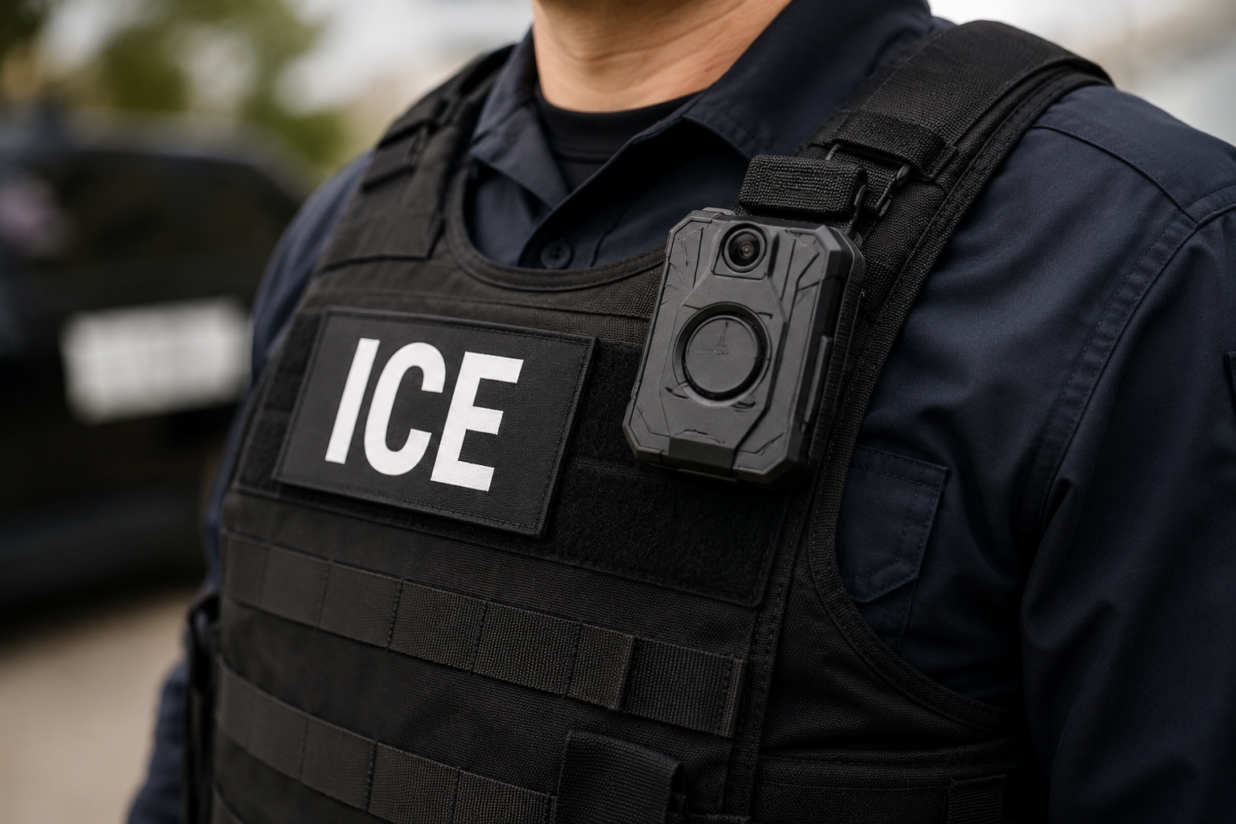
Acting Director David Venturella said on Saturday, August 8, that the ICE Body Camera Rollout will be finished countrywide by the end of August 2026. The announcement indicates that U.S. Immigration and Customs Enforcement (ICE) will complete the program earlier than expected.
According to Venturella, every ICE officer and agent working in the field should have a body-worn camera by August 31. The faster implementation comes as the agency is under increased public scrutiny for its immigration enforcement activities across the United States.
Body cameras are designed to create an independent record of encounters between ICE officers and members of the public. Supporters argue that the recordings can assist clarify what transpired during confrontations, safeguard cops from false allegations, and boost public trust in law enforcement operations.
ICE Body Camera Rollout Accelerated After Recent Fatal Incidents
The ICE Body Camera Rollout gained traction following a number of tragic instances involving immigration enforcement operations.
Federal immigration enforcement efforts in Minnesota, as well as fatal shootings during traffic stops in Maine and Texas, have reignited concern about the lack of body cameras in some ICE confrontations.
Following the occurrences, then-DHS Secretary Kristi Noem stated that the body camera program will be expanded nationwide as funding became available.
The issue gained traction after Tom Homan, the Trump administration’s border czar, stated that ICE personnel would be compelled to film vehicle stops using at least one body camera.
Venturella’s most recent announcement now establishes a specific deadline for the broader rollout. Instead of adhering to the agency’s previous plan, ICE expects every field officer and agent to have access to body-worn cameras by the end of August.
ICE Body Camera Rollout Expected to Improve Accountability
The nationwide ICE Body Camera Rollout is being billed as a significant step toward more accountability inside the agency.
Body cams can provide valuable evidence during arrests, traffic stops, and other law enforcement operations where there may be disagreements about what happened. Investigators can use video recordings to determine the facts more accurately than they can with witness accounts alone.
The cameras could also help with internal reviews, court hearings, and other official inquiries involving ICE officials.
ICE Body Camera Policy Raises Questions About Public Access
Although the rollout is being portrayed as a measure of transparency, there are still uncertainties regarding how captured footage will be handled.
Venturella stated that ICE policy permits video material to be shared swiftly in the event of a significant injury or death involving someone in detention. However, the government may suppress recordings if officials believe they would interfere with an ongoing investigation or violate privacy rights.
This has become a major problem for detractors, who claim that wearing body cameras does not guaranty public access to the material. They will very likely continue to question how decisions about disclosing recordings will be made and if the process provides adequate independent monitoring.
ICE has maintained that limiting certain recordings is vital to safeguard sensitive investigations and personal information.
What the ICE Body Camera Rollout Means for the Public
The completion of the ICE Body Camera Rollout signifies a significant operational shift for an agency that has come under fire for its immigration enforcement practices.
Body cams may provide security for ICE officials when their actions are questioned. The cameras could provide the public with increased visibility into encounters that were previously documented mostly thru official reports.
With the nationwide rollout set to be completed by August 31, 2026, the focus will now shift to implementation, officer compliance, and the agency’s judgments on revealing recordings after significant occurrences.
- Join our whatsapp channel for daily updates.
- Follow tazatimesnews Telegram Channel for latest news alerts.
- Follow TazaTimesNews on TruthSocial for exclusive updates
- Also reads : Hero Xtreme 160R 4V Combat Edition Uncovers What’s Inside